
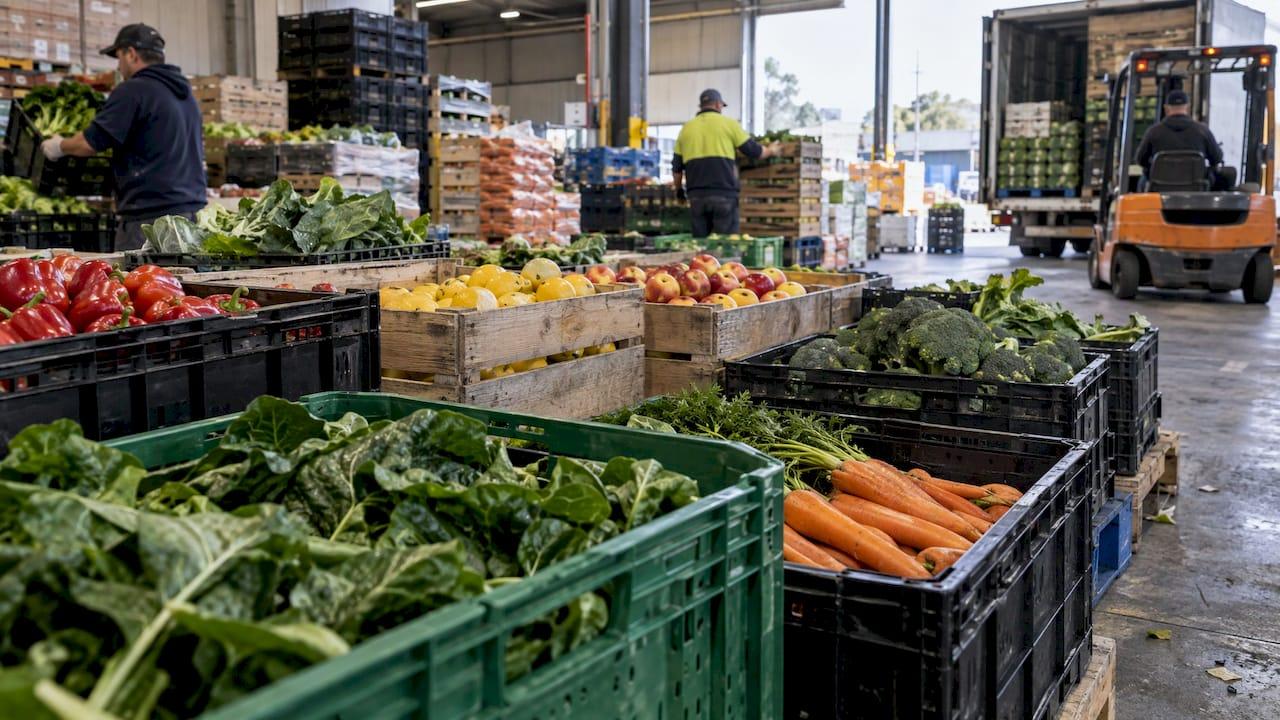
There is no single Australian produce calendar. Seasons run on different clocks in Hobart, Brisbane, Perth and Darwin, so the venues that buy well are the ones that track what is peaking in their own state, plan the menu around it and keep stock counts tight enough to act when prices swing. This guide gives you the season dates, a month-by-month picture of what is plentiful, and a routine for turning it into lower food cost. If you run a café, pub, club, fish and chip shop or restaurant, you can use it as a buying reference. Pantryhub's real-time stock tracking and supplier ordering are built to help you act on it.
TL;DR
- Australia's calendar seasons are fixed (spring is September to November), but harvest times shift by state, so always check produce by region, not nationally.
- Peak-season produce is usually the best value and quality, which makes it the right base for specials and menu changes.
- Spring supply and prices move fast. In November 2026, stone fruit was around $10 a kilo early in the month, with prices expected to halve by month's end.
- Seasonal buying only pays off if you know what you hold, what you use and what you pay, which is where inventory and supplier ordering tools earn their keep.
- The northern tropics run on a wet and dry season, not four seasons.
Table of Contents
- What the seasons actually are in Australia
- Why harvest windows differ by state
- A season-by-season guide for the kitchen
- What's plentiful in spring: a November snapshot
- How to buy and menu around seasonality
- Mistakes that eat the savings
- Our view: seasonality is an inventory problem
- Put seasonal buying on autopilot with Pantryhub
- FAQ
- Sources
What the seasons actually are in Australia
The Bureau of Meteorology defines summer as December to February, winter as June to August, with spring (September to November) and autumn (March to May) as the three-month transitions in between. That is the calendar most produce guides use, and it is the one your suppliers quote.
In the north it is different. The Bureau uses a wet season from 1 October to 30 April and a dry season from 1 May to 30 September for the tropics. Tourism Australia says the Top End, Broome, the Kimberley and Tropical North Queensland run a wet season and a dry season instead of four. If you run a venue in Cairns or Darwin, the southern four-season guides are only a rough match for what your growers are picking.
For a buyer, the practical point is simple. "Season" on a menu is a marketing label. "In season" on the market floor is a harvest window, and the two do not always line up.
Why harvest windows differ by state
Seasonality in the strict sense refers to peak harvest times. LiveLighter, a NSW health body, notes that different climates within and between states, greenhouses and imports mean some fruit and vegetables are on the shelf year-round. It also gives an example of a longer cool spring pushing grapes into season only in mid-December.
Here is how that plays out in practice:
- Tasmania. The state's Department of Natural Resources and Environment lists harvest windows by region. In the North, cherries run December to February, strawberries October to May, apples February to May and broccoli November to June. In the South, apricots run January to February.
- Queensland and Victoria. Strawberries are a winter crop in the north and a summer crop in the south, which is why you can see good local berries at very different times of year depending on your state.
- Western Australia. Apples and pears come from the south-west in autumn, while tropical fruit comes from the far north on a completely different schedule.
If you buy through a wholesaler, ask which state a line is coming from. A "seasonal" item trucked or freighted across the country is not the same as one picked two hours from your door, in price or in shelf life.
A season-by-season guide for the kitchen
This summary follows a Victoria and Murray region seasonal guide from a community food organisation. Treat it as a southern, temperate baseline and adjust for your state.
| Season | Vegetables | Fruit and other |
|---|---|---|
| Spring (Sept to Nov) | Asparagus, broad beans, broccoli, carrots, cabbage, kale, leek, lettuce, parsnip, pumpkin, rhubarb, silverbeet, spinach | Apples, grapefruit, lemons, mandarins, oranges, tangelo |
| Summer (Dec to Feb) | Summer salad and fruiting vegetables | Apricots, cherries, figs, grapes, stone fruit, berries, rockmelon, watermelon, with interstate mango and pineapple |
| Autumn (Mar to May) | Pumpkin and root vegetables | Feijoa, kiwifruit, pears, persimmon, pomegranate, quince, chestnuts, pistachios |
| Winter (Jun to Aug) | Brassicas: broccoli, cauliflower, Brussels sprouts, kale, kohlrabi, romanesco | Citrus, apples, pears, kiwifruit, pomegranate |
Two patterns are worth building into your menu planning:
- Winter is brassica and citrus season. Cauliflower, broccoli, kale and citrus give you cheap, strong ingredients for soups, slaws, roasts, garnishes and bar fruit.
- Summer is the fruit and salad peak. Berries, stone fruit and melon suit desserts, cocktails and breakfast menus, but the window for each can be short.
What's plentiful in spring: a November snapshot
Spring is where supply moves fastest, so it is a good example. The ABC's November 2026 produce roundup names broccoli, cauliflower, cabbage, asparagus, broad beans, corn, zucchini, avocado, garden peas, snow peas and fresh garlic as in-season vegetables for the month. For fruit it lists mangoes, strawberries and cherries, with nectarines, peaches and apricots expected later in the month.
The Guardian's 4 November 2026 value guide adds some useful market colour. It reports an early Victorian strawberry glut, mangoes arriving from the Northern Territory and Queensland, a large tomato supply from Queensland, Victoria and South Australia, plenty of Lebanese cucumbers from NSW, abundant red capsicums and well-priced grapefruit. Nectarines and peaches were about $10 a kilo in early November 2026, with prices expected to halve by the end of the month, according to the Watts Fresh owner quoted in the piece.
That last point is the lesson. A product can be at its most expensive and at its cheapest within the same month. Those are the prices of one month in 2026, so use them as an example of how fast spring moves, not as a benchmark for your next order. Your own supplier price lists and market reports are the live figures.

Why prices swing
Weather drives it. In the ABC piece, produce buyer Josh Ball explains that after a few sunny spring days, brassicas "come on really fast", and that cherries are volatile to grow, since badly timed rain or hail can wipe out a crop. Early flushes bring a glut and a price drop. A bad weather event brings the opposite.
For a venue, that means seasonal ingredients are best treated as a rolling opportunity, not a fixed menu line. Picking dates can move by a few weeks from year to year, so a dish built around a single item needs a fallback.
How to buy and menu around seasonality
Knowing what is in season is the easy part. The margin comes from the routine you wrap around it. Here is a process that suits a single café or a multi-venue group.

1. Build a seasonal shortlist for your state
At the start of each season, list 10 to 15 ingredients that are at or near peak in your region, using your state's harvest information and your supplier's advice. Tasmanian operators can start from the state harvest dates above, and LiveLighter provides state-specific seasonality charts. Keep the list short enough that the kitchen will actually use it.
2. Match the shortlist to your menu
Sort your dishes into three groups: dishes that can switch to the seasonal item, specials that can be built around it, and fixed dishes that need a year-round supply. A fish and chip shop might lean on lemons and cabbage in winter for slaws and sides. A pub kitchen might move a house salad from tomato and cucumber to shaved brassicas when those prices change. A bar might shift garnish and juice fruit with citrus in winter.
3. Set par levels you can actually hold
Par levels are the target quantity you want on hand for each item. Seasonal produce is perishable, so pars for fresh lines need to be lower and reviewed more often than for dry goods. Over-ordering a cheap seasonal line is the classic way a bargain turns into waste. Our guide on managing seasonal menu stock goes deeper on this.
Before you commit to a large buy, check how much cold room and shelf space you really have. Our storage capacity planning guide covers how to work that out.
4. Cost the dish at the price you are buying at
A seasonal special is only profitable if the plate cost is current. Recalculate recipe costs when the ingredient price moves, not once a year. If a dish used a $10 a kilo product and the price halves, the margin improves, and you may want to run the special harder or lower its price to build volume.
5. Count, then reorder
Seasonal supply can disappear quickly. When a line goes from plentiful to scarce, you want to see it in your stock levels before the plate runs out on a Saturday night. Regular counts, low-stock alerts and a clear record of what each supplier charged make that possible. If you do counts on paper, our free kitchen inventory checklist template is a starting point.
6. Track what you throw out
Waste is where seasonal buying often goes wrong. Record what is binned and why, then compare it to the savings you made by buying in season. If a peak-season line produced more waste than it saved, shrink the par or adjust the prep. Fresh produce also has to be labelled correctly, so check our date marking guide for venues.
Mistakes that eat the savings
- Using a national list in a regional market. A Queensland strawberry season and a Victorian one do not overlap neatly. Check your state.
- Confusing availability with peak. Cold storage and imports keep many items on the shelf all year, but they are not at peak price and quality.
- Locking a menu too early. If a dish depends on one weather-sensitive crop, such as cherries, have a swap ready.
- Ignoring the wet and dry season in the north. Tropical venues should work from local growers' schedules.
- Buying the bargain without a plan for it. A cheap case of something delicate is only cheap if it is used before it turns.
Our view: seasonality is an inventory problem
Most operators we speak to about seasonal menus start with the calendar. We think the calendar is the easy bit. Every chef knows asparagus is a spring crop and mandarins are a winter one.
The harder part is what happens in the kitchen after the delivery arrives: knowing what you have, what you paid, what it costs on the plate and when to reorder. That is what protects your margin when prices swing.
Pantryhub was built by a chef for chefs, and it is designed for Australian venues, from a single café to a multi-location group. Real-time stock tracking, low-stock alerts, supplier ordering, recipe and pricing standardisation and waste and cost reporting sit in one place, so a seasonal special runs on current numbers, not last quarter's.
Pricing in Australian dollars, GST-ready reporting and a mobile-first design mean the head chef can count stock on the floor and the owner can see the result across sites.
the author
Put seasonal buying on autopilot with Pantryhub
If you are ready to bin the spreadsheets, Pantryhub gives your kitchen one place to track stock, order from suppliers and report on cost, across one site or several. Plans are published on our pricing page: Starter is $39 a month, Regular is $69 a month and Pro is $99 a month, all in Australian dollars. You can begin with a free trial.
Bars and pubs can see how it handles pour cost and stocktakes on our bar inventory software page. For a wider look at what to expect from this kind of tool, read our food inventory software guide for Australia. We also have pages for venues in Melbourne, Sydney and Adelaide.
FAQ
What months make up the seasons in Australia?
Summer is December to February, autumn is March to May, winter is June to August and spring is September to November, according to the Bureau of Meteorology. The tropical north uses a wet season (1 October to 30 April) and a dry season (1 May to 30 September) instead.
What fruit and vegetables are in season in spring?
In the southern states, spring brings asparagus, broad beans, broccoli, carrots, cabbage, kale, lettuce, rhubarb, silverbeet and spinach, with citrus and apples still around. Later in spring, cherries, strawberries, mangoes and stone fruit start to arrive, depending on your state. Check your local supplier for the exact timing.
Is the seasonal produce calendar the same in every state?
No. Climate, region and growing methods change harvest windows. Strawberries, for example, are a winter crop in Queensland and a summer crop in Victoria, and Tasmania publishes its own regional harvest dates. Use your state's information and your supplier's advice for planning.
Is seasonal produce always cheaper?
Peak-season produce is usually at its best value and quality, but weather can change that quickly. A glut can lower prices, while hail or heavy rain can push them up. Keeping your recipe costs and supplier prices up to date lets you respond as the market moves.
Sources
- Solstices, equinoxes and the seasons, Bureau of Meteorology
- Australia's seasons, Tourism Australia
- In season, LiveLighter
- Seasonal Produce Harvest Dates, Tasmanian Department of Natural Resources and Environment
- Seasonal Produce Guide, Ceres Fair Food
- Seasonal produce to make the most of this November, ABC News
- Best value fruit and veg in November, The Guardian