

The single most effective action you can take right now is to deploy a checklist-driven compliance system that combines daily shift checks, weekly internal audits, and monthly third-party reviews, backed by ingredient-level inventory and supplier-ordering software. That combination prevents regulatory shutdowns, protects food cost margins, and gives you defensible records when an inspector walks through the door.
Start here in the next 72 hours:
- Assign a named compliance owner for each shift (not a role, a person)
- Enable digital temperature logging for all coolers and hot-holding equipment
- Run a baseline ingredient-level stock count and link each item to its supplier invoice
Table of Contents
- Your club kitchen compliance best practices checklist for month one
- How often should you audit, and what should each audit cover?
- How inventory and supplier-ordering workflows reduce your compliance risk
- Kitchen design and equipment choices that make compliance easier
- How to make compliance a daily habit for your team
- What to document, how long to keep it, and how reporting reduces risk
- Key Takeaways
- Why compliance protects your club's bottom line
- Pantryhub gives your club kitchen a compliance backbone
- Useful sources and further reading
Your club kitchen compliance best practices checklist for month one
Work through these 10 tasks in order. Each one builds on the last.
-
Assign a compliance owner. One named person per shift holds accountability. Owner: GM or Head Chef. Time: 30 minutes to document. Success metric: name posted on every shift schedule.
-
Map peak-service workflows. Diagram your busiest event flow from receiving through service. Gaps in that map are where compliance breaks. Owner: Head Chef. Time: 2 hours. Metric: single-page flow diagram signed off by management.
-
Install calibrated digital thermometers and log templates. Every cooler, freezer, and hot-holding unit needs a temperature log on record. Owner: Compliance owner. Time: 1 hour setup. Metric: zero missed readings in week one.
-
Implement color-coded cutting boards and utensils. Red for raw meat, green for produce, yellow for poultry. No exceptions. Owner: Head Chef. Time: 1 hour to purchase and label. Metric: 100% station compliance on first walk-through.
-
Post SOPs at every station. Document and display SOPs for cleaning, sanitizing, cooking temperatures, and allergen handling so any staff member can follow them without asking. Owner: GM. Time: 2 hours to print and laminate. Metric: SOPs visible at all prep stations.
-
Set a written cleaning schedule with sign-off fields. Assign tasks by station and shift, not by "whoever has time." Owner: Compliance owner. Time: 1 hour. Metric: 100% sign-off rate by end of week two.
-
Run a baseline ingredient-level inventory count. Count by ingredient, not by product category. Capture lot numbers and expiry dates. Owner: Head Chef or inventory manager. Time: several hours. Metric: every line item has a lot number and expiry date recorded.
-
Link supplier invoices to lot numbers in your software. Ingredient-level tracking with lot and expiry fields lets you isolate affected batches quickly and produce supplier-backed evidence during inspections. Owner: Inventory manager. Time: 2 hours. Metric: every received delivery has a matched invoice in the system.
-
Launch a daily shift checklist in your software. Digital task completion rates give you a real-time view of compliance health across the whole venue. Owner: GM. Time: 1 hour to configure. Metric: checklist completion rate above 95% by end of month.
-
Schedule your first third-party audit. Book it for week six, not month six. An early external review surfaces gaps before they become violations. Owner: GM. Time: 30 minutes to book. Metric: audit report received and corrective actions logged.
Pro Tip: Prioritize tasks 3, 5, and 9 first. Temperature logging, posted SOPs, and a digital shift checklist are the three items inspectors check within the first five minutes of any visit. Get those right and the rest of the month becomes much easier.
How often should you audit, and what should each audit cover?
A reliable audit rhythm has four layers. Each one catches what the previous layer misses.

Daily and per-shift checks cover the highest-risk touchpoints: cooler and hot-holding temperatures, handwashing signage, visible SOPs at each station, and cleaning completion for critical equipment. These take under 10 minutes when they are built into a digital shift checklist.
Weekly checks go one level deeper. Walk the prep flows, verify thermometer calibration, review stock rotation (FIFO at every shelf), and pull your software's task completion report. A completion rate below 90% is a signal to investigate before the next inspection.
Monthly tasks are where you reconcile inventory at the ingredient level, review supplier paperwork including lot numbers and invoices, run targeted swab tests on high-contact surfaces, and close out any open corrective actions. This is also when you review your corrective-action closure rate as a KPI.
Third-party audits should cover infrastructure integrity, sanitation SOPs, and cross-contamination protocols. For most club kitchens, a quarterly cadence is appropriate; high-volume venues running weekly events may need semiannual reviews at minimum.
| Check | Frequency | Owner | Key Metric |
|---|---|---|---|
| Temperature logs (coolers/hot-holding) | Every shift | Shift lead | Zero out-of-range readings |
| Handwashing signage and SOP visibility | Daily | Compliance owner | 100% stations compliant |
| Stock rotation (FIFO) | Weekly | Head Chef | Zero expired stock on shelves |
| Thermometer calibration | Weekly | Compliance owner | Within ±1°F of standard |
| Ingredient-level inventory reconciliation | Monthly | Inventory manager | Variance under 2% |
| Supplier invoice and lot-number review | Monthly | GM or inventory manager | 100% deliveries matched |
| Swab testing (high-contact surfaces) | Monthly | Third-party or compliance owner | Results within acceptable limits |
| Third-party audit | Quarterly | External auditor | Corrective actions closed within 30 days |
Cold chain targets to keep on your wall: refrigerators at or below 41°F (5°C), freezers at or below 0°F (−18°C), and poultry cooked to a minimum internal temperature of 165°F (74°C), per FDA Food Code 2022 guidance.
Pro Tip: Your software's audit log is your best friend with a regulator. Tamper-evident digital records with timestamps and user IDs are far more credible than a paper binder. Export the log before every third-party visit and hand it to the auditor at the door.
How inventory and supplier-ordering workflows reduce your compliance risk
The ideal receiving-to-service workflow runs like this: delivery arrives → staff captures lot number and expiry date at the dock → items are stored with zone labels → ingredient-level depletion is tracked by recipe → reorder triggers automatically when stock hits par, with the supplier invoice linked to the order.
Every step in that chain has a compliance payoff. Lot and expiry fields let you pull a single affected batch in minutes during a recall. Supplier records give inspectors the paper trail they need. Digital audit trails show who approved what and when. Low-stock alerts prevent the workaround behaviors that happen when a kitchen runs short mid-service.
The features that matter most for compliance in any kitchen ordering system:
- Lot and expiry date fields on every received item
- Supplier records linked to purchase orders and invoices
- Low-stock alerts that trigger before you run out, not after
- Role-based approvals so only authorized staff can place or approve orders
- Recipe-based allergen and cost tagging for menu-level traceability
- Exportable audit logs for inspectors and boards
Pro Tip: Configure your software to auto-open a corrective-action record whenever a temperature alert fires. The alert notifies the manager, the system logs the out-of-range reading, and the disposition (discarded, held, retested) is recorded before the shift ends. That closed loop is what separates a defensible record from a liability.
Kitchen design and equipment choices that make compliance easier
Design your kitchen for peak events, not your average Tuesday lunch. A layout that holds up during a 300-cover tournament dinner will handle everything else without strain.
Unidirectional food flow is the single most underrated compliance design principle: receiving → storage → prep → cooking → pass → service, with dirty and clean flows never crossing. When flows cross, cross-contamination risk rises even with well-trained staff, and SOPs become harder to follow consistently.
Short-term fixes (implement this quarter):
- Install hands-free or foot-pedal sinks at every prep zone
- Add color-coded zone labels to shelving and storage areas
- Audit refrigeration capacity against your peak-event headcount and add portable units if needed
Longer-term remodel decisions:
- Ask about ceiling heights, ventilation, and electrical capacity before committing to any equipment upgrade
- Poor layout creates bottlenecks at dishwashing and the pass that force staff workarounds under pressure, and workarounds are where compliance breaks
- Modular equipment and flexible prep zones let you reconfigure for different event formats without rebuilding your SOPs
Pro Tip: Walk your kitchen at the height of your busiest service and count how many times a staff member crosses a dirty-to-clean boundary. Each crossing is a compliance risk and a training burden. Eliminating even two of those crossings with a layout change pays for itself in fewer incidents.
How to make compliance a daily habit for your team
A training matrix is the foundation. Map every role to the competencies it requires, document sign-offs when staff demonstrate each skill, and schedule refreshers whenever the menu or a system changes. Cross-training across stations reduces risk when casual staff fill in during events.
For new or casual staff, guided checklists in your software replace the "ask the senior chef" dependency. Short micro-trainings at the start of a shift, paired with a supervisor sign-off before service, get new team members compliant faster than any printed manual. Training your team on new software follows the same principle: guided prompts, not manuals.
Culture matters as much as process. Compliance must be an active culture, not a document in a drawer. Staff who feel safe reporting a risk without fear of blame are your best early-warning system.
Reward the report, not just the result. When a team member flags a temperature excursion or a mislabeled allergen, that is a compliance win, not a failure. Recognize it publicly. The team that reports problems is the team that prevents shutdowns.
A simple training checklist template to copy into your LMS or software:
- Food handler card verified and on file
- Allergen awareness module completed (with sign-off date)
- HACCP critical control points reviewed for assigned station
- Color-coded tool protocol demonstrated
- Digital shift checklist walkthrough completed with supervisor
- First solo shift signed off by compliance owner
What to document, how long to keep it, and how reporting reduces risk
The records that matter most in a club kitchen:
- Temperature logs (every shift, every unit)
- Cleaning logs with staff sign-offs
- SOP acknowledgment records (dated, by employee)
- Training completion records and competency sign-offs
- Supplier invoices with lot numbers and expiry dates
- Incident and corrective-action logs with closure dates
Keep records for at least one year; two years is recommended by most food safety authorities, and digital records make long-term storage effortless. Store everything in tamper-evident digital logs with role-based access so only authorized users can edit entries. Exportable audit bundles mean you can hand an inspector a complete compliance packet in under five minutes.
The KPIs to monitor monthly:
| KPI | Target | Action if missed |
|---|---|---|
| Shift checklist completion rate | 95%+ | Investigate root cause promptly |
| Average corrective-action closure time | Under 5 business days | Escalate to GM if over 7 days |
| Ingredient-level inventory variance | Under 2% | Audit receiving and depletion records |
| Temperature excursions per month | Zero | Review equipment calibration and alert settings |
Pro Tip: Build a monthly "audit-ready packet" report in your software: export temperature logs, task completion rates, corrective-action closure records, and supplier invoices into a single PDF. Send it to your board or compliance committee before they ask for it. That proactive habit signals operational maturity and shortens every external audit.
Key Takeaways
A checklist-driven, software-backed compliance system is the most reliable way to keep a club kitchen audit-ready, protect margins, and prevent service disruptions.
| Point | Details |
|---|---|
| Assign ownership first | Name a compliance owner per shift before implementing any other system or checklist. |
| Audit cadence matters | Daily shift checks, weekly walk-throughs, monthly reconciliations, and quarterly third-party audits each catch different failure modes. |
| Ingredient-level traceability | Lot numbers and expiry dates linked to supplier invoices let you isolate a recall batch in minutes and satisfy inspectors on the spot. |
| Design for peak, not average | Layout and equipment sized for your busiest event prevents the workarounds that break compliance under pressure. |
| Pantryhub operationalizes compliance | Pantryhub's real-time stock tracking, low-stock alerts, supplier integration, and exportable audit logs map directly to the practices in this checklist. |
Why compliance protects your club's bottom line
The business case for compliance is straightforward, but most operators frame it backwards. They treat compliance as a cost center, a set of boxes to check before an inspection. The clubs that get it right treat it as a revenue protection system.
A single regulatory shutdown during a major event can cost more than a year of software subscriptions in lost revenue, emergency labor, and reputational damage. Food waste from poor inventory controls silently eats into margins on every service. High staff turnover, often driven by chaotic kitchens with unclear procedures, adds recruiting and training costs that compound quarterly.
Clubs that enforce recipe specs, a training matrix, and centralized processes deliver consistent service and higher per-head revenue. The measurable wins are real: reduced stock variance, fewer corrective actions per month, faster throughput at peak service, and a team that reports problems instead of hiding them. Those outcomes are not soft benefits. They show up in your food cost percentage and your member satisfaction scores.
Compliance done well is not extra work. It is documentation of work your team is already doing, organized in a way that protects the business.
Pantryhub gives your club kitchen a compliance backbone
Running a compliant club kitchen gets significantly easier when your inventory and ordering platform does the heavy lifting. Pantryhub's hospitality inventory software maps directly to every practice in this guide.
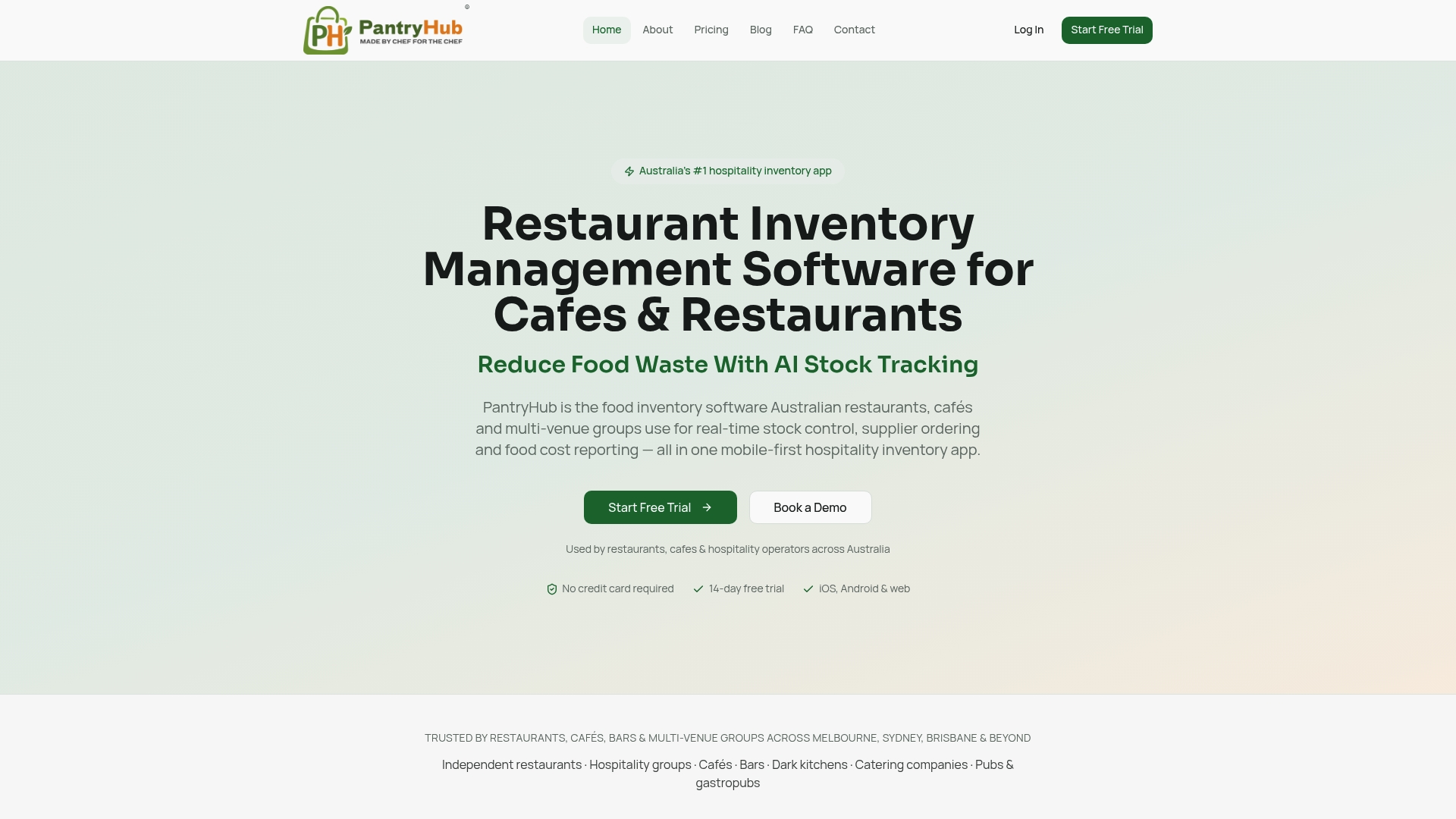
Here is what that looks like in practice:
- Ingredient-level tracking with lot and expiry fields on every received item
- Supplier integration with invoices linked to purchase orders and lot records
- Low-stock alerts that trigger reorders before service is disrupted
- Role-based access so only authorized staff approve orders and edit records
- Recipe and allergen tagging for menu-level traceability
- Exportable audit logs ready for inspectors, boards, and third-party auditors
Onboarding a club kitchen typically takes one week: day one for baseline stock count and supplier setup, days two through four for shift checklist configuration and team training, and day five for a live run with your compliance owner signed off. Most venues are generating their first audit-ready report within 30 days.
Check Pantryhub's pricing or book a demo to see how the platform fits your venue's compliance workflow.
Useful sources and further reading
- Improving Food Safety Compliance in Commercial Kitchens — Insight Hospitality: SOPs, temperature standards, third-party audit scope
- FDA Food Code 2022: the governing US model code for food safety in commercial kitchens
- Designing Club Kitchens from the Inside Out — Club & Resort Business: unidirectional flow and layout principles
- Why Kitchen Upgrades Are Critical for Facilities Planning — McMahon Group: peak-service design and modular equipment
- Before You Renovate Your Clubhouse Kitchen — SFI Hospitality: 10 questions every GM should ask before a remodel
- Food Safety Compliance Guide for Small Businesses — PassMyKitchen: record retention, HACCP, and inspection readiness
- Ingredient-Level Stock Tracking for Restaurants 2026 — Pantryhub: traceability workflows and lot-number capture
- What Is an Inventory Audit Kitchen? — Pantryhub: audit types and audit-ready kitchen setup
- Catering business tips: boost profit and streamline operations — Stovoo: operational efficiency for high-volume catering and club events
- Cloud-Based Kitchen Management Benefits — Pantryhub: multi-outlet oversight and remote compliance reporting