
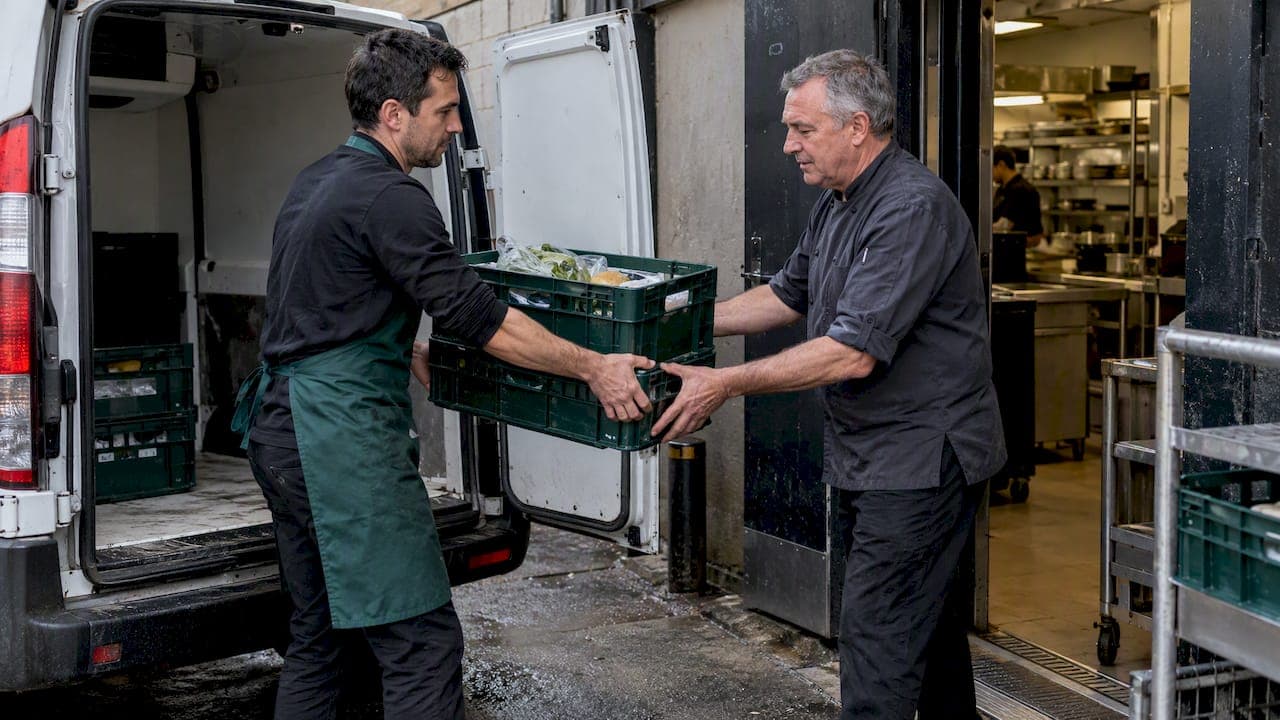
An interstore transfer is stock that leaves one of your venues and arrives at another, recorded on both sides so neither stocktake is thrown out. Done well, it takes about a minute per transfer and keeps food cost accurate. Done on a text message and a handwritten note, it quietly pushes one venue's cost of goods up and the other's down, and nobody can say why.
This guide covers how to run transfers in a restaurant, café, pub or club group: the steps, the paperwork, what Australian tax and alcohol rules mean for you, and where software earns its keep.
TL;DR
- Record every transfer as an outgoing entry at the sending venue and an incoming entry at the receiving venue, with quantity, unit, date and who handled it.
- Transfers between your own venues under the same ABN are generally internal movements, not sales, but keep the records for at least five years and confirm your setup with your accountant.
- Spirits and other underbond excisable goods are different: you need ATO permission to move them between excise-licensed premises.
- Use transfer data to reset par levels and ordering, so you stop moving the same stock around every week.
- A shared inventory platform makes both sides of a transfer visible in real time. Start a free trial to see it on your own venues.
Table of Contents
- What an interstore transfer is, and what it is not
- Why transfers matter more than they look
- A transfer process that works on a busy Saturday
- What to record on every transfer
- GST and tax: what Australian operators should know
- Transferring alcohol: a separate set of rules
- Transfer or reorder? Use the data to decide
- Common mistakes
- Where software helps
- Our view: transfers are a symptom, not just a task
- Run transfers inside PantryHub
- A starter checklist for your next transfer
- FAQ
- Sources
What an interstore transfer is, and what it is not
A transfer moves existing stock between two locations you own. Nobody is paid, no supplier is involved, and the stock has already been bought and counted into one venue's inventory.
That separates it from three things people mix it up with:
- A supplier order: new stock arriving from outside the business.
- A sale: stock leaving to a customer or a different business entity.
- Wastage or a write-off: stock that is gone, not relocated.
It also differs from retail "store transfers" that dominate search results for this term. Those usually describe warehouse-to-shop replenishment in a point-of-sale system. In hospitality, the typical case is smaller and messier: a café runs out of oat milk on Saturday morning, the sister venue has six cartons spare, and someone drives them over.
Why transfers matter more than they look
One carton of milk is trivial. A season of unrecorded transfers is not.
Here is what goes wrong when transfers are not recorded:
- The sending venue shows a shortage. At the next stocktake, the missing product looks like theft, over-portioning or waste.
- The receiving venue shows a surplus. Its food cost looks better than it really is, so nobody questions its ordering.
- Both venues' food cost percentages are wrong. Menu pricing, rostering and bonus decisions get made on bad numbers.
- Par levels drift. If a venue is always borrowing, its par is too low. If another is always lending, its par is too high. Without a record, you never see the pattern.
Industry consultants make the broader point that recalibrating par levels against actual consumption data, not chef intuition, is what turns purchasing savings into profit. Transfer records are one of the cleanest sources of that data, because each one is a small admission that a par level was wrong.
A transfer process that works on a busy Saturday
Keep it simple enough that a shift supervisor will do it in the middle of service. Five steps cover it.
1. Agree who can request and who can approve
Decide in advance. A common setup: any supervisor can request, and the venue manager or head chef at the sending site approves. This stops a venue emptying another's walk-in because it forgot to order.
2. Raise the transfer before the stock leaves
Log the item, quantity, unit of measure and the two venues. Use the same units as your stocktake (cartons, kilos, 700 mL bottles), not whatever is on the delivery docket. Mismatched units are the single most common source of transfer errors.
3. Pack and label for the cold chain
Chilled and frozen product needs to stay in temperature range in transit. If you move perishables regularly, your venue's temperature and refrigeration record-keeping should cover the journey too, not just the coolroom. Label with the product, date received originally and use-by date, so first-in, first-out survives the move.
4. Confirm receipt at the other end
The receiving venue checks what actually arrived and confirms the quantity. If six cartons left and five arrived, you want that discrepancy flagged the same day, not at month-end.
5. Let the stock value follow the stock
The receiving venue should take the product in at the cost it was bought at, not at a fresh price. Otherwise transfers quietly create profit at one venue and loss at the other. Cost-at-source keeps your group's total food cost unchanged by an internal movement, which is exactly what it should be.
What to record on every transfer
A good record answers who, what, when and why. Use this checklist:
| Field | Why it matters |
|---|---|
| Sending and receiving venue | Adjusts both stock-on-hand figures |
| Item, quantity, unit | Keeps stocktakes reconcilable |
| Cost per unit | Keeps food cost accurate at both sites |
| Date and time | Places it on the right side of a stocktake |
| Person who sent / received | Accountability, and someone to ask about discrepancies |
| Reason (stock-out, overstock, event, closure) | Feeds par level reviews |
| Received quantity vs sent quantity | Catches loss in transit |
The "reason" field is the one people skip and later wish they had. After three months, a report of transfers by reason will tell you which venues run short and on which items.
GST and tax: what Australian operators should know
The short version: moving general stock between your own venues is normally an internal management event, not a taxable sale. The ATO notes that supplies between members of a GST group are generally not taxable, and for most operators running several venues under one ABN, a transfer is not a supply at all, so no GST event is triggered.
Two cautions where you act on this:
- Different entities change the answer. If your venues are held in separate companies or trusts with separate ABNs, a transfer may be treated differently. Ask your accountant or BAS agent before you set up transfers across entities, and ask them to confirm how it should be recorded.
- Keep the records. The ATO says to keep business records for at least five years. Transfer logs support your stocktake figures and variance reports if you are ever asked to substantiate them.
This article is operational guidance, not tax advice. Your accountant owns the final call on your structure.
Transferring alcohol: a separate set of rules
Beer in kegs, wine and packaged spirits that have already been purchased duty-paid are ordinary stock for inventory purposes. But your liquor licence is tied to a specific premises, and state rules on storage and supply differ across NSW, Victoria, Queensland, South Australia and Western Australia. Check with your state liquor regulator before you routinely move alcohol between licensed venues, particularly if the venues have different licensees.
Underbond excisable goods are a different matter entirely. Your business needs permission from the ATO before it moves underbond excisable goods between excise-licensed premises or to a place of export. That mostly affects distilleries and breweries holding stock under bond, but if that is you, the transfer cannot be a casual van run.
Transfer or reorder? Use the data to decide
The cheapest stock is the stock you already own. Before ordering, check whether another venue is sitting on excess. But a transfer has a cost too: someone's time, fuel, and the risk of a quality hit on delicate product.
A rough rule of thumb:
- Transfer when the item is shelf-stable or robust, the distance is short, and the sending venue's excess is genuinely surplus to its own needs.
- Reorder when the product is delicate (fresh herbs, soft seafood), the distance is large, or a supplier delivers to both sites on the same day anyway.
- Fix the par level when the same item moves between the same two venues more than a couple of times a month.
That last point is where transfer history pays off. If your Brunswick café borrows from your Collingwood site every Friday, the problem is not the transfer, it is the order. A venue-tested beverage calculator is a useful reference when you are sizing par levels for events or peak weekends, though your own sales data should always win.
Common mistakes
- Recording only one side. The sending venue deducts, the receiving venue never adds. Stock vanishes from the group's books.
- Transferring after the stocktake. Stock moved on the night of a count ends up counted twice or not at all. Freeze transfers during counts.
- Using different item names per venue. "Full cream milk 2L" and "Milk FC 2 litre" will not reconcile. Standardise your item list across sites.
- No cost carried across. Leads to phantom profit and loss at venue level.
- Treating transfers as wastage. It hides the real reason stock is moving and breaks your waste reports.
- Letting it live in a group chat. Messages are not records. Nobody can report on them.
Where software helps
Paper and spreadsheets can handle two venues if everyone is disciplined. They struggle at three or more, with different people closing, and with a head office trying to see the whole picture. The pain points are predictable: duplicate entries, no confirmation at the receiving end, and no way to see stock levels at other sites before ordering.
A platform built for multi-venue hospitality gives you a shared item list, one stock-on-hand view per venue, and a transfer record both sides can see. If you want to go deeper on the multi-site side, these guides cover it:
- How multi-location inventory works for hospitality
- Inventory visibility across multiple sites
- Centralising multi-venue inventory control
- The common multi-location stock challenges
If you run a single site today but plan a second, set up your item list and units properly now. It is much easier than untangling two venues' naming later. Our small venue stock management guide is a good place to start.
Our view: transfers are a symptom, not just a task
We built PantryHub by chefs for chefs, and we have seen the same pattern in venue after venue. The transfer is rarely the problem. It is the first visible sign that a par level is off, a supplier order was missed, or a menu item is selling harder at one site than another.

So we think about transfers in two ways. First, make them frictionless: if recording takes longer than carrying the box to the car, it will not happen. That is why mobile-first matters. The person standing in the coolroom should be able to log it from their phone. Second, treat the transfer log as a report, not a record. Review it monthly. Which items move most? Between which venues? Is it always the same person asking? Those answers tell you where to adjust par levels and ordering days.
We would rather you transfer less because your ordering got smarter than transfer more because your records got better. Both are wins, but the second one is only the start.
— Admin
Run transfers inside PantryHub
PantryHub tracks stock in real time across one or many venues, with low-stock alerts, team access controls and supplier ordering in the same place. That means a supervisor can see whether another site has spare stock before placing an order, and your reports reflect where product actually went. Pricing is in Australian dollars and published openly:
- Starter: $39 per month
- Regular: $69 per month
- Pro: $99 per month
See the plans and pricing or start your free trial and load in a couple of venues. If you are in Perth, our restaurant inventory software page for Perth covers local details. For a wider look at what we offer, see our hospitality inventory software overview.
A starter checklist for your next transfer
- Confirm both venues operate under the same ABN, or check with your accountant.
- Use the shared item name and unit.
- Log the transfer before the stock leaves.
- Pack chilled goods properly and label dates.
- Confirm quantity received on arrival.
- Carry cost across at the original purchase price.
- Note the reason.
- Review the reasons monthly and adjust par levels.
FAQ
Do interstore transfers trigger GST?
Generally not, when the venues are under the same ABN, because the movement is internal rather than a sale. Supplies within a GST group are also generally not taxable. If your venues sit in separate entities, ask your accountant how to treat it before you start.
How long should I keep transfer records?
The ATO's guidance is to keep business records for at least five years. Transfer logs back up your stocktakes and variance reports, so keep them with the rest of your inventory records.
Can I move spirits between my venues?
Duty-paid bottles are normal stock, though your state liquor regulator's rules on licensed premises still apply. Underbond excisable goods are different and need ATO permission before they move between excise-licensed premises.
Should transfers count as wastage or purchases?
Neither. A transfer is its own movement type: stock out of one venue, stock into another, at the same cost. Booking it as wastage or a purchase distorts both venues' food cost percentages.
Sources
- BAS and GST tips, Australian Taxation Office
- Permission to move excisable alcohol products, Australian Taxation Office
- How to Reduce Food and Beverage COGS in Hospitality, Trace Consultants