

Stock management is defined as the practice of tracking, controlling, and replenishing every item a venue holds, from bottles behind the bar to tablecloths in storage, to protect profit and prevent waste. For small venue operators, this is not a back-office task. It is a direct revenue protection strategy. Bars and restaurants lose roughly 20% of revenue to inventory shrinkage on average. That figure means one in five dollars earned disappears before it reaches your bottom line. Understanding what stock management means for a small venue is the first step toward stopping that loss.
What does stock management mean for a small venue?
Stock management, also called inventory control, is the system you use to know exactly what you have, where it is, and when to reorder it. For a small venue, that covers everything from kegs and cocktail garnishes to candles and cleaning supplies. The goal is simple: never run out of what you need, and never hold more than you can use before it expires or loses value.
The industry term "inventory management" covers the same concept at a broader level. It includes purchasing decisions, supplier relationships, and demand forecasting. Stock control is the day-to-day execution of that strategy. Both terms apply directly to small venue inventory operations, and you will see them used interchangeably across the hospitality industry.

What separates a venue that profits from one that struggles is rarely the number of bookings. Venues lose money from untracked usage, waste, and unexplained shrinkage, not from empty calendars. Getting stock control right closes that gap.
What types of stock are involved in small venue management?
Small venues hold two broad categories of inventory, and most operators only track one of them well.
Consumable stock is what gets used up during events and daily service. This includes:
- Food and beverage items: spirits, wine, beer, mixers, garnishes, and food ingredients
- Single-use supplies: napkins, straws, takeaway containers, and cleaning products
- Merchandise: branded merchandise, gift cards, and retail items sold to guests
Capital or reusable assets are items that get deployed repeatedly but still need tracking. These include:
- Audio-visual equipment: microphones, projectors, speakers, and cables
- Linens and tableware: tablecloths, napkins, glassware, and cutlery
- Décor items: centerpieces, lighting rigs, signage, and props
Tracking specialty assets like AV equipment, linens, and décor prevents costly unnecessary replacements and rental expenses. A venue that cannot locate its projector the day before a corporate event will either pay to rent one or disappoint a client. Both outcomes cost money.
The key principle is that every item with a dollar value attached to it belongs in your inventory system. That includes items you might consider too small to track. A venue that loses 20 napkins per event across 150 events per year has lost 3,000 napkins. At any replacement cost, that adds up fast.
How does real-time stock tracking improve small venue operations?
Real-time stock tracking means your inventory count updates automatically as items are sold, used, or allocated to an event. You do not wait until the end of the week to discover you are out of a key ingredient or a piece of equipment is missing.
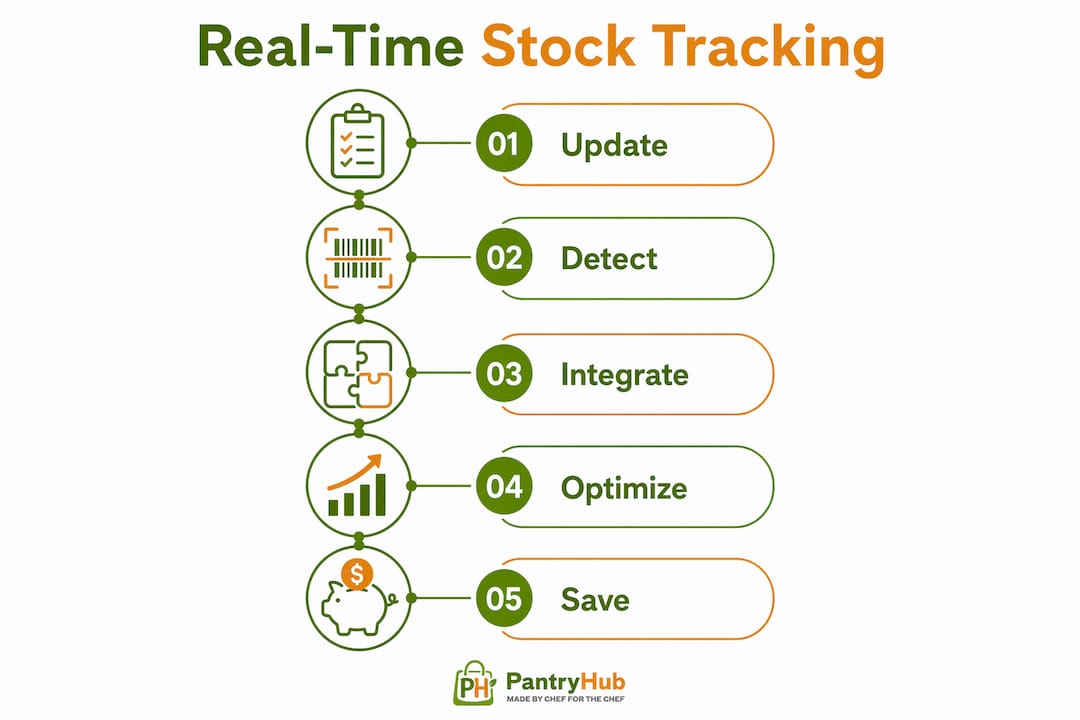
Real-time tracking integrated with POS systems enables automatic deduction of inventory at the point of sale, improving accuracy and preventing stockouts. Every drink poured, every plate served, and every item sold triggers an update in your stock count. This removes the manual counting step that most small venues skip because it takes too long.
The practical benefits go beyond accuracy. Real-time visibility lets you catch spillage patterns, identify which staff members are over-pouring, and spot theft before it compounds. It also prevents overselling. If your system shows you have 12 bottles of a house wine and a booking requests 15, you know before the event, not during it.
For venues that run both a bar and a kitchen, bar inventory tracking and food stock need to be visible in one place. Splitting them across two systems creates blind spots.
Pro Tip: Start with your highest-cost or highest-volume items first. Track your top 10 products accurately before you try to track everything. Staff adoption is far more likely when the system feels manageable from day one.
The simplest real-time setup for a small venue is a cloud-based inventory platform connected to your point-of-sale terminal. When a sale is recorded at the POS, the inventory count drops automatically. No spreadsheet update required. No end-of-shift counting. Just accurate numbers, available whenever you need them.
What are practical stock management techniques for small venues?
The most effective stock management techniques for small venues are the ones your team will actually use. Complexity kills adoption. Here are four methods that work in real operations.
-
Set par levels for every item. A par level is the minimum quantity you need on hand before placing a reorder. Setting par levels and reorder points based on usage and supplier lead time keeps inventory balanced and prevents both stockouts and overstocking. Calculate your par level by taking your average daily usage, multiplying it by your supplier's lead time in days, and adding a safety buffer. For a venue that uses 3 cases of beer per day and has a 2-day lead time, the par level is at least 6 cases plus buffer.
-
Run regular stocktakes. A stocktake is a physical count of every item in your inventory, compared against your records. Weekly stocktakes on high-value items and monthly counts on everything else catch discrepancies before they grow. The gap between your recorded stock and your actual stock is called shrinkage. Shrinkage comes from theft, spillage, spoilage, and recording errors. Regular counts make each source visible.
-
Use demand data to adjust orders. Your sales history tells you which items move fast on Friday nights versus Tuesday lunches. Use that data to order more before your busy periods and less before slow ones. This reduces spoilage on perishables and frees up cash that would otherwise sit on a shelf.
-
Train staff on portion control and handling. Over-pouring a spirit by 5ml per serve across 200 serves per week is a significant loss by the end of the year. Standard portion sizes, measured pours, and proper storage procedures reduce waste at the source. Training is a stock management technique, not just an HR task.
What challenges do small venues face in stock management?
Small venues face specific obstacles that larger operations do not. Recognizing them is the first step to solving them.
Common challenges include:
- Overstocking: Buying too much to avoid running out, then losing product to spoilage or expiry
- Understocking: Running out of key items during peak service, which costs sales and damages reputation
- Theft and shrinkage: Untracked losses from staff, guests, or poor handling procedures
- Inaccurate records: Manual entry errors that make your stock count unreliable from the start
The biggest misconception among small venue operators is that inventory management requires expensive, complex software. Simpler inventory systems are more effective for small businesses because complex software leads to low staff adoption. A system your team ignores is worse than no system at all.
"Venue owners often see inventory as logistics only, but it is fundamentally a revenue protection mechanism affecting client relationships and repeat bookings."
Linking inventory to event bookings prevents conflicts and ensures accurate stock allocation. When a client books your venue for a wedding and requests specific linen colors or a particular wine, your system should show immediately whether those items are available or already allocated to another event. Without that link, double-booking stock is easy and the client experience suffers.
The solution to most of these challenges is centralization. Putting consumables, equipment, and décor into one view, connected to your booking calendar, removes the guesswork from every event. You know what you have, what is committed, and what needs to be ordered before a problem occurs.
Key Takeaways
Effective stock management for small venues is the single most direct way to protect revenue, reduce waste, and deliver consistent client experiences without increasing bookings.
| Point | Details |
|---|---|
| Stock management protects revenue | Venues lose roughly 20% of revenue to shrinkage; tracking stock closes that gap. |
| Track both consumables and assets | Food, drinks, AV gear, and linens all need to be counted and monitored. |
| Real-time POS integration matters | Automatic stock deductions at point of sale eliminate manual errors and blind spots. |
| Simplicity drives staff adoption | The best system for a small venue is the one your team will actually use every day. |
| Link stock to event bookings | Connecting inventory to your calendar prevents double-allocation and client disappointment. |
Why stock management is really a revenue strategy
Most venue operators I have worked with treat stock management as something they will "sort out later," usually after a bad month. The problem is that by the time a bad month arrives, the losses have already been accumulating for weeks. Shrinkage does not announce itself. It just quietly reduces your margin until the numbers stop making sense.
The mindset shift that changes everything is this: stock management is not about counting bottles. It is about knowing your business. When you have accurate inventory data, you know your true cost of goods, your actual pour cost, and which events are genuinely profitable versus which ones look good on paper but drain your stock.
I have seen small venues with modest booking volumes run profitably because their operators tracked every item and ordered with precision. I have also seen busier venues struggle because nobody knew what was on the shelf until it was gone. The difference was not talent or effort. It was visibility.
The venues that adopt simple, consistent stock control early build a habit that compounds over time. Their ordering gets tighter, their waste drops, and their staff start to see inventory as part of their job rather than an inconvenience. That cultural shift is worth more than any single software feature.
Start with what you can manage today. A spreadsheet done consistently beats a platform used once a month.
— Admin
How Pantryhub supports stock management for small venues
Small venues need a system that works without a dedicated inventory manager on staff. Pantryhub is built for exactly that situation.
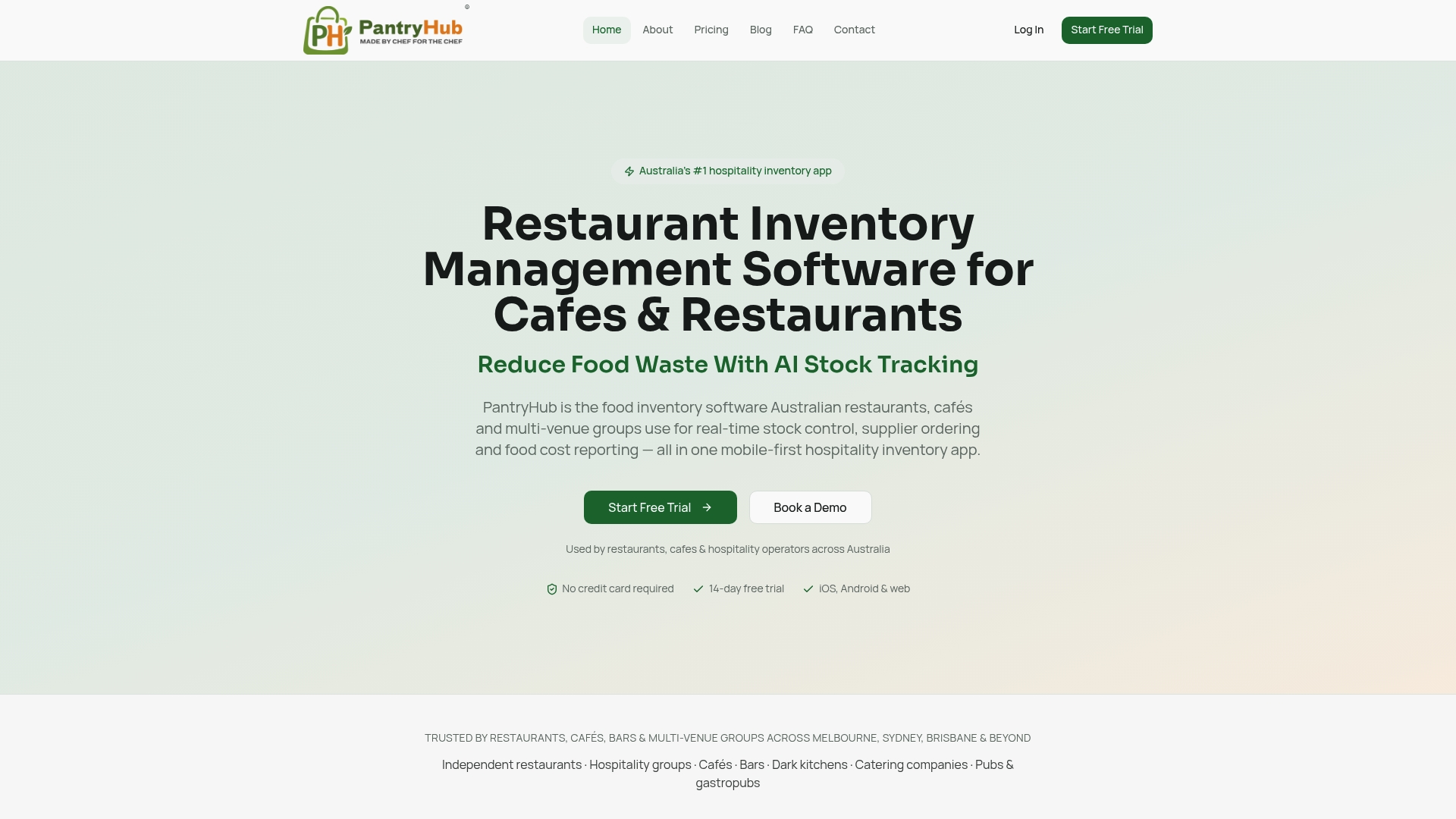
Pantryhub's hospitality inventory software connects stock tracking, supplier ordering, and low-stock alerts in one platform designed for restaurants, bars, cafés, and commercial kitchens. Real-time visibility across your entire inventory means you catch shortfalls before service, not during it. Automated reorder alerts replace the guesswork of manual checking. Supplier integration cuts the time spent on purchasing down to minutes. Whether you manage a single venue or multiple locations, Pantryhub gives you the stock control clarity that protects your margins every day.
FAQ
What does stock management mean for a small venue?
Stock management for a small venue means tracking every item you hold, from drinks and food to equipment and décor, so you always know what you have, what is committed, and what needs reordering. The goal is to prevent waste, avoid stockouts, and protect profit margins.
How does inventory shrinkage affect small venue profitability?
Bars and restaurants lose roughly 20% of revenue to inventory shrinkage on average. That loss comes from theft, spillage, spoilage, and recording errors, all of which a consistent stock control system can reduce significantly.
What is the best inventory system for a small venue?
The best system is the simplest one your team will use consistently. Complex platforms often see low staff adoption, which wastes the investment. Start with a cloud-based tool that connects to your POS and tracks your highest-value items first.
How often should a small venue do a stocktake?
High-value items like spirits and premium ingredients should be counted weekly. Full stocktakes across all inventory categories work well on a monthly cycle. Regular counts catch discrepancies early before shrinkage compounds.
Why should stock be linked to event bookings?
Linking inventory to bookings shows what stock is already allocated to confirmed events and what remains available. This prevents double-allocation errors, improves client communication, and ensures every event is properly resourced before the day arrives.