

Multi-location restaurant stock challenges are defined by three compounding forces: supply chain volatility, inconsistent inventory visibility, and demand variability across sites. The National Restaurant Association reports that 82% of operators faced higher food costs in 2026, driven largely by emergency procurement at non-contracted prices. For restaurant owners managing three or more locations, the standard playbook of spreadsheets and manual counts stops working fast. The solution requires integrated systems, local demand planning, and a clear-eyed view of where your stock control is actually breaking down.
1. What causes multi-location restaurant stock challenges?
Inventory discrepancies in multi-location restaurants trace back to one root problem: manual systems that cannot scale. Transparency gaps emerge once operations exceed three sites, because legacy spreadsheets and disconnected tools cannot surface errors fast enough to act on them. A misplaced decimal in one location's count can ripple into a chain-wide ordering error before anyone notices.
Siloed data makes the problem worse. When each site tracks stock independently, your central team has no unified view of what is on hand, what is moving, and what is sitting dead in a walk-in. Variance detection slows from hours to days. By the time a discrepancy surfaces, the financial damage is already done.
Fragmented supplier bases add another layer of complexity. When different sites use different vendors for the same SKU, you get inconsistent pricing, duplicate catalog entries, and substitutions that no one planned for. Each of those substitutions is a small margin leak. Across 10 locations, they add up to a serious profitability problem.
- Manual count errors cause stock discrepancies that take days to detect and correct.
- Siloed purchasing means no single view of spend, vendor performance, or stock levels.
- SKU duplication across sites inflates your catalog and complicates reordering.
- No centralized variance tracking leaves spoilage and shrinkage invisible until month-end.
Pro Tip: Set a weekly variance threshold for each location. Any site exceeding that threshold triggers an immediate count review, not a wait until the next scheduled stocktake.
2. How integrated inventory systems solve stock visibility problems
Integrated inventory management is the most direct fix for multi-unit restaurant logistics failures. Digital orchestration platforms connect procurement, point-of-sale data, inventory counts, and finance into one live system. That connection means a stockout at one site triggers an automatic reorder, not a phone call to a manager who may or may not act on it.

Real-time dashboards give operators a chain-wide view of stock levels without waiting for manual reports. Automated reorder points replace gut-feel purchasing. Purchase price variance monitoring flags when a vendor charges above the contracted rate, which is a signal most operators miss entirely until a quarterly review.
Inventory management at scale is a systems problem, not a people problem. Manual spreadsheet management becomes unsustainable past 10–20 locations without real-time data integration. Investing in the right platform early prevents the exponential cost of fixing broken processes later.
Key capabilities to prioritize when evaluating platforms for chains with three or more locations:
- Real-time stock tracking across all sites from a single dashboard
- Automated reorder points tied to actual consumption data, not estimates
- Supplier performance monitoring including fill rates and delivery accuracy
- Purchase price variance alerts to catch contract breaches immediately
- POS integration so sales data automatically adjusts inventory counts
Pro Tip: Before selecting a platform, map every data handoff in your current process. Procurement to receiving, receiving to storage, storage to prep. Any handoff that relies on a person writing something down is a failure point your system needs to eliminate.
Pantryhub is built specifically for this kind of multi-site visibility. Its hospitality inventory software connects stock tracking, supplier ordering, and reporting across all your locations in one place.
3. Why local demand planning prevents stockouts and spoilage
Treating multiple locations as a single inventory pool is one of the most common and costly mistakes in multi-location restaurant management. A downtown location near a sports arena needs different par levels on game nights than a suburban location with steady weekday lunch traffic. Applying the same reorder triggers to both guarantees you will either run out or overstock.
Local demand planning means adjusting par levels based on site-specific signals: local events, seasonal shifts, neighborhood demographics, and historical sales patterns. A location near a convention center should increase par levels for high-protein proteins and premium beverages during conference weeks. A beachside location needs different adjustments in summer versus winter.
The cost of ignoring local demand shows up in two ways. Stockouts force emergency purchases at premium prices, directly inflating food costs. Dead stock ties up cash and eventually becomes waste, which compounds the margin hit. Both outcomes are preventable with site-level planning.
Practical local demand planning strategies include:
- Event calendars integrated with inventory triggers so par levels adjust automatically before high-demand periods
- Site-specific reorder points based on each location's actual consumption rate, not a chain average
- Seasonal menu alignment that reduces the number of slow-moving SKUs during off-peak periods
- Weekly demand reviews at the site level, not just monthly chain-wide reports
The 2026 Operator's Guide to inventory visibility covers how to build site-specific demand signals into a centralized system without losing chain-wide control.
4. What are the hidden costs of poor stock management across locations?
The visible cost of poor stock management is food waste. The hidden costs are larger and harder to measure. Manual stocktakes are labor intensive, error prone, and require ongoing training as staff turns over. Every hour a manager spends counting stock manually is an hour not spent on service, training, or revenue-generating activity.
Emergency procurement is the most damaging hidden cost. When a location runs out of a key ingredient, the manager buys it locally at retail price. That price is often 30–50% above the contracted supplier rate. Multiply that across a chain with frequent stockouts, and the margin erosion is significant. The 82% of operators reporting higher food costs in 2026 are not all victims of market forces. Many are paying the price of reactive purchasing.
Dead inventory creates a different kind of cash flow problem. Stock that sits beyond its usable life locks up working capital and eventually gets written off. For a chain with 10 locations, even a modest dead stock problem at each site adds up to a material impact on cash flow.
| Hidden cost | Primary driver | Margin impact |
|---|---|---|
| Emergency procurement | Stockouts from poor par level management | High |
| Manual labor for stocktakes | No automated counting or cycle count tools | Medium |
| Dead stock write-offs | Inaccurate demand forecasting | Medium to high |
| Audit and compliance errors | Manual data entry mistakes | Low to medium |
| Staff training for inventory | High turnover plus complex manual processes | Medium |
Supply chain gaps should be treated as direct revenue threats, not just operational inconveniences. They affect kitchen throughput, labor efficiency, and guest satisfaction simultaneously.
5. Best practices for restaurant stock control across multiple sites
Effective restaurant stock control strategies at scale require discipline, standardization, and the right metrics. Cycle counting is the most underused practice in multi-location operations. Instead of a full monthly stocktake, cycle counting rotates through different product categories each week. This keeps counts current without shutting down operations for a full inventory day.
Workflow standardization matters just as much as technology. When every site uses the same receiving process, the same count sheets, and the same variance reporting format, your central team can compare data across locations without translation. Inconsistent processes make chain-wide analysis nearly impossible.
Tracking operational signals like emergency buy frequency and forced substitutions reveals supply chain health far better than purchase price alone. A vendor with a low unit price but a high substitution rate is costing you more than the price difference suggests. These metrics are the early warning system for supply chain problems before they become financial ones.
Key performance indicators every multi-location operator should track:
- Emergency buy rate per location per week
- Inventory turnover ratio by site and by category
- Spoilage and write-off rate as a percentage of total purchases
- Supplier fill rate and on-time delivery performance
- Variance between theoretical and actual food cost
Pro Tip: Audit your menu for stock control vulnerability. Dishes that rely on a single-source ingredient or a highly perishable item are your highest-risk items. Either build backup sourcing for those ingredients or redesign the dish to use a more stable substitute.
Backup vendor management is non-negotiable for chains beyond five locations. A single supplier failure should never shut down a location. Maintain pre-approved secondary vendors for your top 20 highest-volume SKUs, and review that list quarterly.
Key takeaways
Multi-location restaurant stock challenges require integrated systems and site-specific planning to control costs and maintain service consistency across all venues.
| Point | Details |
|---|---|
| Visibility gaps start at three sites | Manual systems fail past three locations; invest in real-time tracking before scaling further. |
| Local demand planning prevents dual losses | Site-specific par levels stop both stockouts and dead stock accumulation at the same time. |
| Hidden costs outweigh visible waste | Emergency procurement and manual labor costs often exceed the cost of food waste itself. |
| Track operational signals, not just price | Emergency buy rate and supplier fill rate reveal supply chain health better than unit cost alone. |
| Integration is the core fix | Connecting POS, procurement, and inventory data eliminates the manual handoffs where errors occur. |
What I've learned from watching operators scale past five locations
The operators who struggle most with multi-location stock management are not the ones who lack discipline. They are the ones who scaled their people before they scaled their systems. They hired more managers, added more spreadsheet tabs, and held more weekly calls, and then wondered why variance kept climbing.
The shift that actually works is treating inventory as a data problem from day one. Not a staffing problem. Not a training problem. A data problem. When your systems surface the right information at the right time, your managers make better decisions without needing more oversight from above.
What I find consistently underestimated is the cost of local demand blindness. Operators who run tight central control often do it by averaging demand across all sites. That average is wrong for every individual location. The downtown site is overstocked on items the suburban site runs out of every Friday. Both locations are losing money, just in different ways.
The other thing worth saying plainly: the technology investment pays back faster than most operators expect. The first month you catch a purchase price variance that would have gone unnoticed, or the first week you avoid an emergency buy because your system flagged a low-stock alert three days in advance, you start to see the real return. The operators who wait until they are in crisis to adopt integrated systems always pay more than the ones who moved early.
— Admin
Pantryhub gives multi-location operators real control over stock
Running stock across multiple restaurant locations without real-time visibility is like managing a kitchen blindfolded. Pantryhub is built specifically for restaurant groups that need chain-wide control without losing site-level detail.
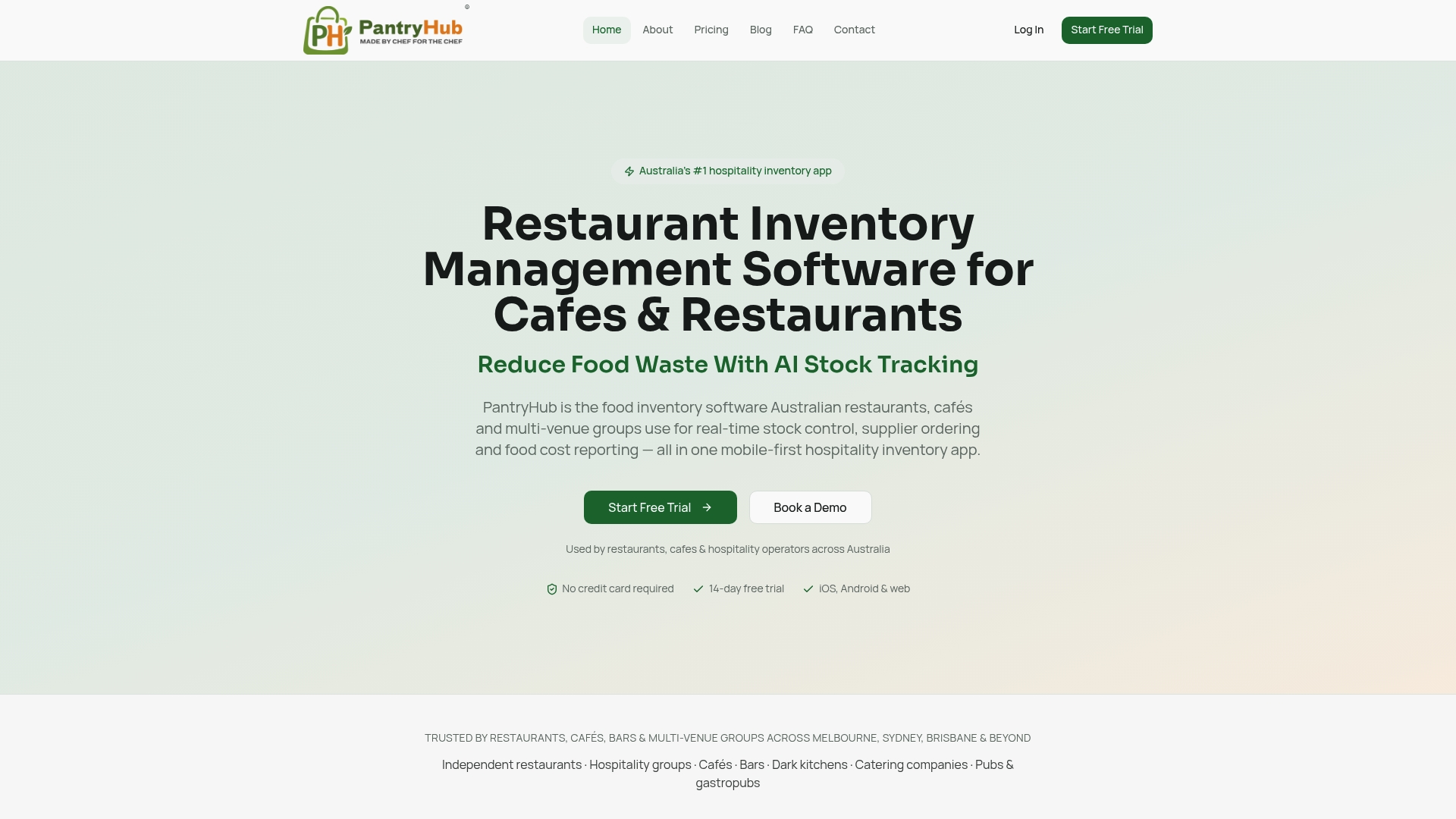
Pantryhub connects multi-location inventory management with supplier ordering, low-stock alerts, and reporting tools in one platform. You get a live view of every location's stock position, automated reorder triggers, and the data you need to catch variance before it becomes a write-off. Whether you run three locations or thirty, Pantryhub scales with your operation. Check Pantryhub's pricing to find the plan that fits your chain's size and complexity.
FAQ
What are the biggest stock challenges for multi-location restaurants?
The biggest challenges are inventory visibility gaps, inconsistent purchasing across sites, and emergency procurement costs from poor demand planning. These problems compound as the number of locations grows past three.
How does local demand planning reduce food waste?
Local demand planning adjusts par levels based on each site's actual sales patterns, events, and seasonality. This prevents both stockouts that trigger emergency buys and overstocking that leads to spoilage and write-offs.
When should a restaurant chain switch from spreadsheets to inventory software?
Inventory management becomes unsustainable on spreadsheets past 10–20 locations, but the problems start at three. Switching to integrated software before scaling past five locations prevents the most costly errors.
What KPIs should multi-location operators track for stock control?
Track emergency buy rate, inventory turnover ratio, spoilage as a percentage of purchases, and supplier fill rate. These metrics reveal supply chain health faster than food cost percentages alone.
How do integrated inventory systems reduce supply chain risk?
Digital orchestration systems model disruption impacts in real time and automate reorder workflows, so operators can respond to supply shortages before they cause stockouts or service failures.