
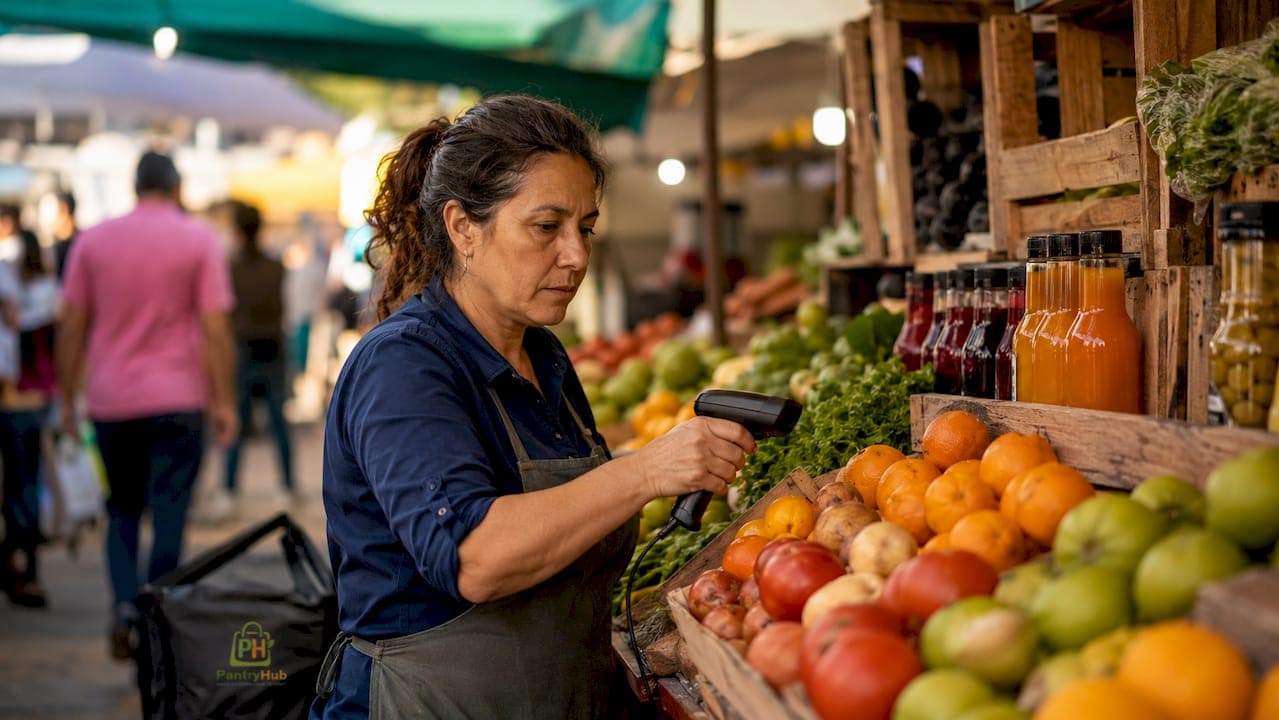
Digital stock management is the use of barcode scanning, real-time software, and cloud-based tracking to monitor inventory levels, movements, and ordering across a food service operation. The benefits of digital stock management for hospitality businesses are direct and measurable: reduced food waste, fewer ordering errors, lower carrying costs, and sharper financial control. Carrying costs drop by about 10% when businesses replace manual counts with digital tracking. Pantryhub is built specifically for restaurants, cafés, bars, and commercial kitchens that want these results without the complexity of enterprise software.
1. How does digital stock management reduce waste and spoilage?
Food waste is one of the largest controllable costs in any kitchen. Digital stock control addresses it at the source by giving you real-time visibility into what you have, what is moving, and what is sitting idle.

Better purchasing and rotation directly reduce obsolescence and waste costs. When your system flags that a product is nearing its use-by date, your team can prioritize it in prep or feature it on a special before it becomes a loss. Without that alert, the item quietly expires in the back of a walk-in cooler.
Key mechanisms that cut spoilage:
- Automated low-stock and expiry alerts prevent both over-ordering and forgotten stock
- Real-time stock levels stop duplicate orders placed by different team members
- Purchase history data shows which items consistently go to waste, so you can adjust par levels
- First-in, first-out (FIFO) tracking is easier to enforce when stock movements are logged digitally
Traceability records every movement by user, date, and time. That means you can trace a spoilage problem back to a specific delivery, supplier, or storage failure rather than guessing.
Pro Tip: Set automated reorder points 20% above your true minimum. This buffer absorbs delivery delays without triggering over-ordering.
2. How does digital stock management improve inventory accuracy?
Manual stocktakes are slow, error-prone, and disruptive to kitchen operations. Digital inventory management replaces clipboard counts with barcode scanning and live data sync, cutting the time and error rate of every stock check.
Real-time data improves the speed and accuracy of warehouse and kitchen operations. In a restaurant context, that means your team spends less time counting and more time cooking. A stocktake that once took three hours on a Sunday night can take under an hour with a mobile scanning app.
Steps that drive accuracy gains
- Scan on receipt. Log every delivery at the point it enters the kitchen. This eliminates the gap between what was ordered and what was actually received.
- Record waste in real time. When a prep cook trims a product or discards a damaged item, logging it immediately keeps your stock figures honest.
- Run cycle counts. Instead of one massive monthly count, check a rotating subset of items daily. Digital systems make this fast enough to be practical.
- Reconcile weekly. Compare your system's theoretical stock against a physical count once a week. Discrepancies shrink over time as the team builds the habit.
The cultural shift matters as much as the technology. A system is only as accurate as the data your team puts into it. Consistent real-time logging by kitchen staff is critical. Without buy-in, digital systems fail to deliver the visibility they promise.
Pro Tip: Assign one team member per shift as the "stock lead." That person owns all logging for that shift, which creates accountability and keeps data clean.
3. What financial advantages come from digital stock management?
The financial case for digital inventory management is straightforward. Less waste, fewer errors, and better purchasing decisions all reduce costs. The savings then free up cash that was previously locked in idle stock.
Automation frees working capital by aligning stock levels with actual demand rather than guesswork. A café that previously ordered two weeks of coffee beans "just in case" can safely carry one week when it has reliable consumption data. That freed cash can go toward equipment, staffing, or marketing.
The table below shows the primary financial benefits and their operational source:
| Financial benefit | What drives it |
|---|---|
| Lower carrying costs (avg. 10%) | Digital tracking reduces overstock and storage waste |
| Reduced spoilage losses | Expiry alerts and FIFO tracking prevent write-offs |
| Better cash flow | Purchasing aligned to real demand, not estimates |
| Fewer emergency orders | Reorder alerts prevent stockouts before they happen |
| Stronger supplier negotiations | Purchase history data shows volume and patterns clearly |
Digital stock systems give hospitality businesses a competitive edge by improving financial flexibility. When you know exactly what you spend on each ingredient category, you negotiate from a position of knowledge rather than habit.
4. How does digital stock management support multi-location operations?
Running inventory across two or more venues with spreadsheets is a coordination problem that compounds with every new location. Digital systems solve it by centralizing data in the cloud and syncing it across all sites in real time.
Cloud-based inventory systems synchronize data across locations and absorb growing volume without increasing errors or manual labor. That means adding a third or fourth venue does not require hiring a dedicated stock controller for each site. The system scales with the business.
Benefits specific to multi-location operators:
- Centralized reporting shows stock performance across all venues in one view
- Consistent par levels and recipes are enforced across locations without manual coordination
- Inter-venue transfers are logged and tracked, so stock moved between sites does not disappear from your records
- Group purchasing power becomes visible when you can see total consumption across all locations
Pantryhub supports multi-location inventory control from a single dashboard, which is particularly useful for restaurant groups managing different menus or supplier relationships at each site.
5. What strategic decisions does digital stock data enable?
The shift from reactive to predictive inventory management is the most underrated advantage of digital stock control. When you have clean, consistent data, you stop firefighting and start planning.
Advanced analytics and real-time data improve demand forecasting and inventory planning. A restaurant that tracks weekly consumption by ingredient can predict what it needs for a busy long weekend with far more accuracy than one relying on memory or last year's paper records.
Strategic decisions that digital data supports:
- Menu engineering: Identify which dishes consume the most expensive ingredients relative to their margin
- Seasonal purchasing: Spot consumption trends across months and adjust orders before demand peaks
- Supplier performance: Track delivery accuracy and pricing changes over time to support renegotiation
- Loss and shrinkage detection: Discrepancies between theoretical and actual stock flag theft or unrecorded waste early
Demand patterns, seasonal effects, and product lifecycle data integrated into a digital system sharpen forecasting beyond what any spreadsheet can deliver.
"Digital inventory's primary advantage is visibility. It moves businesses from reactive to predictive inventory management, turning daily guesswork into decisions backed by real consumption data."
The inventory accuracy and profitability connection is direct: better data produces better decisions, and better decisions protect your margins.
Key Takeaways
Digital stock management delivers its strongest results when real-time visibility, staff discipline, and accurate data work together across every shift and location.
| Point | Details |
|---|---|
| Waste reduction is immediate | Expiry alerts and FIFO tracking cut spoilage from the first week of use. |
| Accuracy requires staff buy-in | Digital systems only work when every team member logs stock movements consistently. |
| Financial gains compound over time | Lower carrying costs, less spoilage, and smarter purchasing all reduce costs simultaneously. |
| Multi-location control scales cleanly | Cloud-based systems sync data across venues without adding labor or errors. |
| Data enables proactive decisions | Consumption trends and traceability records support forecasting, menu planning, and supplier talks. |
What I've learned from watching kitchens go digital
The operators who get the most from digital stock management are not the ones with the best software. They are the ones who treat the system as a kitchen discipline, not an IT project.
Efficiency gains appear only after deliberate focus on skill development and process alignment. That matches what I have seen in practice. The first two weeks after a new system goes live are always the hardest. Staff revert to old habits. Counts get skipped. Data gets patchy. The managers who push through that period and hold the team accountable are the ones who see the real numbers shift.
The other thing most articles get wrong is the timeline. You will not see a 10% reduction in carrying costs in week one. You will see it after three months of clean data, consistent logging, and at least one full purchasing cycle where you actually used the system's recommendations instead of your gut. The technology is the easy part. The staff onboarding process is where the real work happens.
My honest advice: pick a system your team will actually use on a mobile device during a busy service, not one that requires sitting at a desktop after the rush. Adoption is everything.
— Admin
Pantryhub gives hospitality operators real inventory control
Pantryhub is built for the food service operators who need real-time stock visibility without the overhead of enterprise software. It handles low-stock alerts, supplier ordering, waste tracking, and multi-location reporting from a single platform designed for kitchens, not warehouses.
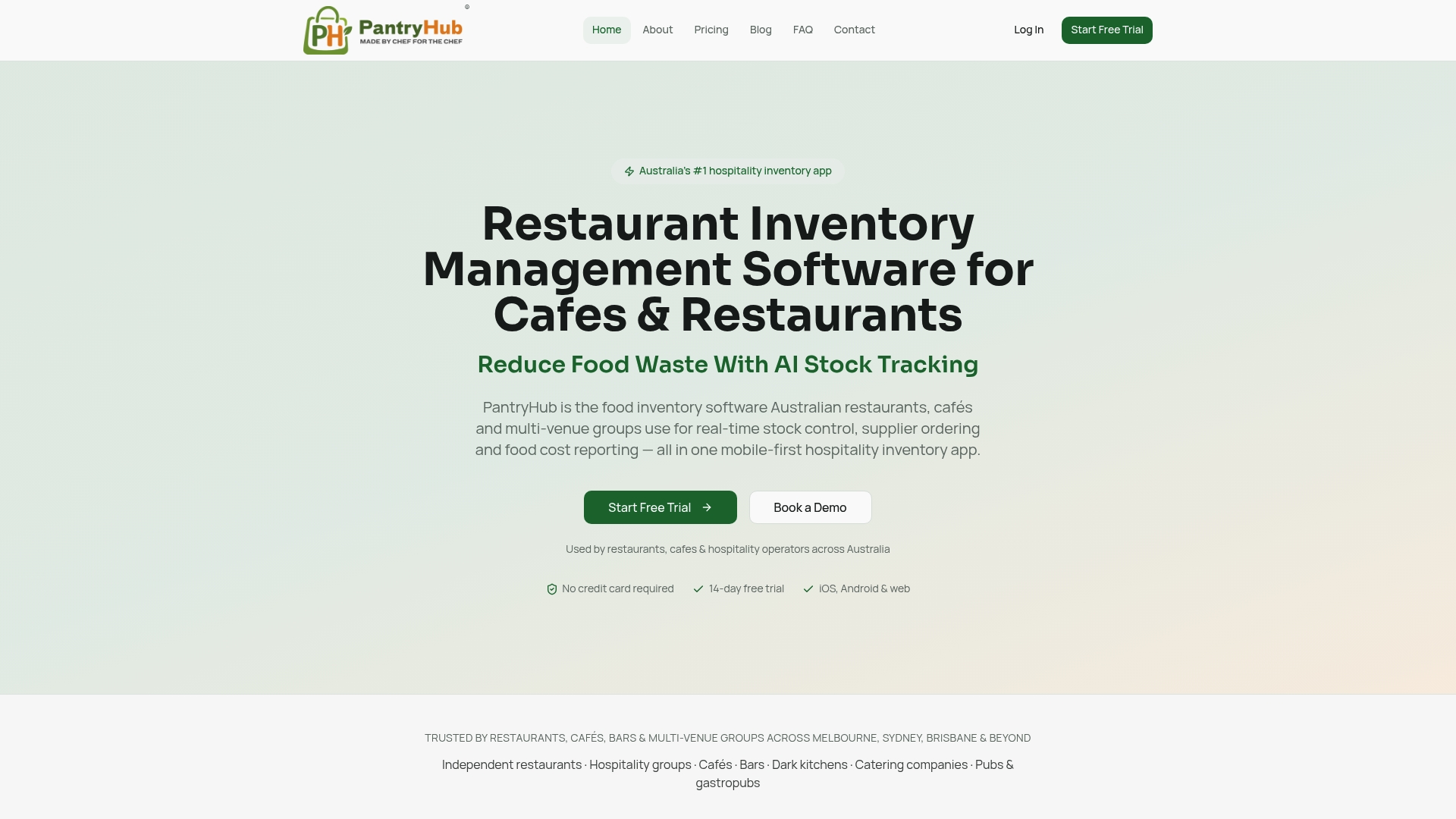
Whether you run a single café or a growing restaurant group, Pantryhub connects your stock data to your purchasing decisions in real time. The platform's hospitality inventory software is purpose-built for Australian food service businesses that want to reduce waste, improve accuracy, and stop losing money to inventory they cannot see. If you want to understand the full scope of what digital tools can do for your kitchen, the food inventory software guide is a practical starting point.
FAQ
What is digital stock management in hospitality?
Digital stock management is the use of software, barcode scanning, and cloud-based tools to track inventory levels, movements, and orders in real time. It replaces manual spreadsheets and paper counts with automated, accurate data.
How does digital stock management reduce food waste?
Real-time visibility into stock levels, expiry dates, and consumption patterns prevents over-ordering and catches slow-moving items before they spoil. Automated alerts and FIFO tracking enforce better stock rotation across every shift.
How long does it take to see the benefits of digital stock management?
Most operators see accuracy improvements within the first few weeks, but financial benefits like lower carrying costs typically appear after two to three months of consistent use and full staff adoption.
Can digital stock management work across multiple locations?
Yes. Cloud-based systems sync inventory data across all venues in real time, allowing group-level reporting and purchasing decisions without manual coordination between sites.
What is the biggest barrier to adopting digital stock management?
Staff consistency is the primary barrier. Operational gains from digital transformation become significant only after the full team is trained and logging stock movements reliably on every shift.