

Queensland restaurants are automating their ordering systems because the operational math has shifted. Labor is harder to find, customers expect faster and more accurate service, and manual order-taking silently eats into margins every single shift. Automated ordering, which covers everything from QR code table ordering to AI phone agents and integrated point-of-sale platforms, addresses all three problems at once. The results are concrete: near-perfect order accuracy compared to the accuracy typical of phone orders, recovery of multiple hours of staff time daily, and measurable increases in average spend per table. Here is why Queensland operators are making the switch, and what it actually looks like on the floor.
The core reasons Queensland restaurants automate ordering:
- Labor relief: Automated systems handle order entry so staff can focus on guests, not paperwork
- ✅ Order accuracy: Customers enter their own orders, cutting miscommunication and kitchen re-fires
- Higher average spend: Digital menus encourage exploration of add-ons and premium items without social pressure
- ⏱️ Faster service: Orders reach the kitchen instantly, reducing wait times during peak hours
- Real-time data: Every order builds a customer and inventory data record you actually own
- Staff retention: Removing repetitive tasks makes hospitality roles more rewarding and sustainable
- 24/7 ordering: Customers place orders outside business hours, capturing demand that would otherwise be lost
Why Queensland restaurants automate ordering: the operational case
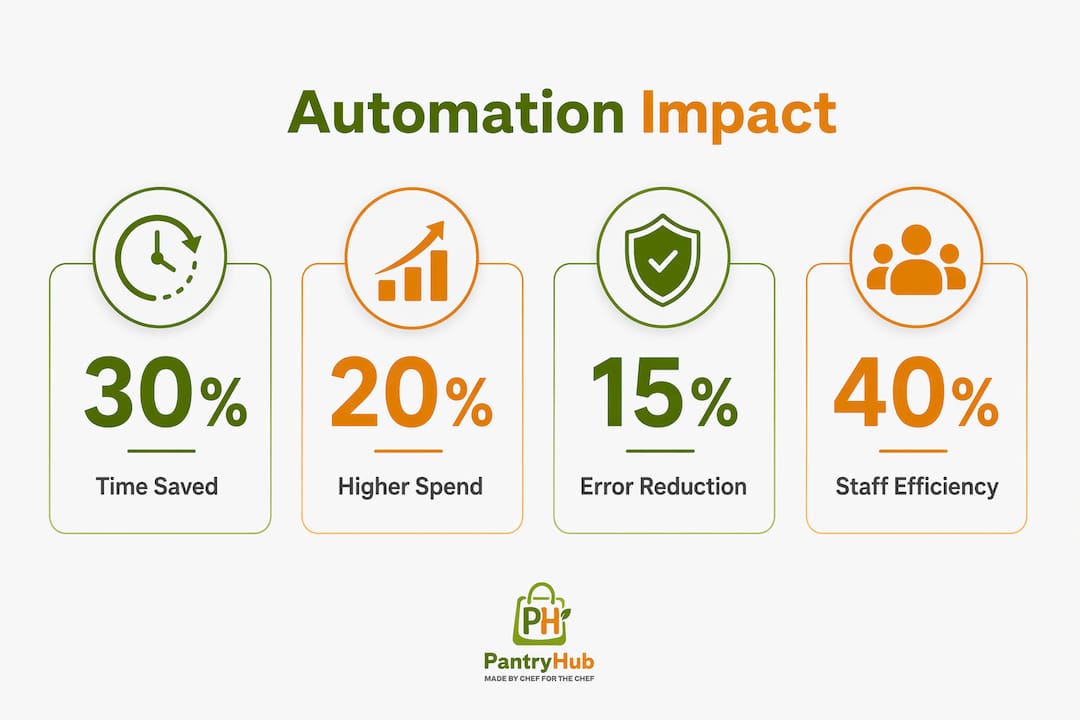
The most immediate payoff from automated ordering is time. When a customer calls to place an order, a staff member spends 3–7 minutes per call answering, reading back items, handling payment, and managing the line in front of them simultaneously. Multiply that across dozens of phone orders a day and you have burned several hours of labor on pure order-taking. Automated ordering recovers that time and redirects it to food preparation and guest interaction.
Order routing improves just as dramatically. When orders flow directly from a customer's phone or a table QR code into a kitchen display system, the telephone-game distortion disappears. The kitchen sees exactly what the customer typed, including modifiers, allergen flags, and special requests, formatted and ready to action. That clarity reduces re-fires, cuts food waste, and keeps the pass moving during a Friday night rush.
Supply chain and inventory management benefit too. When ordering data feeds directly into your stock tracking, you get real-time visibility on what is selling, what is running low, and what needs reordering before the next service. Understanding how kitchen ordering systems work end-to-end is what separates operators who use automation tactically from those who use it to genuinely reshape their cost structure.
Pro Tip: Before you go live with any automated ordering system, map your floor plan and service flow first. A structured rollout process tailored to your venue's layout prevents the disruption that sinks most implementations before they gain traction.
How automation reshapes staff roles and labor dynamics
Automation does not replace hospitality staff. It changes what they spend their time doing. The shift is from transactional tasks, writing down orders, reading back totals, answering the same phone questions repeatedly, to relational ones: advising guests on the menu, checking in on tables, and delivering the kind of attentive service that earns five-star reviews.
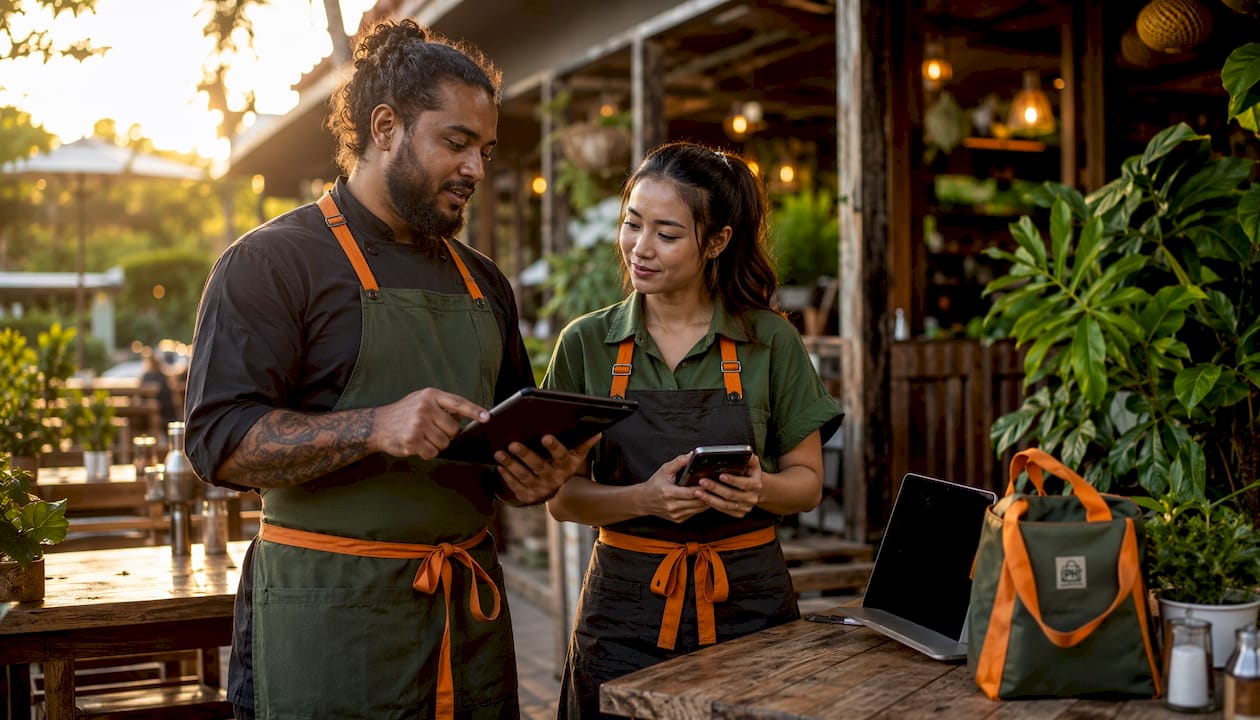
Post-pandemic staffing pressures made this shift urgent for Queensland venues. Smaller crews were expected to manage the same floor volume, and the math simply did not work without some form of digital support. Automation became a survival tool, letting lean teams handle larger sections without burning out. Staff retention improved at venues that adopted it, partly because the job became less grinding and partly because hospitality workers got back to the part of the role they actually enjoy.
The changes to frontline duties are worth spelling out clearly:
- Order-taking moves to the guest: Staff no longer write down orders or manage table-side payment processing for every cover
- Phone interruptions drop: AI phone agents capture bookings and standard inquiries 24/7, so floor staff stay focused on the room
- Upselling becomes systematic: Digital menus prompt add-ons automatically, removing the awkwardness of staff pushing extras
- Kitchen communication improves: Orders arrive formatted and pre-checked, so the pass runs cleaner and chefs spend less time clarifying tickets
For hospitality staff retention, this reallocation of duties matters more than most operators expect. When staff spend their shift on genuine hospitality rather than repetitive data entry, job satisfaction rises and turnover drops.
What automated ordering does for your customers
Guests notice the difference immediately. Wait times fall because orders reach the kitchen the moment a customer confirms them, not when a staff member gets a free moment to walk to the POS. Order accuracy improves because the customer controls their own input, achieving near-perfect accuracy compared to phone orders. And the ordering experience itself becomes less stressful for a wider range of guests.

Digital ordering reduces anxiety for customers who feel uncomfortable speaking to staff, whether due to social anxiety, language barriers, or simply not wanting to feel rushed. QR code menus let guests browse at their own pace, explore the full menu without a server hovering, and add items whenever they want rather than waiting for someone to pass by.
The customer experience benefits stack up across several dimensions:
- Reduced wait times: Orders go straight to the kitchen without a staff relay step
- Higher accuracy: Customer-entered orders eliminate phone miscommunication and misheard items
- Menu exploration: Guests discover premium add-ons and specials they would skip under time pressure
- Accessibility: Language barriers and social anxiety become non-issues with a visual, self-paced digital menu
- Ordering autonomy: Customers add to their order whenever they want, not only when a staff member is available
- Consistent experience: Every visit delivers the same reliable ordering process, which builds repeat behavior
Online orders average 15–20% higher ticket sizes compared to phone orders, driven by visual menu browsing, built-in upsell prompts, and the removal of time pressure. That is not a marginal improvement. For a venue doing serious takeout volume, it compounds quickly.
Emerging technology shaping restaurant automation in 2026
The ordering automation picture in 2026 goes well beyond QR codes. The most forward-looking Queensland venues are building unified platforms where every order channel, dine-in, takeout, delivery, and phone, feeds into a single kitchen display and inventory system. That integration is what makes automation genuinely powerful rather than just a convenience feature.
Key technology trends driving adoption right now:
- AI phone agents: Systems like those offered by Nuwa Technology answer calls during service, take bookings, handle common questions, and escalate unusual requests to staff with full context. A missed call is a missed booking; AI handles the predictable volume so your team stays on the floor.
- Integrated POS platforms: Modern point-of-sale systems connect QR ordering, delivery platforms, kiosk ordering, and kitchen displays in one operating layer, eliminating the duplicate admin of managing separate tools
- Unified menu management: Update prices, mark items unavailable, and push promotions across every channel in seconds from one dashboard
- Automated inventory sync: Orders trigger real-time stock adjustments, so you know exactly what is running low before service ends
- Customer data capture: Every order builds a profile with order history, preferences, and spend patterns that you own outright, not locked inside a third-party app
For a deeper look at how these systems connect, the 2026 guide to Australian restaurant software integrations covers the specific platforms and connection points Queensland operators are using right now.
The strategic advantage of a unified platform is clearest during peak hours. When all order channels sync to the same kitchen communication system, service quality holds up under volume rather than fragmenting across disconnected screens and tablets.
What Queensland operators have learned from going digital
The experience of Pancakes on the Rocks, a multi-venue group operating across New South Wales and Queensland, is one of the clearest illustrations of what automated ordering actually delivers in practice. General Manager Nelson Tromp was candid about the initial motivation: the group could not find enough staff coming out of COVID, and customers were ready to return. Digital ordering through me&u, integrated with PowerEPOS, was the solution that let them serve a full floor with a lean team.
What happened next surprised even the operators themselves. Average spend increased, service speed improved, and customers who had never been comfortable ordering through a staff member found the QR code experience genuinely better for them.
The transition itself was smoother than the team expected. Staff who initially worried about their roles found that automation freed them from the mundane writing-down-orders part of the job and gave them more time for the interactions that drew them to hospitality in the first place. The back-end data visibility was an unexpected bonus: the ability to drill down into what actually sold, rather than relying on anecdotal impressions, changed how the group planned menus and staffing.
The lesson for Queensland operators considering the move is straightforward. Vendor relationships matter. Pancakes on the Rocks succeeded partly because their technology partners adapted their product to the venue's specific needs rather than forcing a generic setup. A well-planned venue scheduling approach and a technology partner willing to customize the rollout are what separate a smooth transition from a disruptive one.
Key takeaways
Queensland restaurants that automate ordering gain measurable efficiency, better staff focus, and higher customer satisfaction, with the strongest results coming from venues that integrate ordering with inventory and kitchen systems from day one.
| Point | Details |
|---|---|
| Operational efficiency | Automated ordering recovers multiple hours of daily staff time previously spent on manual order entry and phone management. |
| Order accuracy | Customer-entered digital orders deliver near-perfect accuracy compared to phone orders, cutting re-fires and waste. |
| Higher average spend | Digital menus drive 15–20% higher ticket sizes compared to phone orders by enabling unhurried menu exploration and automatic upsell prompts. |
| Staff and labor benefits | Removing repetitive order-taking tasks lets staff focus on guest interaction, improving both service quality and staff retention. |
| Pantryhub's role | Pantryhub connects inventory tracking, supplier ordering, and real-time stock visibility to your ordering workflow, giving Queensland venues complete kitchen control. |
The real reason automation works in Queensland hospitality
The conventional wisdom treats restaurant automation as a cost-cutting play. Cut labor, reduce errors, save money. That framing is not wrong, but it misses the more important shift happening in Queensland venues right now.
The operators who get the most from automated ordering are not the ones who use it to run with fewer staff. They are the ones who use it to change what their staff actually do. When a server stops being an order-taker and starts being a genuine host, the dining experience changes in ways that no technology can replicate on its own. The technology handles the transaction. The person handles the relationship.
There is also a data dimension that most operators underestimate. Every automated order builds a record: what sold, when, at what price, to which customer profile. Over time, that record becomes the most accurate planning tool a venue has. It replaces gut feel with evidence, and it compounds. The venue that has been running automated ordering for two years has a forecasting advantage over the one that just switched.
The hesitation most Queensland operators feel before adopting automation is understandable. Hospitality is a people business, and anything that feels like it might reduce human connection deserves scrutiny. But the evidence from venues like Pancakes on the Rocks points in the opposite direction. Automation, done thoughtfully, does not reduce human connection. It concentrates it where it matters most.
Pantryhub gives your kitchen complete ordering and inventory control
Running automated ordering without real-time inventory visibility is only half the picture. Pantryhub is the platform that connects both sides, built specifically for Queensland restaurants, cafés, bars, and commercial kitchens by people who understand what a busy service actually looks like.
With Pantryhub's hospitality inventory software, you get smart stock tracking, low-stock alerts, supplier integration, and food cost reporting in one place. When your ordering system captures a sale, Pantryhub updates your stock levels in real time, so you always know what to reorder before you run out. Whether you run a single venue or a multi-location group across Queensland, Pantryhub gives you complete visibility from anywhere. Local onboarding support and 24/7 access mean you are never left figuring it out alone during a Saturday night service.
Ready to connect your ordering and inventory in one platform? Start your free trial and see what full kitchen control actually feels like.