
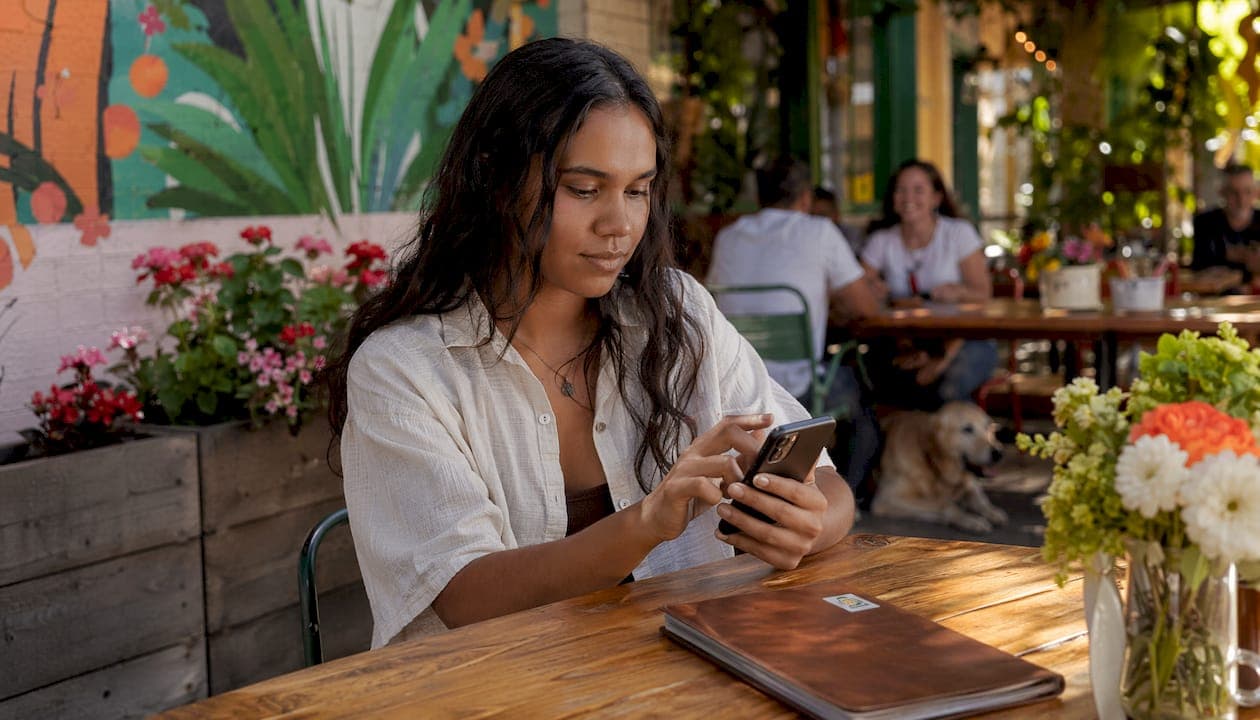
Mobile ordering apps are defined as digital platforms that let guests browse menus, place orders, and pay directly from a smartphone or tablet, without waiting for staff. The role of mobile ordering app in Australian hospitality has shifted from a convenience feature to a core operational tool. Venues using these systems report measurable gains in order accuracy, staff efficiency, and average spend. This guide covers what the data shows, what real Australian venues have achieved, and what managers need to know before implementing a digital ordering solution in 2026.
How do mobile ordering apps improve operational efficiency in Australian hospitality?
Mobile ordering apps reduce the manual workload that slows down service during peak hours. When a guest places an order through a QR code or browser-based interface, that order routes directly to the kitchen display system. Staff no longer transcribe orders by hand, which cuts errors and frees up time for higher-value tasks.
The labor impact is significant. Mobile ordering automates routine logistics, helping venues address staff shortages by freeing team members for genuine hospitality work like greeting guests and resolving issues. Think of it as a team member who never calls in sick and never needs overtime.
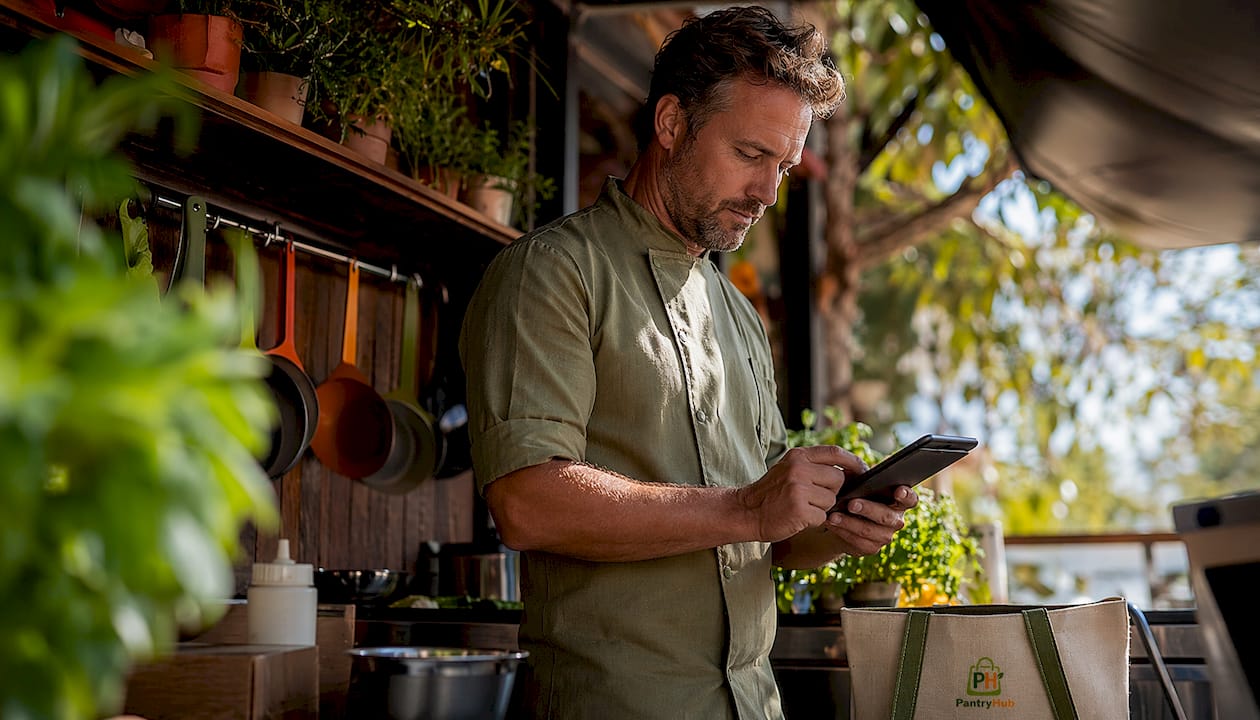
Ingot Hotel Perth is a clear example of what this looks like in practice. Integrated mobile ordering saved 2–3 staff hours per night by automating phone order handling. Those hours were redirected to guest-facing service, not administrative catch-up.
Key operational improvements managers see after implementation include:
- Fewer order errors because guests input their own selections directly
- Faster order flow from table to kitchen without a staff relay
- Reallocation of staff time from order taking to service and problem-solving
- Consistent order handling during peak periods without adding headcount
Pro Tip: Before going live, map every step of your current order flow from guest request to kitchen ticket. Identify the three biggest friction points. A mobile ordering app should fix those specific bottlenecks, not just add a new channel.
What are the key customer engagement benefits of mobile ordering apps?
Customer engagement improves when guests feel in control of their experience. Mobile ordering gives them that control. They browse at their own pace, customize items without repeating themselves, and pay when they are ready. That autonomy reduces perceived wait time even when the kitchen is busy.
One finding stands out for Australian operators planning their rollout. 91% of customers using QR ordering say not having to download a standalone app is critical to their willingness to use it. Browser-based ordering removes the biggest barrier to adoption before a guest even looks at the menu.
"Customer resistance to mobile ordering is mostly about maintaining choice, not technology aversion. Venues that offer mobile ordering as an option alongside traditional service see higher adoption and far less pushback."
The engagement benefits extend beyond convenience:
- Higher order accuracy because guests confirm their own selections
- Upselling through visuals since digital menus with photos and pairing suggestions outperform verbal upsells
- Multilingual support for venues in multicultural precincts, removing language barriers at the point of order
- Hybrid service flexibility so guests who prefer staff interaction can still have it
Venues offering mobile ordering as a choice rather than a replacement for human service see higher adoption and less resistance. The technology works best as an option, not a mandate.
How do mobile ordering apps drive revenue growth for Australian venues?
Revenue growth from mobile ordering comes from three sources: higher average order values, faster table turnover, and new income streams that were previously impractical to manage manually.
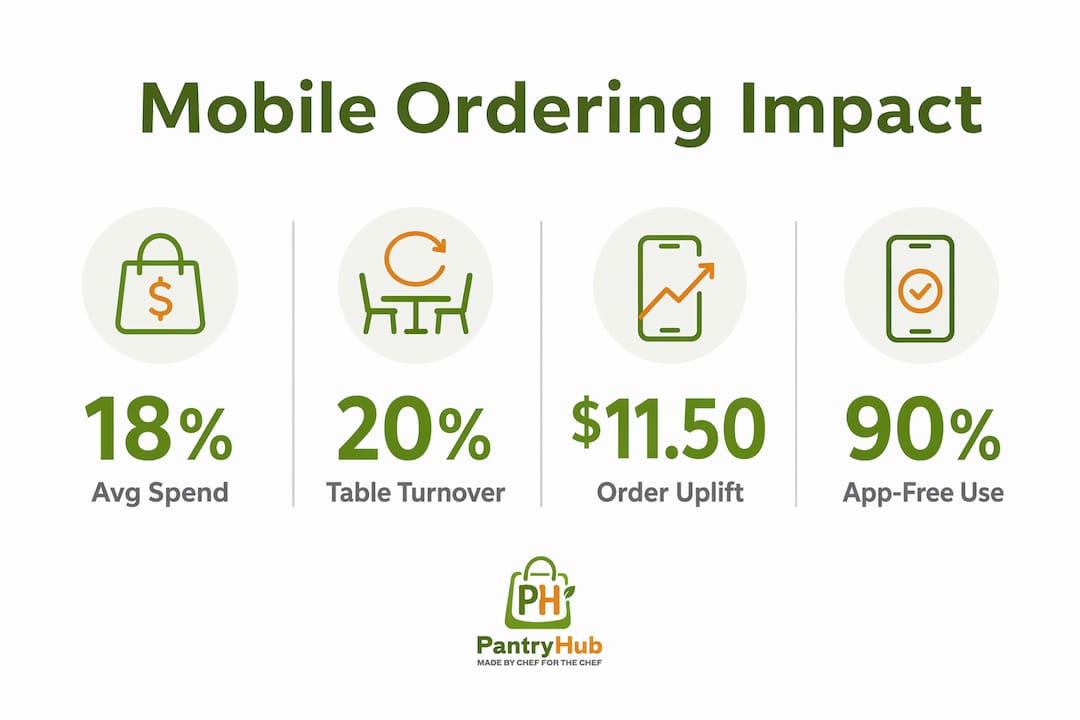
On average order value, the data is consistent. QR ordering platforms increase average spend by 12–18% as customers browse menus at their own pace with rich visuals and upsell prompts. Guests who feel no pressure from a waiting server spend more time considering add-ons and premium options.
Ingot Hotel Perth recorded an $11.50 average order uplift per room service check after implementing integrated mobile ordering. Across hundreds of orders per week, that figure compounds into meaningful monthly revenue.
Table turnover is the second lever. Faster table turnover of 15–20% with QR ordering enables more covers per service without adding seats or staff. A venue doing 80 covers per dinner service could realistically serve 12–16 additional guests per shift with the same floor plan.
| Revenue driver | Mechanism | Reported impact |
|---|---|---|
| Average order value | Visual menus and upsell prompts | 12–18% increase |
| Table turnover | Faster ordering and payment cycle | 15–20% improvement |
| Room service checks | Automated upselling and convenience | $11.50 per order uplift |
| New revenue streams | Shuttle bookings, minibar, ancillary services | Venue-specific |
Pro Tip: Use your digital menu to promote your three highest-margin items with a photo and a short description. Place them at the top of each category. Guests who order digitally are far more likely to choose items they can see.
What technical factors determine successful implementation?
The technology behind a mobile ordering app matters less than how well it connects to your existing systems. POS integration with systems like Micros Simphony is the single most important factor in capturing efficiency gains. Without it, orders arrive on a separate screen, staff must re-enter them manually, and the workload increases rather than decreases.
A practical implementation checklist for Australian managers:
- Confirm POS compatibility before selecting any ordering platform. Ask vendors for a live integration demo with your current system.
- Choose browser-based QR ordering as your primary channel. The 91% preference rate for no-app-download solutions makes this the lowest-friction option for most venues.
- Keep human service as an option on every table. Post a QR code alongside a note that staff are available. This protects the experience for guests who prefer it.
- Connect to your kitchen display system so orders appear in real time without a staff relay step.
- Test with a single section first. Run a two-week pilot on one area of the venue before a full rollout.
For restaurant software integrations in Australia, the venues that see the highest gains are those that treat mobile ordering as one node in a connected system, not a standalone product. Ordering, kitchen display, inventory, and payment should all talk to each other.
Guzman y Gomez pushed this principle further in june 2026 by integrating mobile ordering into Apple CarPlay, letting customers order and pay directly from their vehicle dashboard. That move reduced friction for repeat customers in transit and increased visit frequency. It is an early signal of where the category is heading.
What are the emerging trends shaping mobile ordering in Australia?
The next phase of mobile ordering in Australian hospitality moves beyond the table. Several trends are already visible in 2026 and will define the category over the next two years.
- Vehicle-integrated ordering. Guzman y Gomez's Apple CarPlay launch shows that ordering will extend into commute and transit moments, not just seated dining.
- AI-powered order assistants. Venues are beginning to test AI tools that handle multilingual ordering, personalized recommendations, and dietary filtering without staff involvement.
- Contactless payment as a default. Guests increasingly expect to pay through the same interface they ordered from, without a separate terminal interaction.
- Labor-driven automation. Australia's ongoing hospitality labor shortage makes automation not a preference but a practical necessity. Mobile ordering acts as a reliable team member that works every shift without overtime.
- Inventory-linked menus. The most advanced venues are connecting their digital menus directly to mobile stock management systems so that sold-out items disappear from the menu in real time, eliminating guest disappointment and staff awkwardness.
The venues that build connected systems now will have a structural advantage as customer expectations continue to rise. Digital ordering is no longer a differentiator. It is becoming the baseline.
Key Takeaways
Mobile ordering apps deliver the strongest results in Australian hospitality when they are integrated with POS systems, offered as a guest choice rather than a mandate, and connected to inventory and kitchen workflows.
| Point | Details |
|---|---|
| POS integration is non-negotiable | Without it, mobile ordering adds workload instead of reducing it. |
| Browser-based ordering wins adoption | 91% of customers prefer no app download, making QR browser ordering the default choice. |
| Revenue lifts are measurable | Average spend increases 12–18% and table turnover improves 15–20% with QR ordering. |
| Hybrid service protects the experience | Keeping human service as an option reduces resistance and broadens adoption. |
| Labor savings are real and immediate | Venues like Ingot Hotel Perth saved 2–3 staff hours per night through automation. |
Why I think most venues are still leaving money on the table
Most hospitality managers I speak with have heard about mobile ordering apps. A surprising number have tried one and quietly shelved it after a rocky rollout. The reason is almost always the same. They picked a platform for its interface and ignored the integration question until it was too late.
The technology itself is not complicated. What is complicated is getting your POS, kitchen display, and inventory systems to talk to each other without a staff member manually bridging the gaps. Venues that skip that step end up with a beautiful QR code that creates more work, not less. That experience poisons the well for future adoption.
The other mistake I see is treating mobile ordering as a replacement for service culture rather than a support for it. Guests who feel forced into a digital experience they did not choose will leave a review about it. Guests who discover they can order another round without flagging down a server will order that round. The difference is choice.
My honest recommendation is to start with how kitchen ordering systems work before you evaluate any front-of-house app. If your kitchen workflow is not ready to receive digital orders cleanly, no amount of front-end polish will save the guest experience. Fix the back end first. The revenue follows.
— Admin
How Pantryhub supports venues running mobile ordering
Running mobile ordering without tight inventory control creates a new problem. Orders come in faster, but your kitchen runs out of key ingredients mid-service because no one updated the stock count.
Pantryhub is built specifically for Australian restaurants, cafés, bars, and commercial kitchens. It tracks stock levels in real time, sends low-stock alerts before service, and connects supplier ordering directly to your kitchen workflow. When your mobile ordering volume increases, Pantryhub keeps your hospitality inventory accurate so your menu stays reliable. Whether you run one venue or several, Pantryhub gives you full visibility across every location from a single dashboard. Faster ordering only works when the pantry behind it is under control.
FAQ
What is the role of a mobile ordering app in Australian hospitality?
A mobile ordering app lets guests place and pay for orders directly from their device, reducing staff workload, improving order accuracy, and increasing average spend. In Australian hospitality, these apps address both labor shortages and rising guest expectations for faster, contactless service.
Do customers need to download an app to use mobile ordering?
No. 91% of customers prefer browser-based QR ordering that requires no app download. Venues should prioritize browser-based solutions to maximize adoption and minimize friction at the point of order.
How much can mobile ordering increase revenue?
QR ordering platforms increase average spend by 12–18% through visual menus and upsell prompts. Ingot Hotel Perth recorded an $11.50 uplift per room service check after implementing integrated mobile ordering.
Does mobile ordering work without POS integration?
Without POS integration, mobile ordering typically increases administrative workload rather than reducing it. Staff must re-enter orders manually, which negates the efficiency gains and creates new error points.
Should mobile ordering replace staff entirely?
No. Venues that offer mobile ordering as an option alongside traditional service see higher adoption and less guest resistance. The most effective model keeps human service available for guests who prefer it.