

Scalable restaurant software in Australia is defined as a cloud-based platform that centralizes inventory, menu, and staff management across one or more venues from a single dashboard. Unlike traditional point-of-sale systems locked to a single terminal, these platforms give you real-time visibility across every location, whether you run one café in Adelaide or ten restaurants across Sydney and Melbourne. The industry term for this category is "enterprise restaurant management software," though "scalable restaurant software" captures the growth-focused intent most Australian operators are searching for. This guide covers what is scalable restaurant software Australia, which features matter most, how to evaluate your options, and what pitfalls to avoid before you sign a contract.
What are the essential features of scalable restaurant software in Australia?
Cloud-based multi-site management is the defining feature of any platform worth considering. It means menu updates that once took weeks now take minutes, pushed simultaneously to every location. Consolidated reporting gives you group-wide KPI tracking without manually pulling data from separate systems.
Real-time inventory tracking sits at the core of operational efficiency. Platforms like Pratham POS offer group inventory aggregation, consolidated purchasing, and real-time transfer of surplus stock between venues. That last capability alone can cut food waste significantly, because a venue running low on chicken can pull from a sister site rather than placing an emergency order at a premium price.
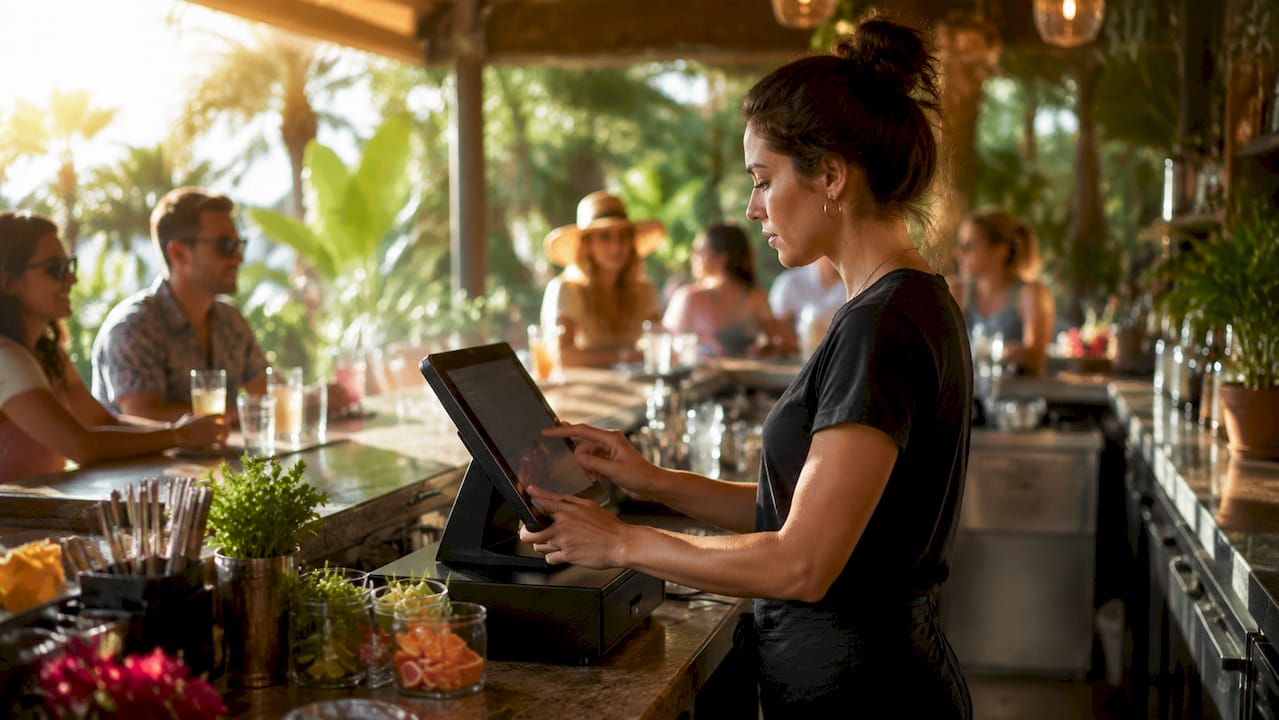
Staff scheduling and labor compliance tools are non-negotiable for Australian operators. Australia's hospitality award rates and penalty structures are among the most complex in the world. Software that does not account for Fair Work Act requirements will create payroll errors that cost you more than the software saves.
Offline mode is a feature many operators overlook until they need it. Offline functionality keeps your POS running during internet outages, which is especially critical for restaurants in regional or remote Australian locations where connectivity is unreliable.
Pro Tip: Choose a platform with modular architecture. This lets you add POS, inventory, or kitchen display system modules one store at a time, so you pay for what you use and expand without replacing your entire tech stack.
Feature comparison: full-scale vs. entry-level platforms
| Feature | Full-scale platform | Entry-level platform |
|---|---|---|
| Multi-site dashboard | Yes, centralized | No, per-venue only |
| Real-time inventory sync | Yes, across all locations | Limited or manual |
| Offline mode | Yes, automatic failover | Often unavailable |
| Labor compliance tools | Australian award-aware | Generic, requires manual setup |
| API integrations | Open, third-party ready | Closed or limited |
| Reporting | Group-wide KPI benchmarking | Single-venue summaries |
How to choose the right scalable restaurant software for your Australian business
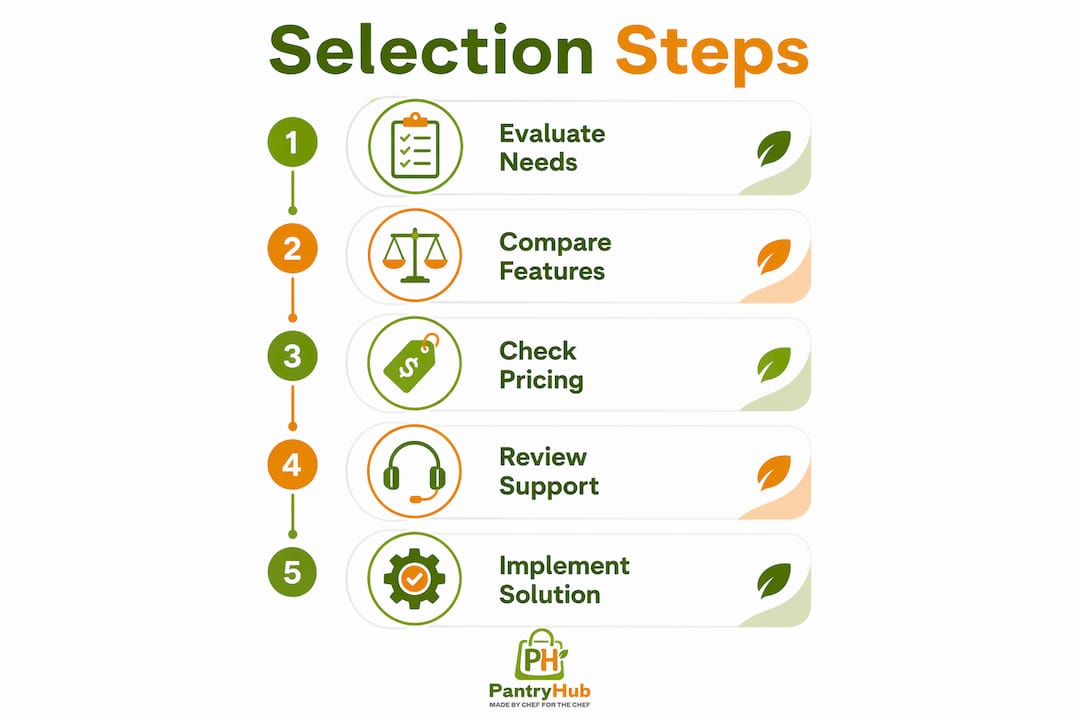
The evaluation process for restaurant management software should follow a structured 12-point checklist covering inventory depth, labor management, API connectivity, payment transparency, offline capability, and local support. Rushing this process is the most common mistake operators make. A proper evaluation spans 3–6 months to align the software with a realistic 3-year growth plan.
Pricing for Australian restaurant software typically runs $35–$99 per location per month. That range reflects a wide gap in capability, so the price tag alone tells you very little. What matters more is whether the contract is month-to-month or locked into a multiyear agreement.
Month-to-month contracts are strongly advised over multiyear agreements. Hardware financing costs are often buried inside long-term contracts, making the true cost invisible until you try to exit. Always insist on data export rights before signing anything.
Payment processing transparency is another area where operators get caught off guard. You need to know upfront whether payment processing is bundled into the platform or connected through a third party. Bundled solutions offer convenience. Third-party connections often offer better negotiable rates and cleaner data portability.
Pro Tip: Run a 30-day trial using your actual operational data, not demo data. Real inventory counts, real supplier orders, and real staff schedules will expose gaps that a polished demo never will.
Here is a sequential process for evaluating your options:
- Map your current pain points across inventory, scheduling, and reporting before looking at any software.
- Build a shortlist of three platforms that offer Australian-specific compliance features and local support.
- Request a 30-day live trial for each shortlist candidate using real venue data.
- Score each platform against your 12-point checklist, weighting inventory and labor compliance highest.
- Check contract terms for month-to-month flexibility and confirm data export rights in writing.
- Involve your floor and kitchen staff in the final decision, since their adoption determines whether the software actually works.
How does scalable restaurant software improve operational efficiency?
Centralized dashboards give you a single view of sales, stock levels, and labor costs across every venue in real time. Without that view, a multi-site operator spends hours each week reconciling data from separate systems. With it, you spot a slow-moving ingredient at one venue and transfer it to another before it becomes waste.
Automated stock alerts and internal transfers between venues are two of the highest-value features for growing restaurant groups. Consolidated purchasing across locations gives you buying power that a single-venue operator simply does not have. Suppliers respond to volume, and centralized ordering creates volume.
Labor cost tracking improves when scheduling data feeds directly into your reporting. You stop guessing whether a venue is overstaffed on Tuesday nights and start making decisions based on actual sales-per-labor-hour data. That shift from guesswork to data reduces labor costs without cutting service quality.
Integrated systems eliminate manual data reconciliation. When your POS, inventory platform, and accounting software share data automatically, your team stops re-entering the same numbers into three different spreadsheets. That time goes back into running the restaurant.
Pro Tip: Define success in 60-day operational cycles rather than feature checklists. A goal like "full shift coverage without manual stock counts" is measurable. "We have 47 features" is not.
The practical gains from a well-implemented platform follow a clear sequence:
- Menu updates pushed from one dashboard to all venues, cutting update time from days to minutes.
- Automated low-stock alerts triggering supplier orders before a venue runs out.
- Real-time KPI benchmarking across venues, identifying underperforming locations early.
- Consolidated audit trails replacing manual end-of-day reconciliation.
- Labor compliance reports generated automatically for payroll, reducing errors and admin time.
What common pitfalls should you avoid when scaling restaurant software in Australia?
The biggest operational mistake is using a single-venue POS to manage a multi-site operation. Single-venue systems create manual reconciliation overhead that grows with every location you add. What works for one café becomes a liability at three venues and a crisis at five.
Hidden fees are the second major risk. Hardware financing is often embedded in long-term contracts in ways that obscure the true monthly cost. A platform advertised at $49 per month can cost significantly more once hardware leasing, payment processing fees, and support charges are added.
"Operators should insist on data export rights and understand payment processing structures before committing to any platform. Lock-in is not just a contract problem. It is a data problem." — Restaurant management system buying guide 2026
Staff usability is the pitfall that kills otherwise good implementations. New software fails when it is intuitive enough for management but too complex for floor staff. If a new team member cannot use the system confidently within one shift, adoption will be low and the investment will underperform. Management enthusiasm does not substitute for staff-level usability.
Data portability deserves attention before you sign, not after. If you decide to switch platforms in two years, you need your sales history, inventory records, and supplier data to move with you. Vendors who resist data export clauses are telling you something important about how they view your relationship.
Key Takeaways
Scalable restaurant software in Australia is a cloud-based, multi-site management platform that centralizes inventory, labor, and reporting to reduce manual work and support growth across locations.
| Point | Details |
|---|---|
| Cloud-based architecture is foundational | Multi-site control, real-time sync, and offline mode are only possible on cloud platforms. |
| Pricing runs $35–$99 per location monthly | Choose month-to-month contracts and confirm data export rights before signing. |
| Evaluation takes 3–6 months | Use a 12-point checklist and run trials with real operational data, not demo environments. |
| Staff usability determines adoption | Software that floor staff cannot use within one shift will underperform regardless of features. |
| Single-venue POS systems create scaling problems | Modular, cloud-based platforms allow incremental expansion without manual reconciliation overhead. |
What I have learned after years of watching restaurants scale their tech
Most operators approach software selection as a feature-shopping exercise. They build a list of capabilities they want, score platforms against that list, and pick the winner. The problem is that a feature list tells you nothing about whether the software will actually change how your team works day to day.
The restaurants that get the most from their platforms share one habit: they define what "working" looks like before they start evaluating. Not "we want better inventory management." Something specific, like "we want to eliminate the Monday morning stock count at every venue." That clarity makes the trial period meaningful and the final decision obvious.
Local support matters more than most operators realize until something breaks during a Friday dinner service. A platform with Australian-based support and genuine knowledge of Fair Work compliance is worth paying more for. The alternative is logging a ticket at 7 p.m. on a Saturday and waiting for a response from a team in a different time zone.
My honest advice on contracts: treat any vendor who resists month-to-month terms as a red flag. Confidence in a product shows up as flexibility, not lock-in. The best platforms let you stay because the software earns it, not because the contract forces it.
For inventory-focused operations, the gap between a platform built for hospitality and a generic stock management tool is enormous. The former understands recipe costing, supplier lead times, and waste tracking. The latter requires you to build those workflows yourself, which defeats the purpose.
— Admin
How Pantryhub supports scalable restaurant operations in Australia
Pantryhub is built specifically for Australian restaurants, cafés, bars, and commercial kitchens that need real control over their inventory across one or multiple locations. The platform covers stock tracking, low-stock alerts, supplier ordering, team management, and reporting, all from a single dashboard you can access from anywhere. Pricing starts from A$39 per month, with transparent terms and no hidden hardware fees. For operators ready to move beyond spreadsheets and disconnected systems, Pantryhub's hospitality inventory software is designed to grow with your business, not hold it back. Book a demo and run it against your real operational data to see the difference firsthand.
FAQ
What is scalable restaurant software in Australia?
Scalable restaurant software in Australia is a cloud-based platform that manages inventory, menus, staff, and reporting across multiple venues from one centralized system. It replaces disconnected, single-venue tools with real-time group-wide visibility.
How much does restaurant management software cost in Australia?
Pricing typically ranges from $35–$99 per location per month, depending on the platform's feature depth and support level. Always confirm whether payment processing fees are included or billed separately.
What features should I look for in restaurant software for growth?
The most critical features are real-time multi-site inventory tracking, offline mode, Australian labor compliance tools, open API integrations, and centralized reporting. Modular architecture lets you add capabilities as your business grows without replacing the entire system.
How do I know if my current POS can handle multiple venues?
If your current system requires manual data reconciliation between locations or cannot push menu updates to all venues simultaneously, it is a single-venue POS and will create increasing overhead as you scale.
How long does it take to evaluate and implement new restaurant software?
A thorough evaluation takes 3–6 months, including a 30-day live trial with real operational data. Implementation timelines vary by platform, but cloud-based systems typically go live faster than on-premise alternatives because they require no local server setup.