
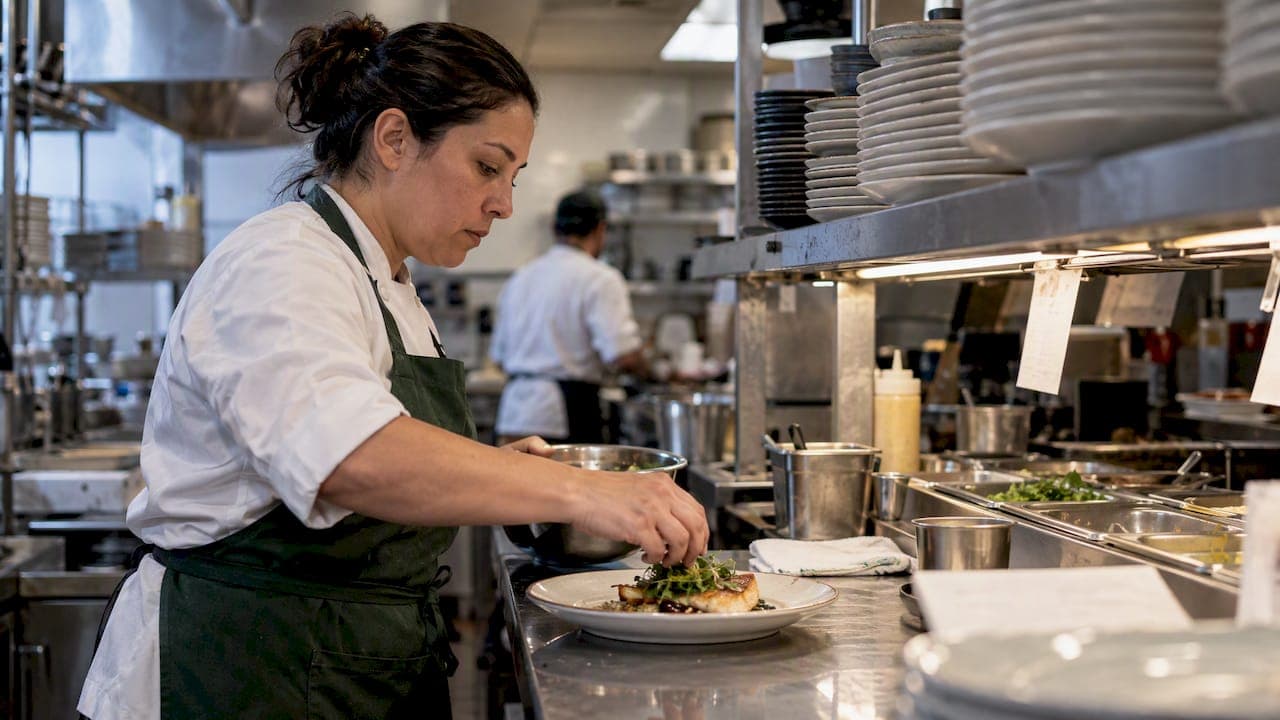
Standardized recipes guarantee the same plate every time and a plate cost you can actually predict. The fastest way to start is to document one high-volume dish today, test it on your own equipment, and track two numbers from that point on: how much the dish varies between cooks, and how closely your actual plate cost matches the one on paper.
TL;DR:
- Each recipe card should record exact AP or EP quantities, portion size, plating guide, timed method, yield, equipment, storage, costs, supplier specifications, and allergy flags.
- Weigh ingredients before and after preparation, then divide as purchased cost by yield percentage for edible portion cost and sum costs at each standard portion.
- Test the method on service equipment and ask another cook to follow it; revise the card if the dish fails the agreed taste or presentation standard.
- Review high volume dishes monthly and other menu items quarterly, with immediate updates after supplier price spikes, repeated complaints, or equipment changes affecting cook times.
- Start with two or three dishes, involve cooks in testing, and use a live demonstration, team tasting, and short service reference video to build adherence.
Table of Contents
- What a standardized recipe actually does for your kitchen
- Core elements every standardized recipe must capture
- Step-by-step process to standardize one recipe
- How to cost recipes and reconcile theoretical vs. actual food costs
- Training, enforcement, and getting kitchen buy-in
- Audit and review cadence: when to update recipes
- How a central recipe system speeds up adoption
- Start small, measure wins, then scale
- Try a recipe and inventory tool built for this exact job
- FAQ
- Sources
- Primary sources, training units, and further reading
What a standardized recipe actually does for your kitchen
A standardized recipe is a documented, tested, and repeatable method for producing a dish the same way every time, regardless of who's on the line. It's not a recipe idea scribbled on a whiteboard. It's a working document that's been tried, tasted, and locked in.
Get this right and the payoff shows up everywhere: guests get the dish they loved last time, new staff train faster because the steps are already written down, ordering gets more accurate because yields are known, and your margins stop being a mystery. Australian training standards back this up directly. SITHKOP010 requires chefs to calculate portion yields and cost recipes from raw ingredient data, while SITHKOP012 extends that discipline to special dietary recipes, with method, yield, and cost all documented.

Core elements every standardized recipe must capture
A recipe card that only lists ingredients isn't standardized, it's a suggestion. To make it operationally useful, every card needs the same fields, filled in the same way, every time.
- Ingredient list with exact units and a clear note on whether quantities are as-purchased (AP) or edible portion (EP).
- Portion size by weight or volume, plus a plating guide so presentation doesn't drift between shifts.
- Method with timings, tolerances, and the quality checkpoints a cook should hit along the way.
- Equipment, storage, and yield notes, alongside the costing fields: AP price, yield percentage, EP cost, and food cost percentage.
- Supplier or spec notes and allergy or dietary flags, which SITHKOP012 treats as a core part of recipe documentation rather than an afterthought.
Skip any of these and you've built a recipe card that looks complete but can't actually control cost or quality on its own.
Step-by-step process to standardize one recipe
Standardizing a single dish doesn't need a committee or a month of planning. It needs a focused day, or a short rollout if you're tackling a handful of priority items at once.
- Pick the dish. Start with something high-volume, high-profit, or prone to inconsistency between cooks. These are the items where variance costs you the most.
- Run a yield test. Weigh the ingredient as purchased, trim and prep it the way your kitchen actually does, then weigh what's usable. That gives you your yield percentage and converts AP cost into EP cost, the number that matters for real costing.
- Write the method. Document steps, timings, and tolerances, then cook it on the equipment your line actually uses, not a test kitchen setup.
- Taste and adjust. Get a second set of hands to cook from the written card. If the result doesn't match, the card isn't finished yet.
- Cost the plate. Use EP cost per ingredient to build the plate cost, then calculate food cost percentage. Note GST where it applies to your purchasing records.
- Finalize and circulate. Store the card in one place everyone can reach, print or digital, and make sure it's the version the team actually cooks from.
Pro Tip: Test every recipe on the same equipment your line cooks use during service. A dish that's perfect in a test kitchen can behave completely differently on a worn flat-top or an undersized combi oven.
How to cost recipes and reconcile theoretical vs. actual food costs
The single biggest source of costing error in commercial kitchens is using AP price instead of EP cost. An onion that costs a certain amount per kilogram as purchased is not the same cost per kilogram once it's peeled, trimmed, and usable, and that gap compounds across every ingredient on the plate.
A proper yield test fixes this: weigh the ingredient before and after prep, calculate the yield percentage, then divide AP cost by that yield to get the true EP cost. Plate cost is simply the sum of EP costs across every ingredient at its standardized portion size, and food cost percentage is plate cost divided by menu price. Our food cost percentage guide walks through the benchmarks worth watching.

When theoretical and actual costs drift apart, the usual culprits are inconsistent portioning tools, missed waste logging, or staff eyeballing quantities instead of following the card. A free food cost calculator can help you spot the gap quickly once you have real numbers to plug in.
Training, enforcement, and getting kitchen buy-in
A recipe card means nothing if nobody cooks from it. The most reliable path combines a short live demo, a line tasting so the whole team agrees on the benchmark, and a quick video for reference during service, backed by the written card as the permanent record.
Assign one person to own updates and audits, so the recipe doesn't quietly drift without anyone noticing. Build simple compliance checks into service, spot-check a plate, weigh a portion, and recognize cooks who hit the standard consistently. Chefs who involve their team in the original testing process tend to get far less pushback later, because the recipe feels like something the kitchen built together rather than a rule handed down from the office.
Audit and review cadence: when to update recipes
Review high-volume items monthly and the rest of the menu quarterly, adjusting the pace based on how often your ingredient costs move. Some triggers should prompt an immediate review regardless of schedule: a supplier price spike, repeated guest complaints about a dish, or a change in kitchen equipment that affects cook times.
Keep a simple change log with each update: what changed, why, and who approved it. Version control matters here, because a recipe that's been quietly tweaked five times with no record is no longer standardized, it's just a guess with extra steps.
How a central recipe system speeds up adoption
Rolling out standardized recipes across more than one outlet is where spreadsheets usually fall apart. Our own batch recipe management features were built around that exact problem, and we've reported that batch recipe management can cut spoilage by 19.4%, with our recipe costing methods helping kitchens keep food costs in the 28% to 35% range.
Centralizing recipes with automatic unit conversion means every location works from the same EP numbers, which removes a major source of drift. If you're testing this approach, try it in one outlet first and track the same variance and plate cost clarity metrics you started with.
Start small, measure wins, then scale
The kitchens that succeed with standardization rarely try to document the whole menu at once. They pick two or three items, prove the variance drops and training gets faster, then use that proof to win over the rest of the team.
Every lesson from the first batch, where cooks got confused, where the method needed more detail, makes the next round faster. That's how standardization actually sticks.
— Admin
Try a recipe and inventory tool built for this exact job
Standardizing recipes by hand works, but keeping them consistent across shifts, suppliers, and locations is a different problem, and it's the one we built our platform to solve. We give kitchens a single source of truth for recipes, with batch recipe management, automatic EP unit conversion, and cost reporting that updates as supplier prices change.
A practical first step: start a free trial, import one high-volume recipe, and run a yield test inside the platform to see your real plate cost. If you manage more than one site, our kitchen inventory app helps enforce portioning consistency on the floor, not just on paper. Plans run from Starter to Regular and Pro tiers, with pricing details available on our pricing page, and operators comparing platforms like MarketMan can see how our Australian-built alternative stacks up on local pricing and support.
FAQ
Why do restaurants use standardized recipes?
Restaurants use standardized recipes to guarantee the same dish every time, regardless of which cook is on the line, and to keep plate costs predictable. This protects guest trust and gives owners a reliable basis for menu pricing and margin tracking.
What are the three C's in a restaurant?
Definitions vary across the industry, but a common version refers to consistency, cost control, and customer satisfaction as the three pillars standardized recipes support. Each depends on documenting method, portion size, and cost the same way across every shift.
Can you give me some examples of standardized recipes?
A standardized recipe card typically documents a dish's ingredient list with AP and EP notes, exact portion size, method with timings, and costing fields like yield percentage and food cost percentage. Industry explainers break down common formats kitchens use to structure these cards.
What is a standardized recipe in the culinary field?
A standardized recipe is a documented, tested, and repeatable method for producing a dish, built so any trained cook can follow it and get the same result. Australian training units like SITHKOP010 require this to include portion yield calculations and cost documentation, not just a list of steps.