
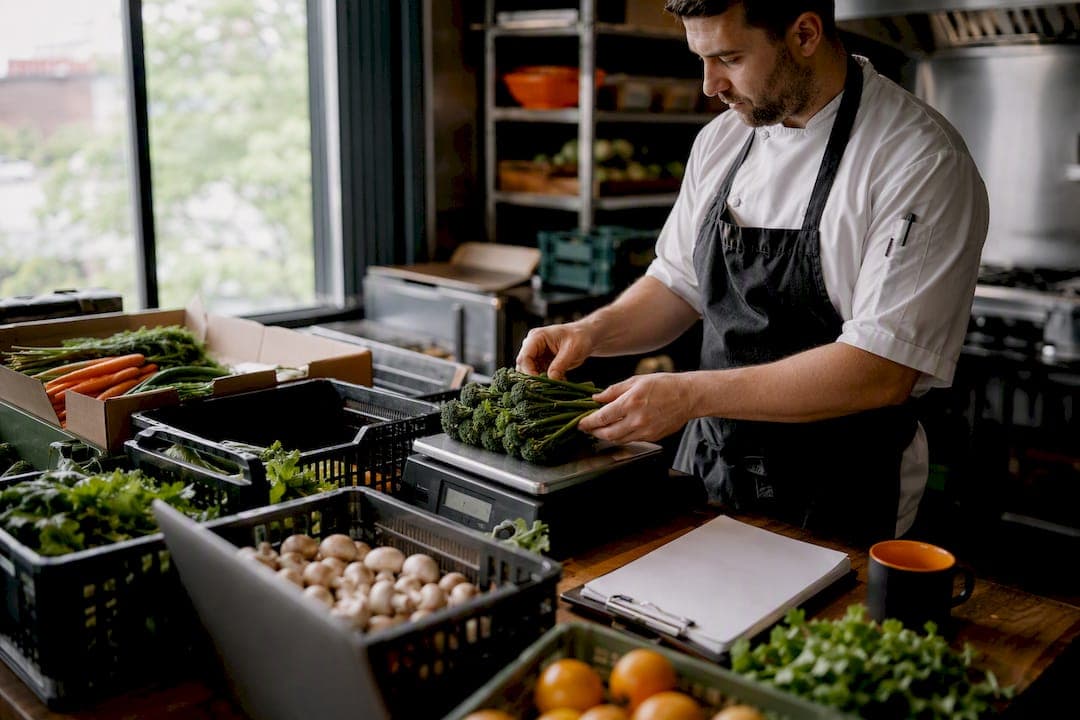
The groups that actually control costs pull seven levers, in roughly this order of impact: procurement consolidation, inventory and par optimization, menu engineering, labour rostering discipline, waste reduction, supplier performance governance, and one shared technology layer to enforce all of it across venues. None of these work in isolation. A group that consolidates procurement but still runs pars off gut feel will bleed the savings straight back out through overstocked walk-ins and last-minute emergency buying.
Here's how each lever maps to the number it actually moves:
- Procurement consolidation → cuts your COGS line through unit price
- Inventory and par discipline → cuts COGS through waste and shrinkage
- Menu engineering → protects gross margin per dish sold
- Rostering discipline → controls labour % of sales
- Waste tracking → recovers food spend currently thrown in the bin
- Supplier governance → locks in and defends procurement gains over time
- Centralized technology → makes every one of the above visible across venues, not just at head office
The single biggest mistake multi-venue groups make isn't picking the wrong lever. It's fixing the procurement number and never building the weekly discipline that keeps it fixed six months later.
You don't need a full transformation program to start. Here's a three-step checklist for next week:
- Run a one-week waste audit at your two highest-volume venues, weighing trim, spoilage, and plate waste daily.
- Pull current par levels against last month's actual consumption for your top 20 SKUs by spend, and flag anything overstocked by more than 30%.
- Call your three biggest suppliers and request current pricing on your top ten commodity lines, then compare against invoices from ninety days ago.
Key Takeaways
Multi-venue cost control works when procurement consolidation, inventory discipline, and menu engineering run together on a weekly reporting cadence backed by one shared technology platform.
| Point | Details |
|---|---|
| Consolidate procurement first | Segment categories by volume and SKU overlap; expect 3% to 8% unit price reductions within six months. |
| Set pars from real consumption | Review weekly against actual usage data, not supplier minimums or last year's habits. |
| Run a weekly flash, not monthly accounting | A Monday flash report and Tuesday action meeting catch problems in week one, not week six. |
| Protect gains with supplier governance | Quarterly scorecards on pricing, DIFOT, and quality stop procurement savings from quietly eroding. |
| Centralize on one platform | Pantryhub gives multi-venue groups shared inventory visibility, supplier ordering, and rolled-up reporting in one place. |
Table of Contents
- How Sydney Restaurant Groups Control Costs Across Venues
- Where Do Multi-Venue Groups Actually Lose Margin?
- How Do You Consolidate Procurement Without Losing Culinary Control?
- How Do You Set Par Levels Across Multiple Venues?
- What Menu Engineering Actually Protects Margin?
- How Do You Control Labour Costs Without Hurting Service?
- How Do You Turn Food Waste Into Recovered Margin?
- How Do You Manage Supplier Performance and Contracts?
- How Does Technology Keep Standards Consistent Across Venues?
- What Does a Realistic Implementation Timeline Look Like?
- What KPIs Should You Track Every Week?
- Why Do Cost Control Programs Stall After Early Wins?
- How Does Cash Flow Fit Into a Cost Control Strategy?
- How Do You Manage Price Volatility and Supply Risk?
- Ready to Centralize Cost Control Across Your Venues?
- Sources
How Sydney Restaurant Groups Control Costs Across Venues
Groups that run this well treat cost control as an operating rhythm, not a project. They diagnose leak points venue by venue, consolidate what should be centralized, leave chef autonomy where it earns its keep, and run a weekly reporting cadence tight enough that a bad number gets caught on Tuesday, not at month end. Structured procurement, inventory discipline, and menu engineering together tend to deliver a blended F&B COGS improvement of roughly 2% to 7% of revenue when applied consistently across a portfolio of venues.
That range matters because it tells you the ceiling and the floor. A single-venue operator chasing supplier discounts alone might land at the low end. A group running procurement consolidation, par discipline, and a shared reporting cadence across five or six venues at once tends to land closer to the top, because the same fixed effort of building the system gets spread across more revenue.
The rest of this guide breaks down exactly how each piece works, in the order that produces the fastest wins.
Where Do Multi-Venue Groups Actually Lose Margin?
Margin leaks in a multi-venue group hide inside averages.
The common leak points, roughly in order of typical impact:
- Fragmented procurement — each venue negotiating its own supplier deals, buying the same SKUs at different prices
- Inaccurate par levels — stock ordered on habit rather than actual consumption, leading to overstocking and spoilage
- Recipe and portion drift — the same dish served at slightly different portion sizes depending on which chef is on shift
- Uncontrolled comps and staff meals — rarely tracked as a cost line, quietly eating into food spend
- Energy and utilities — often ignored while teams focus on food and labour
- Third-party delivery commissions — a fixed cost that scales with volume but rarely gets renegotiated
- Labour rostering inefficiencies — shifts built from last week's roster rather than this week's forecast
Statistic Callout: Up to 10% of food spend can be lost to waste alone, and procurement consolidation typically yields 3% to 8% unit price reductions on key commodity categories within six months of proper category segmentation.
Multi-venue structures amplify every one of these leaks in ways single-site operators never experience. Volume differences get hidden inside group averages. Venue autonomy, which is genuinely valuable for menu creativity, also hides poor purchasing habits behind "that's just how this venue does it." And because financial reporting in most groups still runs on a monthly cycle, a leak that starts in week one doesn't surface in the numbers until six weeks later, by which point it's a habit, not an incident.
How Do You Consolidate Procurement Without Losing Culinary Control?
Procurement consolidation is the single highest-leverage move available to a multi-venue group, and it's also the one operators resist most, usually because head chefs worry it means losing control over quality and creativity. Done properly, it doesn't.
The process runs in five phases:
- Spend mapping — pull twelve months of invoices across every venue and categorize every SKU by supplier, volume, and price variance.
- Category segmentation — decide what centralizes (proteins, dry goods, cleaning supplies, beverages) versus what stays venue-specific (specialty produce, chef-sourced items, single-venue signature ingredients).
- Market engagement — approach two to three suppliers per category with your consolidated volume, not each venue's individual order size.
- Tender and negotiation — compare pricing, delivery reliability, and payment terms, not price alone.
- Onboarding — roll out new supplier arrangements venue by venue, with a transition window so nobody runs out of stock mid-switch.
Category selection isn't guesswork. Use three criteria: volume threshold (does the category represent enough group spend to matter), SKU overlap (are venues already buying the same or similar items), and variance sensitivity (would a price swing in this category hurt margin badly enough to justify locking in a rate).
A realistic tender timeline runs months two through six. Month two is spend mapping and segmentation. Months three and four are market engagement and negotiation. Months five and six are contracting and phased onboarding. Expect 3% to 8% price reductions on consolidated commodity categories, with the main transition risk being short-term supply gaps if onboarding moves faster than the new supplier's delivery capacity can support.
One category worth flagging early: proteins and dry goods consolidate cleanly because SKUs are standard. Fresh produce and chef-sourced specialty items usually don't, and trying to force them into a central contract is where operators lose executive-chef buy-in fastest.
Some groups have found material savings simply by sharing SKUs and renegotiating on high-volume items across venues, with supplier changes on a handful of core products delivering tens of thousands of dollars annually. Preserve chef autonomy on anything that defines a venue's identity. Consolidate everything else.
How Do You Set Par Levels Across Multiple Venues?
Procurement savings evaporate fast if inventory discipline doesn't back them up. A cheaper unit price on chicken thighs doesn't help if the venue is still ordering twice what it needs because nobody has updated the par level in eight months.
Run inventory control on three cadences, each with a clear owner:
- Daily — receiving checks against purchase orders, done by the venue's duty manager, catching short deliveries and quality issues before they become a Friday-night problem.
- Weekly — par level review against actual consumption, done by the head chef or kitchen manager, adjusting for upcoming bookings and known events.
- Monthly — full stocktake to true purchase-based COGS back to actual gross profit, done jointly by the venue and a central finance or operations owner. This step matters because purchases-based COGS drifts from real COGS without a physical count to correct it.
Set pars from actual consumption data, not supplier minimums or last year's habits. High-volume, low-variance items (rice, flour, core proteins) can often be centrally set with venue-level tweaks for seasonal bookings. Highly seasonal or chef-driven items need site-level pars, reviewed weekly against actual covers.
To cut ad-hoc emergency buying, put two controls in place: an approval threshold (any purchase order above a set dollar amount needs manager sign-off) and a group-approved supplier list (venues can't just call a random wholesaler because the regular supplier ran out).

Here's what a par-versus-consumption review typically reveals:
The basil line is the one that hurts.
What Menu Engineering Actually Protects Margin?
Menu engineering works off a simple matrix: plot every dish by popularity against margin. High popularity, high margin dishes are your stars and deserve prime menu placement. High popularity, low margin dishes need portion or pricing adjustments. Low popularity, high margin dishes need better positioning or promotion. Low popularity, low margin dishes get cut.
Across a multi-venue group with shared recipes, run this exercise centrally using pooled sales data, then let each venue adjust for local taste before finalizing. A dish that's a star in a CBD lunch venue might be a dog in a suburban dinner-focused sister venue.
Industry guidance as of 2026 increasingly favors a two-speed menu structure: a tight, margin-protecting core menu that rarely changes, paired with rotating seasonal specials that let chefs respond to ingredient pricing without touching the core P&L. The core menu carries your volume and predictability. The specials menu absorbs price volatility and keeps regulars interested.
A simple ranking template for quarterly menu reviews:
- Rank every dish by contribution margin and units sold over the last 90 days.
- Flag anything in the bottom quartile on both measures for removal or reinvention.
- Flag high-margin, low-volume dishes for repositioning or staff upselling training.
- Protect your top five sellers from ingredient substitution unless the cost shift is severe.
Rather than raising headline prices, which customers notice and resent, adjust portion sizes slightly or restructure the offer. Value engineering through shareables and bundles preserves margin while matching how value-conscious diners now shop a menu.
Pro Tip: Run your menu review the same week you get quarterly supplier pricing updates. Recosting recipes and re-engineering the menu in the same sitting means you only touch the printed menu once per quarter instead of every time a supplier email lands.
How Do You Control Labour Costs Without Hurting Service?
Rostering discipline means the roster gets built and costed against forecast before it's published, not adjusted after the fact when the labour percentage comes in high. Every roster should be tested against forecasted covers and award-loaded wage rates before a single shift goes out to staff.
Cross-training staff across sections, and where geography allows, across nearby venues, reduces the headcount peaks that come from rostering everyone for the busiest possible scenario. A server trained to run both floor and bar service means you can staff for a realistic Tuesday instead of a hypothetical Saturday.
Build your roster controls around four rules:
- Every roster gets built against a covers forecast, not last week's template.
- Overtime above a set threshold needs manager approval before the shift, not after.
- Public holiday staffing decisions get made venue by venue based on actual contribution margin that day, not blanket policy.
- Weekly labour percentage gets checked against target before Friday, so Saturday's roster can still be adjusted if needed.
Track these KPIs weekly, not monthly:
- Labour % of sales — target typically sits between 25% and 30% depending on service model
- Hours per cover — flags creeping inefficiency before it hits the wage bill
- Overtime incidence — a rising trend here usually means rosters are being built too tight, not too loose
How Do You Turn Food Waste Into Recovered Margin?
Run a one-week waste audit at each venue: weigh and log every gram of trim, spoiled stock, and returned plates, categorized by cause. Most groups skip this step because it feels tedious, but it's the fastest way to find where the real dollars are leaking, and it usually surprises even experienced chefs.
Once you have the data, act on it in this order:
- Enforce FIFO stock rotation on every perishable category, with labels showing receipt date.
- Batch prep to forecasted covers rather than round numbers, so Tuesday's prep matches Tuesday's expected volume.
- Build ingredient substitution flexibility into core recipes so a produce shortage doesn't force a last-minute menu change.
- Reuse trim and off-cuts deliberately, in stocks, staff meals, or a rotating specials board, rather than binning them.
Statistic Callout: Up to 10% of food spend can be lost to waste, and a focused audit with substitution strategy can recover a meaningful share of that. An RMIT study found cafés running shorter, seasonal menus had measurably lower waste and better stock control, particularly where recipes allowed ingredient substitution.
Track waste in dollars per week per venue, and as a percentage of total food spend. Smaller, seasonal menus reduce waste exposure structurally, because fewer SKUs means less inventory sitting at risk of spoiling before it gets used.
How Do You Manage Supplier Performance and Contracts?
Procurement consolidation only holds if you govern it afterward. A supplier scorecard should track five dimensions: pricing compliance against the negotiated rate, DIFOT (delivery in full, on time), quality consistency, invoice accuracy, and how fast disputes get resolved.
Run this audit rhythm:
- Quarterly price reviews against the original tender rate, checking for silent creep.
- Monthly invoice spot checks against purchase orders, catching billing errors before they compound.
- Documented corrective action any time a supplier misses DIFOT or quality thresholds twice in a quarter.
- Annual renegotiation cadence using volume growth, payment terms, and lead times as your levers, not just price.
| Scorecard Dimension | Review Frequency | Owner |
|---|---|---|
| Pricing compliance | Quarterly | Procurement owner |
| DIFOT | Monthly | Operations manager |
| Invoice accuracy | Monthly | Finance audit owner |
| Quality consistency | Ongoing, logged per delivery | Venue chef |
Assign clear organizational roles: a procurement owner who manages supplier relationships, a finance audit owner who checks invoices against contracted rates, and an executive sponsor who has authority to walk away from a supplier if performance doesn't improve after a documented warning.
How Does Technology Keep Standards Consistent Across Venues?
None of the controls above hold together without a single source of truth. When each venue tracks stock on its own spreadsheet, par levels drift, invoice errors slip through, and head office only finds out about a problem weeks after it started.
The core capabilities worth looking for in a centralizing platform: multi-location stock visibility so you can see every venue's position from one screen, recipe costing that automatically re-costs when supplier prices change, low-stock alerts that trigger before a shortage hits service, supplier ordering built into the same system as inventory tracking, role-based access so venue staff see what they need without touching group-level data, and consolidated reporting that rolls every venue's numbers up automatically.
A dashboard view that shows stock variance, COGS trend, and low-stock flags across all venues on one screen turns a Monday morning review from a two-hour spreadsheet exercise into a five-minute scan. Groups that move from spreadsheets to a centralized digital stock system typically report faster weekly reporting and noticeably lower stock variance within the first few reporting cycles, simply because the data is accurate and available in one place instead of scattered across venue folders.
The groups that sustain their procurement and inventory gains past the first six months are almost always the ones that stopped relying on someone remembering to check a spreadsheet and started relying on a system that flags problems automatically.
If you're still tracking stock manually across venues, low-stock alerts alone tend to be the single fastest change to implement, because they catch the emergency-buying problem before it happens rather than after.
What Does a Realistic Implementation Timeline Look Like?
Cost control initiatives fail most often because groups try to fix everything simultaneously. A phased rollout, with clear sign-off gates between phases, prevents rework and keeps venue teams from feeling like they're being hit with five new processes at once.
- Phase 1, week zero — Diagnostic. Map spend, pull consumption data, run a waste audit at two pilot venues. Owner: operations lead.
- Phase 2, months two through six — Procurement consolidation. Segment categories, tender, negotiate, onboard new suppliers. Owner: procurement lead, signed off by finance.
- Phase 3, months three through eight — Inventory optimization. Set data-driven pars, implement daily and weekly review cadences. Owner: venue kitchen managers, overseen by operations.
- Phase 4, months four through nine — Technology rollout. Centralize inventory, ordering, and reporting on one platform across all venues. Owner: operations lead with IT support.
- Phase 5, ongoing from month six — Supplier governance. Quarterly scorecards, renegotiation cadence, dispute tracking. Owner: procurement lead, reviewed by executive sponsor.
| Month | Activity | Expected Output | Sign-Off |
|---|---|---|---|
| — | Diagnostic and spend mapping | Category segmentation plan | Operations lead |
| — | Procurement consolidation | 3% to 8% unit price reduction on key categories | Finance |
| 3 to 8 | Inventory optimization | Reduced stock variance, fewer emergency orders | Operations |
| — | Technology centralization | Single-platform reporting live across venues | Executive sponsor |
| — | Supplier governance | Quarterly scorecards operating | Procurement lead |
Statistic Callout: Groups running this full sequence typically see a blended COGS improvement of 2% to 7% of revenue. For a mid-size group turning over several million dollars annually, that range often translates into payback on implementation effort within the first six to twelve months, once procurement and inventory phases are both fully live.
Before advancing to the next phase, confirm the current one is actually embedded, not just launched. Don't start technology rollout until procurement contracts are signed.
What KPIs Should You Track Every Week?
Cost control only sticks when it's measured on a rhythm tighter than monthly accounting. Track these core metrics, with formulas your finance team can calculate weekly:
- COGS% = food purchases ÷ food sales, targeting 28% to 35% depending on venue type
- Labour% = wage costs ÷ total sales, targeting 25% to 30%
- Prime cost = COGS% + labour%, with 55% to 65% of revenue as the typical benchmark band
- Waste $ per week, tracked per venue against a declining target
- Stock variance%, from monthly stocktake against purchase-based COGS
- DIFOT, tracked per supplier per month
Run reporting on this cadence: daily sales checks at venue level, a Monday morning flash report per venue, a Tuesday group meeting where each venue owner brings one committed action, monthly stocktake to true up the numbers, and quarterly supplier reviews.
| Report | Frequency | Owner |
|---|---|---|
| Sales check | Daily | Venue manager |
| Flash report | Monday, weekly | Venue manager |
| Group action meeting | Tuesday, weekly | Operations lead |
| Stocktake | Monthly | Kitchen manager + finance |
A Monday flash report rolling up sales split, COGS%, labour%, prime cost, and exceptions per venue is what turns slow month-end accounting into a fast decision cadence, catching a problem in week one instead of week six.
Why Do Cost Control Programs Stall After Early Wins?
The most common failure pattern isn't a bad plan. It's a good plan that loses discipline after month four, once the initial enthusiasm fades and venue managers drift back to old habits.
The recurring barriers:
- Chef autonomy resisting centralized category decisions
- Inconsistent data entry quality across venues, making group reporting unreliable
- Late financial reporting that delays corrective action by weeks
- Regional supplier fragmentation where one venue insists its local supplier can't be replaced
- General staff resistance to new processes, especially inventory logging
Fix these with structural governance, not just goodwill:
- Get named executive sponsorship for the program, with authority to enforce category decisions.
- Set a clear service-level agreement for data entry timing and accuracy, with named accountability per venue.
- Build a short training plan for every new process, delivered before rollout, not after problems appear.
- Form a steering committee with named roles meeting monthly to review scorecards.
Maintain discipline with monthly scorecards reviewed by the steering committee, quarterly audits of supplier and inventory data, and one committed action per venue raised in every weekly meeting.
How Does Cash Flow Fit Into a Cost Control Strategy?
Cost control and cash flow management are two sides of the same problem. A group can hit its COGS and labour targets on paper and still run into cash pressure if payment terms, stock holding, and payroll timing aren't aligned.
Negotiate supplier payment terms as part of your procurement consolidation, not as an afterthought. Extending terms from 14 to 30 days across your top suppliers frees up working capital without costing a dollar in unit price, provided you're not sacrificing early-payment discounts that outweigh the benefit.
Inventory discipline directly supports cash flow too. Every dollar sitting in an overstocked walk-in is a dollar not available for payroll or rent. Tight par levels, reviewed weekly against actual consumption, reduce the working capital tied up in stock across every venue in the group.
Build a rolling 13-week cash flow forecast at the group level, updated weekly alongside your flash reporting. This catches seasonal dips (the slow weeks after Christmas, a quiet mid-winter stretch) before they become a liquidity problem, giving you time to adjust supplier payment timing or defer non-essential spending.
Prime cost control (keeping COGS and labour within the 55% to 65% combined benchmark) is ultimately a cash flow discipline as much as a profitability one. A venue running efficient prime costs generates cash predictably; one that doesn't will eventually need an injection to cover a bad month, regardless of what the annual P&L says.
How Do You Manage Price Volatility and Supply Risk?
Input price volatility isn't a one-off event anymore. It's a recurring condition groups need to plan for structurally. Food costs rose 3.1% and electricity jumped 25.4% in the year to March 2026, and neither pressure is likely to disappear quickly.
Monitor the ABS Consumer Price Index as your early warning system for input-price pressure.
Diversify supplier relationships for your highest-risk commodity categories so a single supplier disruption doesn't force emergency buying at premium prices. Two qualified suppliers per critical category, even if you primarily order from one, gives you a fallback when weather, freight, or seasonal shortages hit.
Energy costs deserve the same structural attention as food. Simple interventions like scheduling equipment use outside peak tariff periods and regular maintenance on refrigeration and cooking equipment reduce exposure to utility price spikes without any menu or supplier change required.
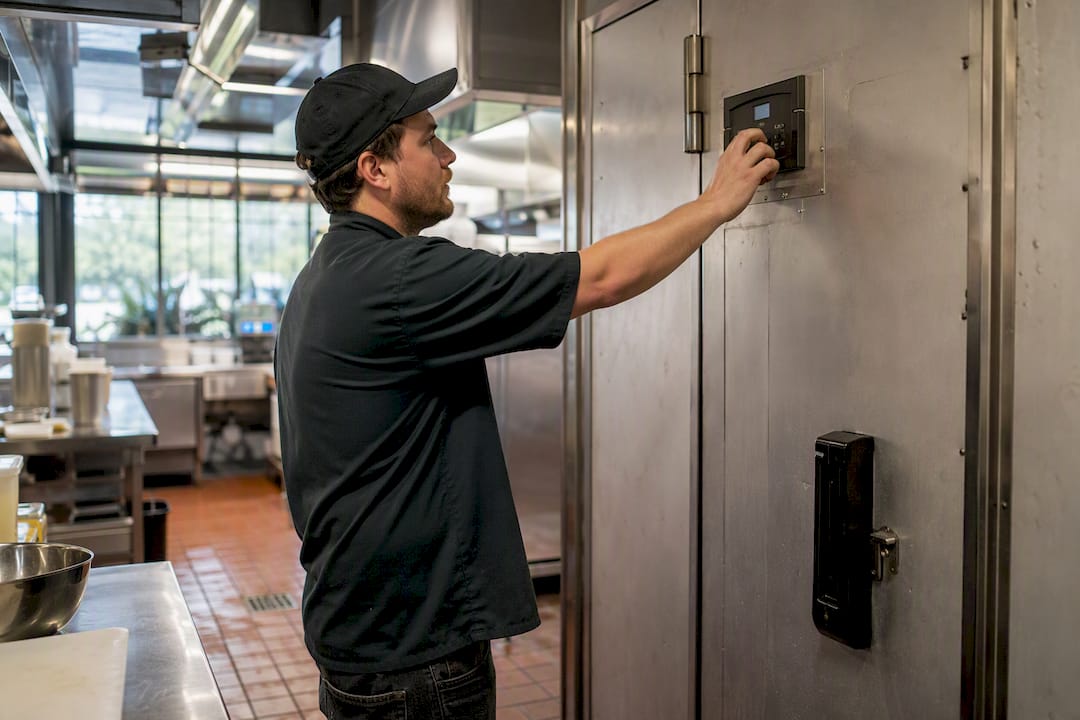
Build price volatility into your menu engineering cycle directly. A two-speed menu structure, with a stable core and rotating specials, gives you a release valve. When a key ingredient spikes, it shows up as a change to a seasonal special, not an emergency reprint of the entire menu.
Author perspective: how operators actually win
Most groups I've watched succeed at cost control didn't start with a big transformation plan. They started because one venue's COGS number looked wrong for three months running, and someone finally pulled the consumption data instead of guessing. The early wins came fast: a par level cut in half, a supplier renegotiated, a waste audit that found $400 a week walking out in trim. What locked the gains in wasn't the initial fix. It was the Tuesday meeting that kept happening every single week afterward.
Pro Tip: Put "one number that moved and why" as a standing agenda item in your weekly ops meeting. It takes five minutes and it's the single habit that stops savings from quietly reversing six months later.
Ready to Centralize Cost Control Across Your Venues?
Everything in this roadmap gets harder to sustain on spreadsheets, and easier to sustain on one shared system. Pantryhub was built specifically for multi-venue hospitality groups that need real-time stock visibility, supplier ordering, and reporting to actually roll up across locations instead of living in six different folders.
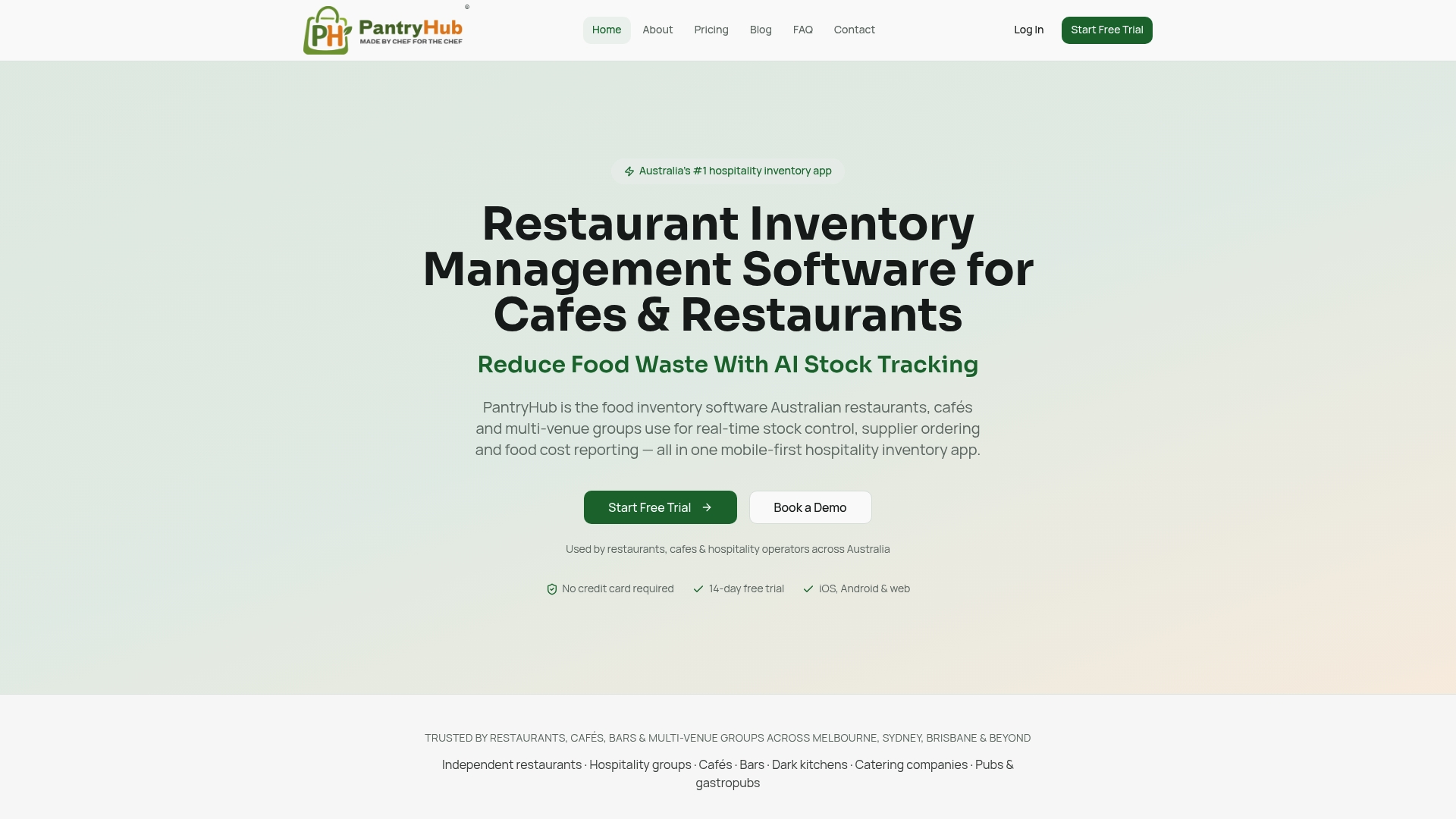
Pantryhub gives you multi-location inventory tracking, AI-powered low-stock alerts so emergency buying stops before it starts, supplier ordering built into the same platform, and group-level reporting that turns your Monday flash into a five-minute check instead of a spreadsheet reconciliation exercise. Groups that centralize on one system typically see faster weekly reporting and tighter stock variance within the first few reporting cycles.
If you want to see what a consolidated view of your group's inventory actually looks like, explore Pantryhub's hospitality inventory software or run your numbers through the free food cost calculator to see where your current recipe costs stand before you start the roadmap above.
Sources
- How to Reduce Food and Beverage COGS in Hospitality
- As costs rise, what are Australian food and hospitality businesses doing differently?
- Restaurant Group Accounting: From Venue Chaos to Weekly Numbers
- RMIT news: cafe waste study
- Consumer Price Index, Australia — latest release