
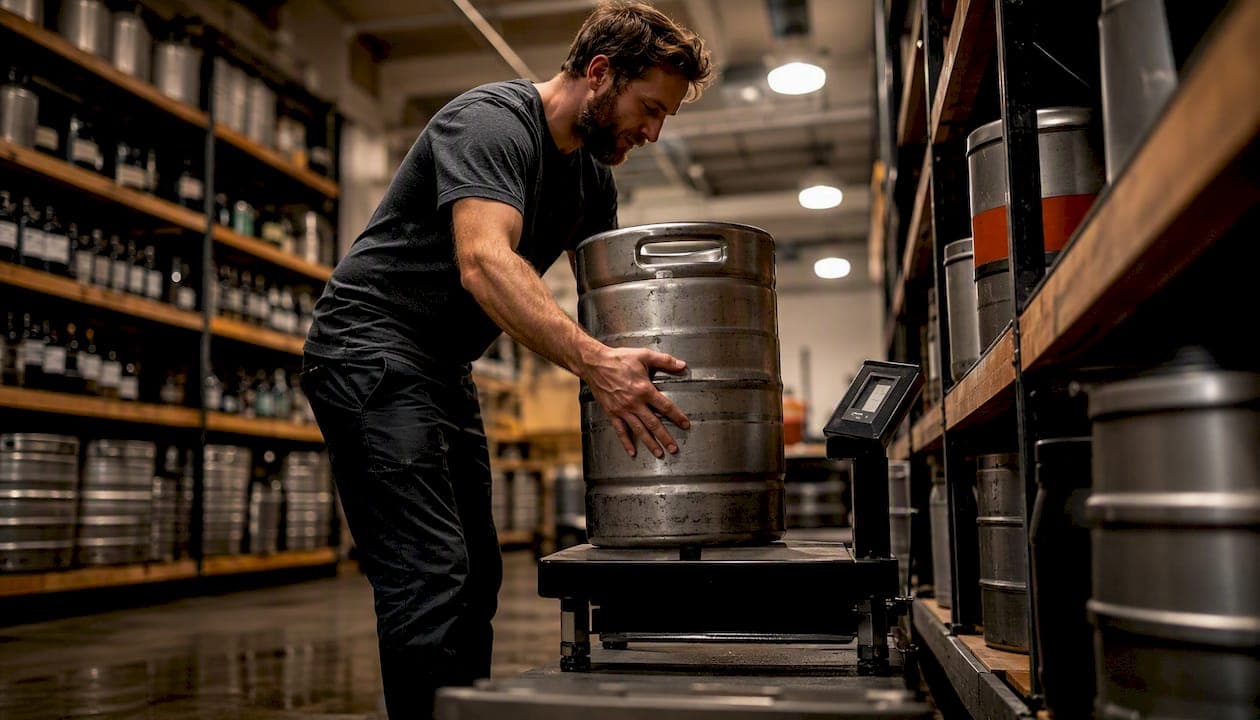
Managing liquor stock in a Perth venue comes down to three moves: run an independent baseline stocktake, lock in weekly blind counts, and centralize everything in a platform like Pantryhub. Get those three right and you stop losing margin to shrinkage you cannot see.
Your three-step action plan:
- Independent baseline stocktake. Book an outsourced count with a firm like Associated Stocktaking before you touch any software. Outsourced stocktaking gives you a clean starting point and surfaces whether losses come from over-pouring, unrecorded comps, short deliveries, or system errors — things your own team will miss when counting their own bar.
- Weekly blind counts and par-based issuing. Blind counts and quiet-period scheduling reduce variance in high-turn bars. Treat the bar as its own inventory location, use signed transfers, and post shift variance where staff can see it.
- Centralize in Pantryhub. Real-time stock tracking, automated low-stock alerts, supplier ordering, and multi-location dashboards replace the spreadsheet and the guesswork.
A 1% gross profit gain on $100,000 per month in revenue is $1,000 recovered every month — Pitcher Partners documents exactly this kind of recovery when venues fix wastage and tighten systems.
Key Takeaways
Perth venues that handle liquor stock well combine an independent baseline count, weekly blind counts, and a centralized platform to close the gap between what they buy and what they sell.
| Point | Details |
|---|---|
| Start with an independent baseline | Book an outsourced stocktake before configuring any software to get a clean, verified starting position. |
| Count weekly, not monthly | Weekly blind counts create a corrective window; monthly counts let shrinkage compound for too long. |
| Align POS and inventory codes | Consistent SKU mapping between your POS and inventory system eliminates the most common source of large variances. |
| Target under 2% shrinkage | Best-in-class venues hit under 2% shrinkage once counts, process controls, and system alignment are in place. |
| Pantryhub centralizes the workflow | Real-time tracking, pour-cost reporting, and supplier ordering in one platform replace manual reconciliation for Perth venues. |
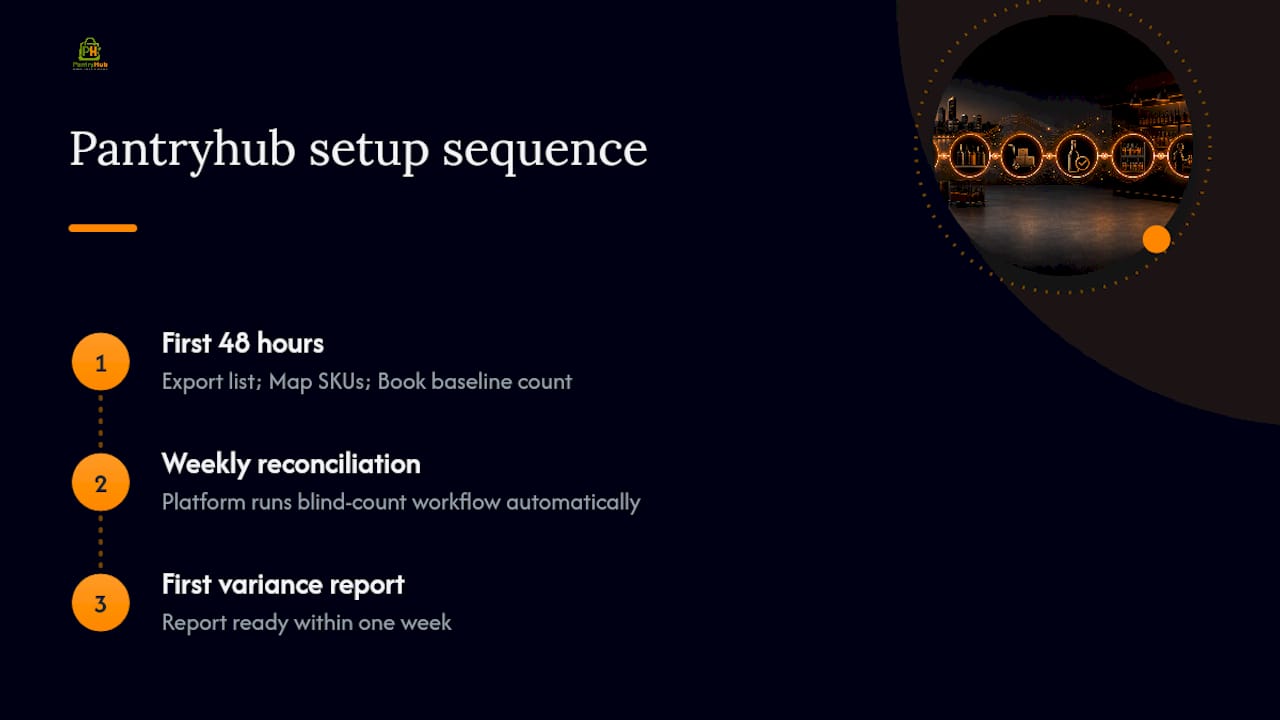
Days 0–3: Export product list, map SKUs, book baseline stocktake. Weeks 1–4: Run weekly blind counts, post variance by shift, set par levels in Pantryhub. Months 1–3: Review GP impact monthly, schedule quarterly independent stocktake, adjust par levels based on variance trends.
Table of Contents
- How Perth liquor licensing rules affect your stock management
- What compliance actually requires from your stock records
- Which liquor stock software actually fits Perth venues?
- Linking stock management to your licensing obligations
- What does effective stock control actually cost?
- Training your team on stock control and compliance
- Why Perth venues need systems, not guesswork
- Pantryhub gives Perth venues the platform to make it stick
- Local resources and trusted suppliers for Perth venues
- Sources
How Perth liquor licensing rules affect your stock management
Western Australia's liquor licensing framework sits under the Liquor Control Act 1988, administered by the Department of Local Government, Sport and Cultural Industries (DLGSC). Your license type — whether a tavern, small bar, restaurant, or club license — determines your trading hours, approved areas, and the conditions under which you can sell, store, and serve alcohol.
Stock management connects directly to licensing because your license conditions may specify storage requirements, approved premises boundaries, and record-keeping obligations. Inspectors can and do check that stock held on-site matches your approved operations.
What compliance actually requires from your stock records
Under WA liquor licensing law, licensees must keep accurate records of stock received, held, and sold. The DLGSC can request these records during compliance inspections. Practically, this means your purchase orders, delivery dockets, and inventory counts need to be retrievable and consistent with your POS sales data.
Misalignment between POS and inventory records is a frequent root cause of large variances — and the same misalignment that erodes your GP is the one that creates unexplainable gaps in your compliance records. Consistent item coding and system integration fix both problems at once.
Which liquor stock software actually fits Perth venues?
The right platform for a Perth venue handles keg measurement, supplier ordering, and multi-site visibility — not just a digital spreadsheet. Four tools worth knowing:
- Pantryhub — real-time inventory tracking, AI-powered low-stock alerts, supplier ordering, pour-cost and variance reporting, and multi-location dashboards built for Australian hospitality operators.
- Kegcheck — a dedicated keg-measure device that delivers fast, repeatable keg volume checks and is available to Australian venues through local distribution.
- Associated Stocktaking — independent baseline and ongoing stocktake services for Perth hospitality venues.
- National Beer Parts — Australian distributor for keg hardware and cellar equipment, supporting venues that need local parts and service.
Linking stock management to your licensing obligations
Connect your inventory system to your compliance workflow in four steps:
- Map every SKU in Pantryhub to the same product codes your POS uses. One source of truth eliminates reconciliation gaps.
- Store delivery dockets digitally against each purchase order so you can produce a full receiving history on request.
- Run weekly variance reports and flag any line where variance exceeds your threshold — this is your early warning before a compliance issue becomes a licensing issue.
- Schedule an independent stocktake at least quarterly so your internal counts are verified by an external party.
What does effective stock control actually cost?
Budget across three areas:
- Software. Pantryhub operates on a monthly subscription tiered by venue count and features — no large upfront cost.
- Independent stocktakes. An outsourced count from a firm like Associated Stocktaking is a recoverable expense; independent stocktakes and system reviews convert hidden losses into measurable improvements, so the fee pays for itself when shrinkage drops.
- Labor. Weekly counts add roughly 1–2 hours of bar manager time per week. That cost is negligible against the GP recovered when weekly liquor counts create a corrective window and catch over-pouring before it compounds.
Training your team on stock control and compliance
Staff training is where process discipline either sticks or falls apart. Three priorities:
- Pour discipline first. Measured pourers or jiggers cut pour variance materially and protect margins without blaming staff. Make measured pouring the standard, not the exception.
- Blind count protocol. Counters should not see the previous count before they start. Post the variance result by shift so the team understands the connection between their actions and the numbers.
- Compliance awareness. Every bar manager should know that stock records are a licensing obligation, not just an operational nicety. A short briefing on WA licensing requirements — what inspectors look for and why accurate records matter — changes the culture around counting.
Why Perth venues need systems, not guesswork
Perth's hospitality market runs heavy on draught. Multi-line keg programs mean a significant share of your working capital sits in the cellar in kegs that are notoriously hard to measure accurately without the right tool. Rough keg estimation is widespread, and the cost shows up as unexplained variance that nobody can trace.
The causes of liquor variance in Perth venues are consistent: over-pouring on free-pour spirits, unrecorded comps and staff drinks, delivery shortfalls that go unchecked, and POS-to-inventory misalignment that makes the numbers look worse than reality. Best-in-class venues achieve under 2% shrinkage once accurate counts, process controls, and system alignment are in place. Most Perth venues are nowhere near that — not because the problem is hard, but because the controls are not in place.
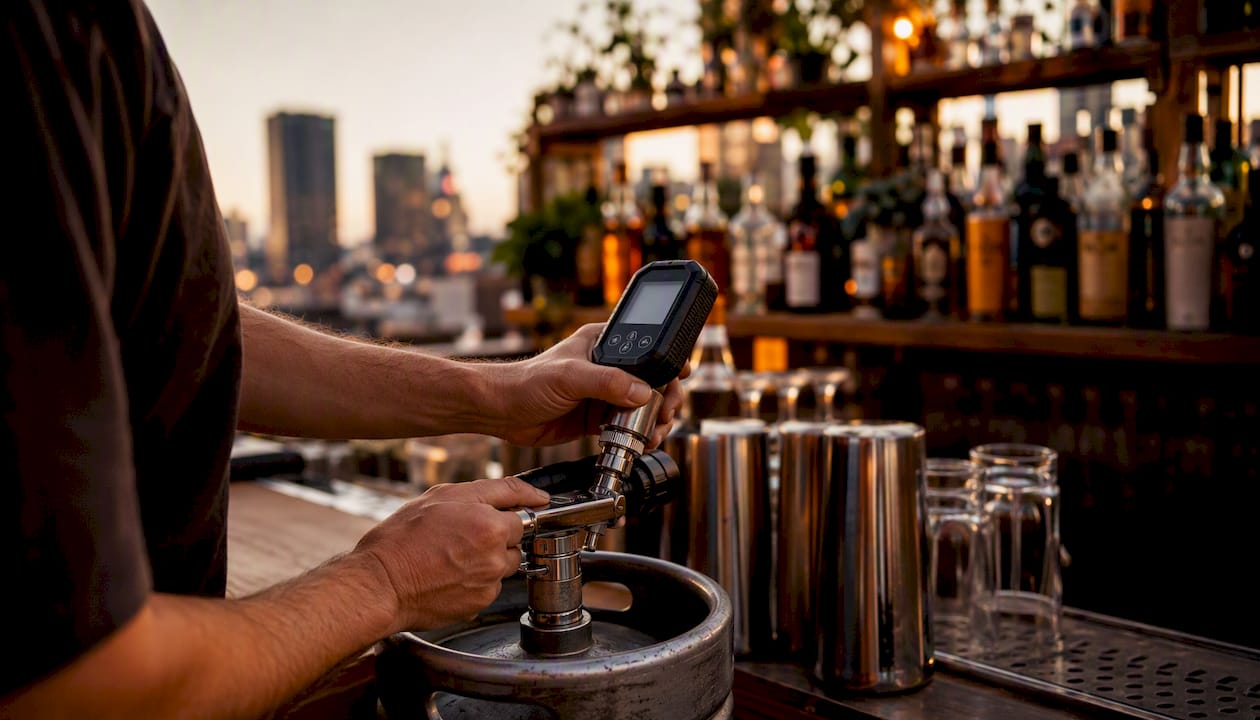
The practical controls that close the gap are operational habits combined with simple hardware, not exotic software alone. A Kegcheck device measures any keg accurately in under a minute. Weekly blind counts take less than two hours. Signed bar transfers take thirty seconds per shift. These are not big investments.
Core KPIs to track:
| KPI | Target | Frequency | Action if breached |
|---|---|---|---|
| Liquor variance % | Under 2% | Weekly | Investigate by category; check pour discipline and delivery dockets |
| Pour cost % | Within recipe standard | Weekly | Review jigger compliance and comp recording |
| GP impact ($) | Positive trend month-on-month | Monthly | Trigger independent stocktake review |
| Keg yield % | approximately full nominal volume | Per keg | Check line cleaning, measure with Kegcheck |
Pro Tip: Weigh kegs at delivery and again at tap-off using a Kegcheck or a calibrated scale. The difference tells you exactly what you served versus what you paid for — no estimation required.
Pantryhub gives Perth venues the platform to make it stick
Losing margin to shrinkage you cannot measure is a solvable problem. Pantryhub is the inventory platform that connects your baseline count, your weekly blind-count workflow, and your supplier ordering into one place — so your GM, bar manager, and head chef are all working from the same numbers.
With Pantryhub, you get real-time stock tracking, automated low-stock alerts, pour-cost and variance reporting, supplier ordering with OK-to-pay workflows, and multi-location dashboards — all built for Australian hospitality. Your first 48 hours: get your GM and bar manager to export your current product list, map SKUs to your POS codes, and book your baseline count. Then let the platform run the weekly reconciliation from there.
Start your free trial at Pantryhub's hospitality inventory platform and have your first variance report ready within a week.
Local resources and trusted suppliers for Perth venues
- Associated Stocktaking — independent baseline and ongoing stocktakes for Perth hospitality venues; the right first call before you configure any platform.
- Kegcheck — keg-measure device available to Australian venues; eliminates estimation and gives you repeatable keg volume data in under a minute.
- National Beer Parts — Australian distributor for keg hardware and cellar equipment; contact for local parts, tap fittings, and service support.
- Pantryhub — bar inventory software — pour-cost, stocktake workflows, and supplier ordering for Perth bars and pubs.
- Bar stocktake guide for Australian pubs and bars — step-by-step templates and procedures to prepare your team for a baseline count.
- How bar inventory tracking works for profit control — explains the theoretical vs. actual model and how variance reporting works in practice.
Sources
- How Outsourced Stocktaking Helps Hospitality Businesses Control Stock Loss - Associated Stocktaking Services
- Bar Stock Control: The Tightest Ship in the House — AWRA OpsHub
- Kegcheck — Australia pubs keg stock control
- How to Control Alcohol Inventory in a Restaurant (2026) — Stop the Loss