
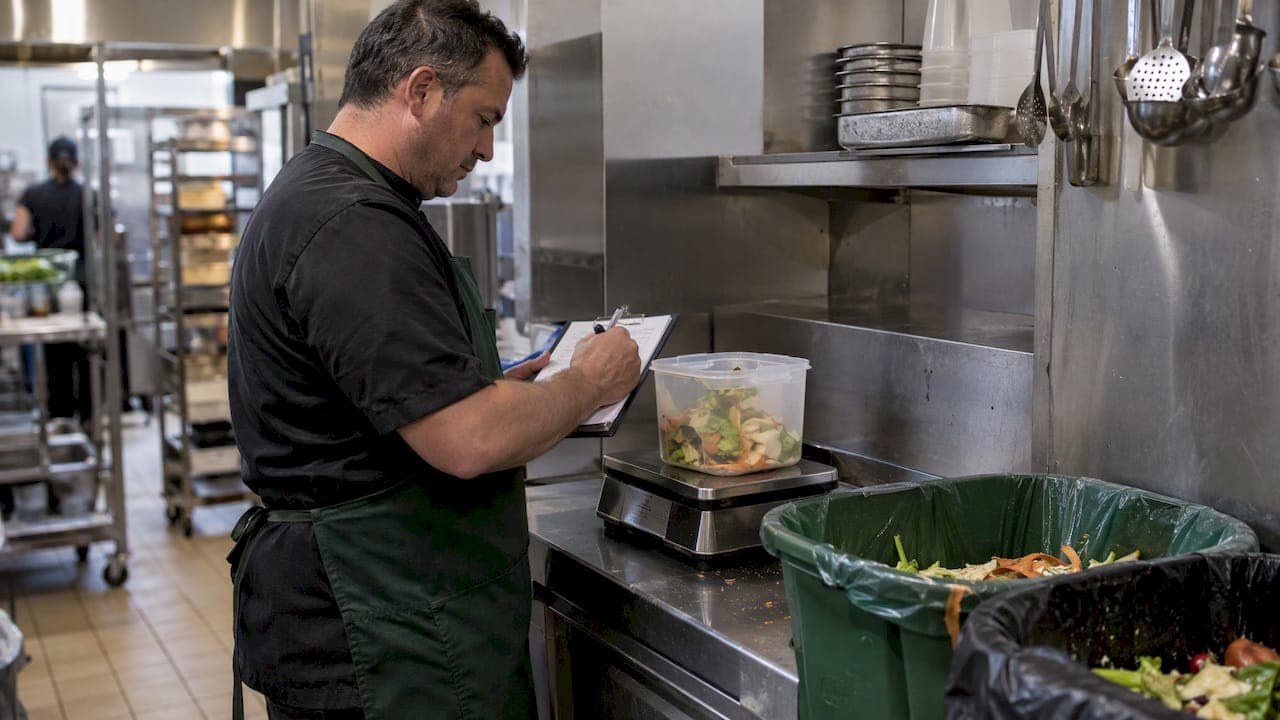
A restaurant waste allowance policy needs to do three things: stop avoidable waste before it happens, contain and document what you can't avoid, and route as much as possible away from landfill. The non-negotiables are source-reduction rules, storage and disposal procedures, assigned accountability, and a simple measurement system. Your first move today: name a Waste Officer and start a daily waste log.
TL;DR:
- Record par levels and portion sizes on prep sheets, rotate perishables first in, first out, and avoid cooking extra food just in case.
- Assign a Waste Officer to check sorting each shift, inspect grease traps daily, review storage weekly, audit waste weekly, and file monthly summaries.
- Log waste daily by cause, then track kilograms per cover, landfill diversion, and waste cost as a share of food cost each week.
- Check monthly volume thresholds before composting on the premises or accepting organics from other locations, since larger operations may need works approval or a license.
- Route liquid waste through approved systems, keep grease arrestors away from food areas, and retain cleaning, pump out, pest control, and diversion records for inspection.
Table of Contents
- 1. Key elements every waste allowance policy needs
- 2. Regulatory touchpoints your policy must reference
- 3. Turning policy into daily tasks, training and records
- 4. Measuring and reporting waste to make the policy work
- 5. Choosing the right disposal, recycling and composting routes
- 6. Why policy and profit sit closer together than you'd think
- How PantryHub helps you put the policy into practice
- FAQ
- Sources
- Where to go for regulatory detail and templates
1. Key elements every waste allowance policy needs
A policy that lives in a folder does nothing. Put these rules directly into your staff manual so there's no ambiguity about what's expected on a Tuesday lunch service.
Start with source reduction, because preventing waste beats managing it every time. Set par levels for your highest-cost items, enforce first-in-first-out stock rotation, and track yields so prep staff know exactly how much usable product a case of produce should deliver by following expert advice on how wagyu is prepared professionally. Cap overproduction with a simple rule: nothing goes on the line "just in case."
Service and portioning rules matter just as much. Standard portion sizes, written down and used in training, stop the slow creep that eats margins. Decide in advance how staff handle special requests and returned plates, and write the procedure down so it's consistent across shifts.
- Set and enforce par levels with FIFO rotation for all perishable stock.
- Standardize portion sizes and document handling for returns and special requests.
- Use labeled, pest-proof bins indoors and a dedicated outside storage area for garbage and recyclables.
- Name one Waste Officer with clear authority to flag and escalate non-compliance.
Storage rules close the loop: separate bins for general waste and recyclables, clearly labeled, with a defined collection schedule and a designated outside storage room that's easy to clean and keeps pests out.
Pro Tip: Write portion sizes and par levels directly onto prep sheets, not just in a separate policy document. Staff follow what's in front of them, not what's filed away.

2. Regulatory touchpoints your policy must reference
Your policy should point directly to the standards that govern food premises waste handling, not paraphrase them from memory. Safe Food Australia sets out requirements for sewage and wastewater disposal, the placement of grease arrestors, and the storage of garbage and recyclable matter, including the expectation that storage containers and garbage rooms are built for easy cleaning and resist pest harbourage.
Build these specifics into your written procedures:
- Never pour liquid waste onto the ground; route it through an approved disposal system.
- Site grease arrestors and holding tanks away from food preparation and storage areas.
- Maintain bunding and a documented spill-response procedure for any waste storage area.
- Keep pump-out and cleaning receipts on file as proof of ongoing maintenance.
If you're considering on-site composting or accepting organic waste loads from other sites, check the volume thresholds first. EPA guidance on composting facilities sets acceptance and production thresholds, and facilities handling organic waste above those monthly limits may need works approval or a license before they can legally operate. Related EPA licence management guidance spells out the containment, monitoring, and notification conditions that apply once a license is in place, which is useful even if you're years away from needing one.
3. Turning policy into daily tasks, training and records
A policy only works once it becomes a checklist someone actually runs through. Give your Waste Officer clear, repeatable duties:
- Check waste sorting at the start and end of each shift to catch contamination early.
- Run a quick grease trap check daily and log any irregularities.
- Inspect outside storage areas weekly for cleanliness, pest activity, and bin condition.
- Conduct a full waste audit weekly and file a summary report monthly.
Pair the duties with records that double as audit evidence: a daily waste log, pump-out and cleaning receipts, pest control records, and signed-off cleaning schedules for storage areas. Keep them in one place, physical or digital, so a council inspector or your own manager can review them in minutes.
Training should be short and recurring rather than a once-a-year briefing. A brief toolbox talk before a Friday dinner service, covering one specific waste rule, keeps the policy active in people's minds instead of buried in onboarding paperwork.
Pro Tip: Rotate the toolbox-talk topic weekly, portion sizes one week, bin sorting the next, so the same reminder doesn't go stale.
4. Measuring and reporting waste to make the policy work
You can't manage what you don't measure, and a waste allowance policy without numbers behind it is just a wish list. Track gross kilograms by cause: prep losses, spoilage, and plate waste each tell you something different about where the problem sits.
A few KPIs do most of the work:
- Kilograms of waste per cover, tracked weekly to spot trends early.
- Percentage of total waste diverted from landfill through recycling or composting.
- Weekly waste cost as a percentage of total food cost.
Once you have a few weeks of data, use it. Adjust par levels down where spoilage is consistently high, tighten a recipe's yield if prep loss is the culprit, or shift your ordering cadence so perishable stock arrives closer to when it's used. For deeper tracking steps, our guide on restaurant waste tracking walks through small-format measurement that works even without dedicated software. An inventory platform that logs waste against stock movements removes the manual tally altogether and feeds the trend straight back into your ordering decisions.
5. Choosing the right disposal, recycling and composting routes
Different waste streams need different homes, and sorting them correctly at the source is cheaper than correcting contamination later. Packaging goes to recycling, food scraps to commercial organics collection where it's available, and only genuinely non-divertible material to general waste.
If you're generating large volumes of food scraps or considering a licensed composter to handle them, check whether the volume triggers works approval. National waste policy guidance outlines the broader pathways for food waste diversion and the resource-recovery goals that commercial organics schemes are built around.
- Match each waste stream to its correct route before it leaves the kitchen.
- Avoid contamination by training staff on what belongs in each bin.
- Manage odor and pests with a firm collection schedule, not an ad hoc one.
- Keep diversion receipts for audits and for any sustainability reporting you do.
6. Why policy and profit sit closer together than you'd think
A waste allowance policy isn't a compliance chore bolted onto the business, it's one of the more direct levers on margin that a kitchen controls. Food safety and food cost both improve when storage, portioning, and disposal rules are written down and followed.
The two moves that matter most are assigning clear responsibility and tracking the numbers consistently. Operators can adjust par levels and recipe yields after reviewing waste logs. Nothing about that requires new equipment, just attention and a named person accountable for it.
— Admin
How PantryHub helps you put the policy into practice
Writing the policy is the easy part. Keeping it running week after week is where most kitchens lose momentum, and that's exactly where inventory-linked waste reporting earns its keep. We built PantryHub to help you track inventory and waste, so par-setting and ordering adjustments can be based on real numbers instead of guesswork.
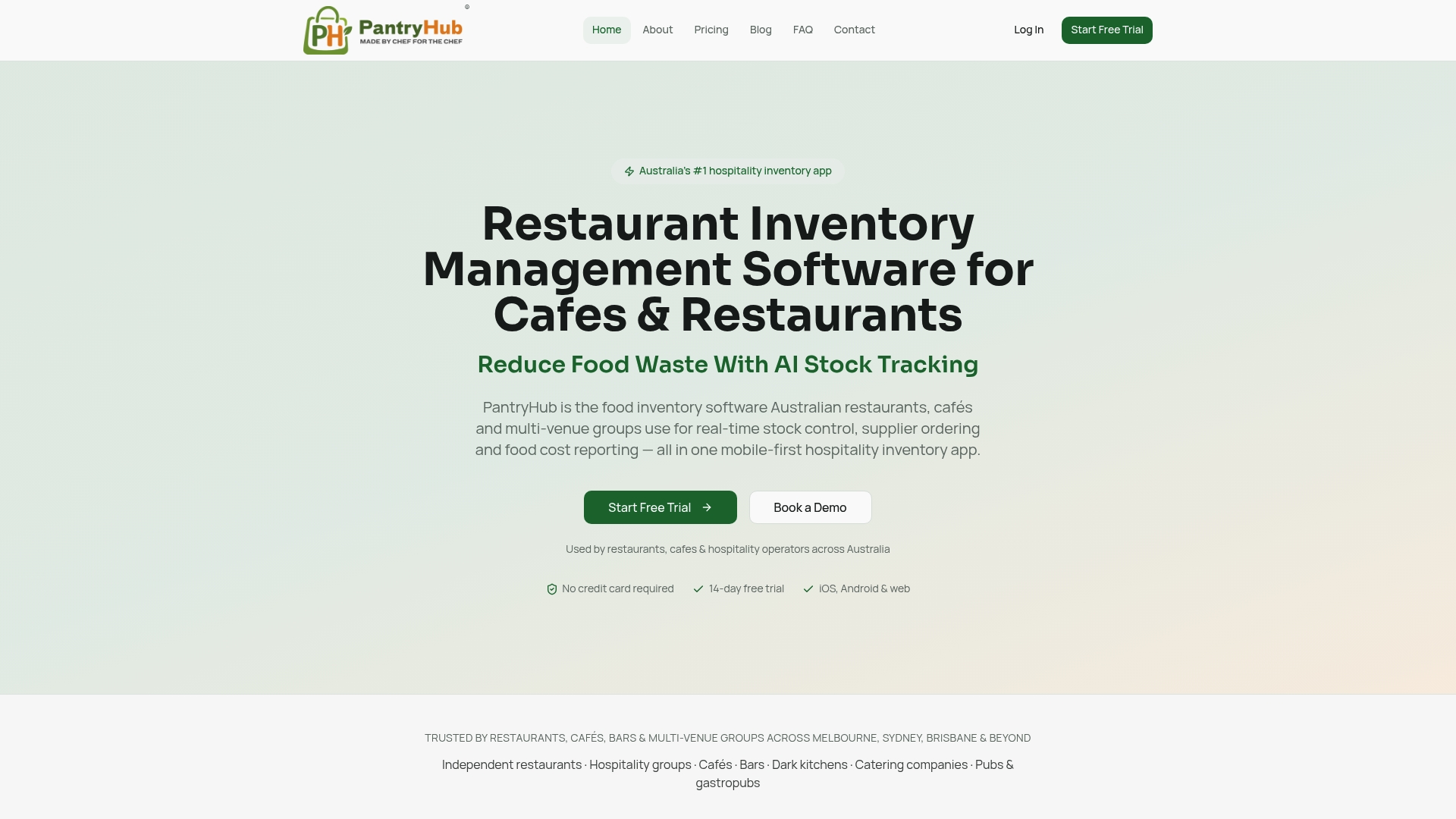
- Waste and cost reporting.
- Low-stock alerts that stop overordering before it becomes spoilage.
- Supplier ordering built into the same platform you use to track waste.
- Centralized visibility across every site if you run more than one location.
If you're ready to see it against your own numbers, start a free trial or check our pricing page for Starter at $39 AUD per month, Regular at $69 AUD per month, and Pro at $99 AUD per month.
FAQ
What should a restaurant waste allowance policy include?
A solid policy covers source-reduction rules like par levels and portion control, storage and disposal procedures, a named person accountable for compliance, and a simple system for logging waste daily. It should also reference the relevant food safety and environmental standards your premises operates under, including Safe Food Australia requirements for waste storage and disposal.
Who should be responsible for enforcing waste policies?
A designated Waste Officer, whether that's a kitchen manager or a senior chef, should own daily checks, weekly audits, and monthly reporting. Giving one person clear authority to flag non-compliance keeps the policy active instead of letting it slide during busy services.
Do I need a license to compost food waste on-site?
It depends on volume. Facilities that accept or produce organic waste above the monthly thresholds set in EPA composting guidance may need works approval or a license before operating, so it's worth checking your expected volumes against those thresholds early.
How often should waste logs and audits happen?
Daily logs give you the most useful trend data, while a full audit once a week and a summary report once a month are enough to catch problems and adjust ordering. Pump-out receipts, cleaning records, and pest control logs should be kept alongside these as ongoing evidence.
Can inventory software reduce food waste in a restaurant?
Yes, tracking waste against stock movements helps identify exactly where losses happen, whether that's over-ordering, poor portioning, or spoilage, and lets you adjust par levels accordingly. Our guide on reducing food waste in restaurants covers the operational changes that tend to have the biggest effect first.
Sources
Where to go for regulatory detail and templates
For the specifics behind this policy, go to the primary sources rather than a summary. Safe Food Australia covers food premises waste storage and disposal in detail, EPA technical guidance addresses composting thresholds and licensing, and your state's business guidance site covers local registration and inspection steps.