

The single move that fixes restaurant waste tracking: log every discard in real time with a weight and a reason code, review it daily, and connect that log to your inventory system. This turns waste from a shrug at the end of the month into a number you manage on purpose. The National Restaurant Association estimates consistent tracking can cut food costs by 2% to 6%, and platforms like PantryHub exist specifically to make that logging automatic instead of another clipboard task nobody finishes.
TL;DR:
- Tracking waste in real time with weight and reason codes can reduce food costs by 2% to 6% when connected to inventory systems.
- A 7-day baseline audit is essential to identify top loss items, with weekly KPIs guiding targeted reduction efforts.
- Digital systems that tie waste logs to inventory and POS data enable more accurate forecasting, par level adjustments, and cost reconciliation.
- Analyzing reason codes helps identify issues like spoilage or portioning and guides specific fixes, such as storage redesign or staff retraining.
- Integrating waste tracking into daily routines and compliance records improves operational habits and satisfies regulatory waste disposal requirements.
Table of Contents
- What Belongs in a Restaurant Food Waste Log
- Building Your First 30 Days: Baseline, Targets, and Routine
- Manual Logs or Digital Capture: Which One Fits Your Kitchen
- Why Connecting Waste Logs to Inventory and POS Pays Off
- What Your Reason Codes Are Telling You, and How to Fix It
- Turning Waste Tracking Into a Habit, Not a Chore
- Staying Compliant With Waste Disposal Rules
- What Kitchens Actually Change First Once They Start Tracking
- Try PantryHub for Waste Tracking That Runs Itself
- Templates and Guides to Put This Into Practice Today
- Sources
What Belongs in a Restaurant Food Waste Log
A waste log only works if it answers a question, not just record a loss. Every entry needs enough detail to point at a fix, not just a total.
Here's what to capture for each discard:
- Date and time, so you can spot patterns by shift or day of week
- Item name, specific enough to catch recurring problem ingredients
- Weight or count, since dollars follow volume, not guesswork
- Reason code, the single most important field, covering categories like prep trim, overproduction, spoilage, plate waste, and quality reject
- Station or shift, which tells you where in the line the loss happens
- Logged by, for accountability and to catch training gaps
- Estimated cost, weight multiplied by unit cost, tracked per entry
- Photo (optional), useful for disputes or training moments
The reason code is what separates a real food waste log template from a garbage tally. A structured log that pairs weight with a reason code lets a manager tell instantly whether the problem is a prep cook over-trimming proteins or a menu item nobody orders anymore. Estimating cost per entry takes seconds if you keep a standing cost sheet by the scale. Multiply that out weekly and you have a number owners actually pay attention to.
Building Your First 30 Days: Baseline, Targets, and Routine
Start with a 7-day baseline audit before you try to fix anything. Weigh every discard by category, tally the cost, and rank stations and menu items by total loss. This single week almost always exposes two or three items causing most of the damage.
From there, run this sequence:
- Week 1: Baseline audit only. No changes, just measurement.
- Week 2: Set KPIs from the baseline, such as waste weight per cover and proportion of food cost lost to waste.
- Week 3: Target a moderate reduction against baseline for your top two loss categories.
- Week 4: Reconcile results in a management review and adjust prep pars or portioning based on what worked.
Place the scale and log at a fixed station near the bin, not in a back office nobody visits during service. Whoever runs that station logs the discard in the moment, and a shift lead reconciles totals at close. One operator report on manual tracking found that kitchens logging waste daily for even two months nearly always see the percentage drop, simply because recording forces attention onto behavior that used to go unnoticed.
Pro Tip: Keep the baseline week's numbers pinned somewhere visible in the kitchen. Comparing this week's total against week one is a far more motivating number for staff than an abstract sustainability goal.
Manual Logs or Digital Capture: Which One Fits Your Kitchen
A paper waste log restaurant teams scribble on a clipboard costs nothing and starts today. That's the appeal, and it's real for a single small venue just getting started.
The trade-offs show up fast, though:
- Manual logging is quick to launch but creates gaps during a rush, when nobody wants to stop and write on a clipboard mid-service.
- Manual data sits disconnected from your ordering and costing, so someone has to retype it into a spreadsheet to get any use out of it.
- Digital capture records the same weight and reason code but ties it directly to inventory, so a waste event automatically adjusts stock counts.
- Digital systems support forecasting and multi-site reporting that paper simply cannot replicate at scale.
The switch usually makes sense once you notice repeated losses in the same category week after week, you run more than one location, or you need reporting for a supplier, insurer, or compliance review. Below that threshold, a disciplined paper log restaurant kitchen staff actually fill out beats an unused app every time.
Why Connecting Waste Logs to Inventory and POS Pays Off
A waste event that only lives in a log book is a missed opportunity. When that same entry adjusts your on-hand stock and feeds cost-of-goods reporting, it exposes variance between what you bought, what you should have used, and what actually left the kitchen as food. Digital waste-tracking tools that integrate with inventory and POS convert that gap from a mystery into a measurable performance metric.
Integration unlocks a few concrete benefits:
- AI-driven forecasting that flags over-ordering before it happens, rather than after the invoice arrives
- Automated par adjustments, so ordering rules shift based on actual usage instead of a static spreadsheet from six months ago
- Recipe yield reconciliation, catching when a dish is quietly costing more than the menu price assumes
- Unified reporting, giving managers one number for waste-adjusted food cost instead of three disconnected reports
In practice, this data lets a kitchen adjust batch sizes for a slow Tuesday, update par levels before a supplier delivery, or build a lunch special that clears surplus produce before it spoils. A reduce food waste restaurant strategy built on connected data moves a kitchen from reacting to losses to preventing them.
What Your Reason Codes Are Telling You, and How to Fix It
Once you have a few weeks of reason-coded data, patterns jump out fast. Each pattern points to a different fix, and mixing them up wastes effort.
- Heavy prep-station losses usually mean portioning or trimming standards need retraining, or your knives and tools are dull enough to cause sloppy cuts.
- Spoilage and out-of-date discards point to a FIFO or storage design problem. If staff can't easily see or reach the oldest stock first, they won't rotate it correctly no matter how many times you tell them to.
- Plate waste coming back from tables signals a portion-size mismatch or a menu description that oversells what's on the plate.
The fix for spoilage rarely starts with a lecture. Storage design determines whether FIFO actually happens: if the easiest shelf to grab from isn't the oldest stock, staff will take the shortcut every time, training or no training. Redesigning shelving so the correct rotation is also the fastest one solves more than any laminated poster. Track waste weight per cover before and after each fix to confirm it actually worked.
Turning Waste Tracking Into a Habit, Not a Chore
The log only works if it survives a Friday night rush, which means it has to live inside routines your team already follows. Add it to the opening and closing checklist, not as a separate task someone forgets.
- Build it into shift handover: the outgoing lead reports total waste weight and top reason code before clocking out.
- Frame training around process health: present the log as a tool for fixing systems, not tracking individuals, since teams log more honestly when it's not used to single anyone out.
- Watch trend lines weekly, not daily spikes, and call out the station or shift that improved most in your team meeting.
Treating tracking as an operational habit rather than a one-off project is what separates kitchens that keep the gains from ones that slide back to old habits within a month.
Pro Tip: Post the week's waste-per-cover number next to the specials board. Visibility does more to sustain good habits than any memo ever will.
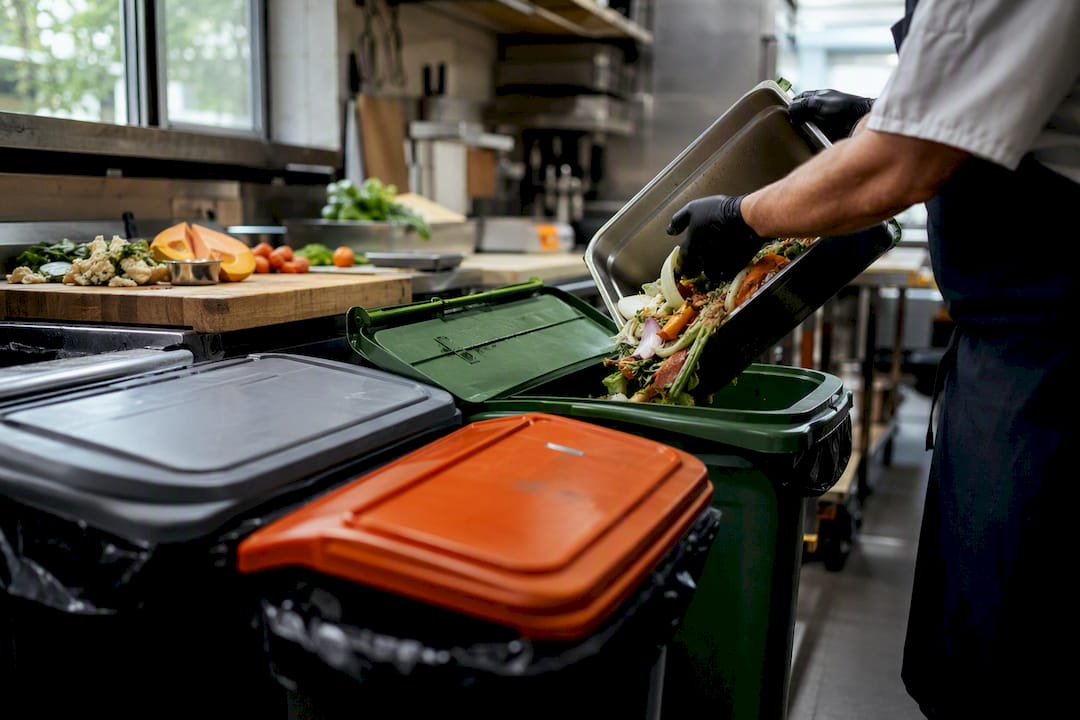
Staying Compliant With Waste Disposal Rules
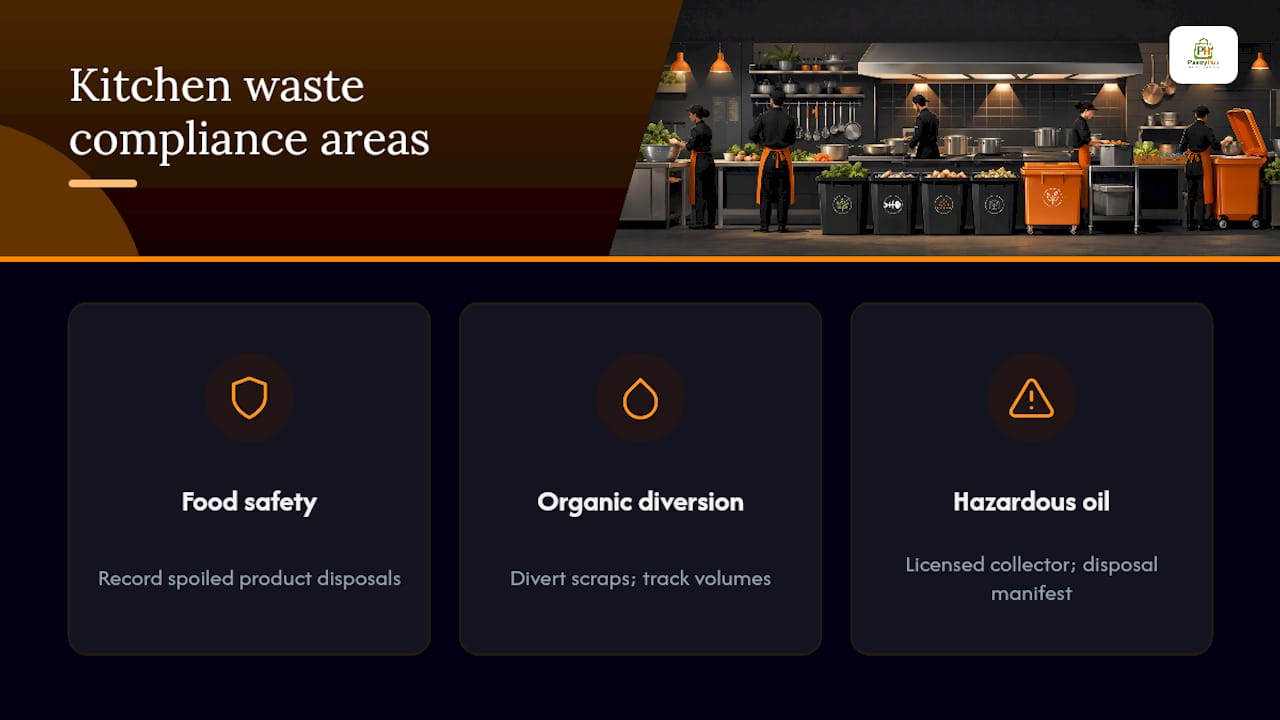
Waste tracking isn't only a margin tool, it also intersects with regulatory obligations that vary by jurisdiction and waste type. Commercial kitchens typically face rules in a few overlapping areas: food safety documentation, organic waste diversion, and hazardous waste handling for items like used cooking oil.
Health inspectors in many regions expect records showing spoiled or contaminated product was discarded rather than served, which is a byproduct benefit of a disciplined waste log restaurant teams already keep for cost reasons. If your reason codes flag "spoilage" or "quality reject" consistently, that same data doubles as evidence of food safety diligence during an inspection.
Organic waste diversion rules are expanding in many cities and states, requiring commercial kitchens above a certain size to divert food scraps from landfill through composting or donation programs. Waste tracking data helps you estimate volumes ahead of a compliance deadline rather than scrambling once a regulator asks for numbers.
Used cooking oil and grease trap waste usually fall under separate hazardous or trade-waste rules, often requiring a licensed collector and a disposal manifest. Keep these records separate from your food waste log, since regulators treat them as a distinct waste stream with different reporting requirements.
Because these rules differ by city, county, and country, check your local health department and environmental agency for the specific thresholds and reporting formats that apply to your venue. A waste log built for cost control gives you a head start on compliance paperwork either way, since the underlying discipline of measuring and recording is identical.
What Kitchens Actually Change First Once They Start Tracking
Kitchens rarely fix everything at once. What tends to happen first, once ingredient-level tracking and low-stock alerts are in place, is that over-ordering drops within the first few weeks. Managers see exactly which items are landing in the bin and stop buying to a gut feeling.
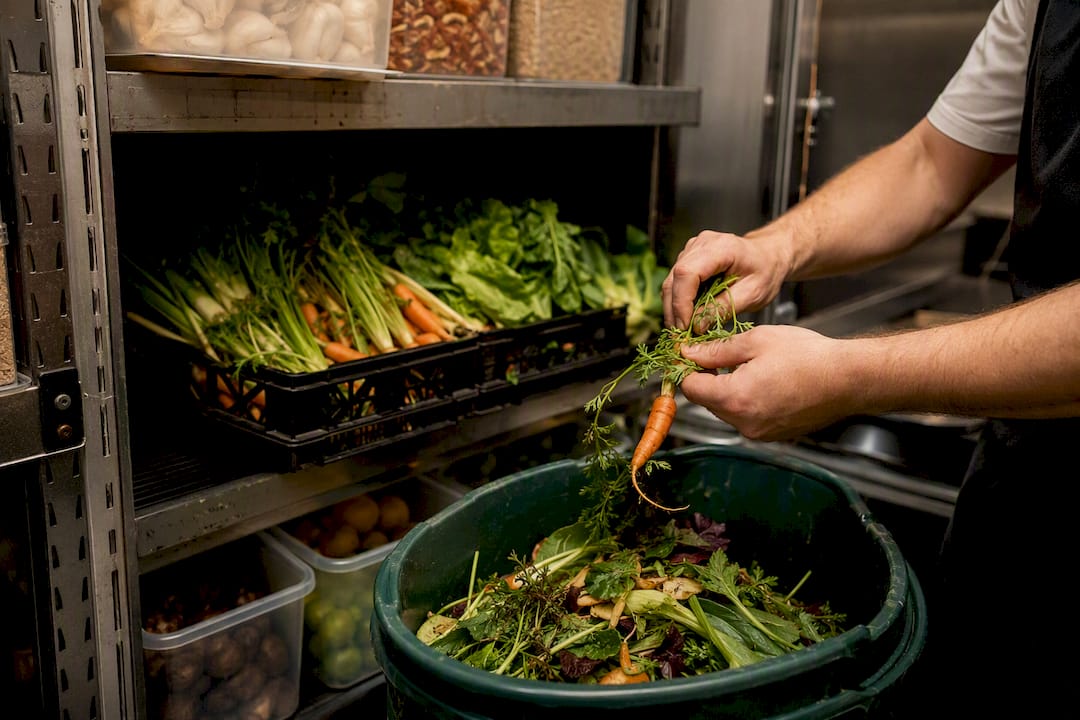
Trimming waste follows close behind, once prep staff realize their station is the one showing up in the weekly numbers. That visibility alone, without a single new procedure, tends to change behavior faster than a memo ever could.
If you manage a kitchen right now, here's one thing worth testing this week: pick your single highest-cost menu item, weigh every trim and discard tied to it for five days, and see what the number tells you. You can browse more operational detail on ingredient-level tracking if you want to see how that data connects to ordering decisions.
— Admin
Try PantryHub for Waste Tracking That Runs Itself
PantryHub is the direct upgrade from a clipboard log for kitchens that are done losing money to guesswork. Instead of retyping paper totals into a spreadsheet, you capture each waste event at the point it happens, weight, reason code, and cost included, and it flows straight into your live stock count and food cost report.
The feature set matches what this article just walked through: ingredient-level stock tracking, waste event capture tied to a reason code, low-stock alerts that catch over-ordering before it becomes spoilage, and reporting that connects every discard back to its dollar cost. Before you book a demo, pull together whatever baseline numbers you already have, even a rough weekly waste estimate works, so the team can show you exactly where PantryHub would move the needle for your kitchen specifically. Most operators start with a free trial to test the workflow on real service nights before committing. If you're ready to see it running against your own menu and suppliers, check out PantryHub's hospitality inventory software or try the kitchen inventory app on the device your team already carries on the floor.
Templates and Guides to Put This Into Practice Today
Start with a proper food waste log template that already includes reason code fields, then build your own 7-day audit checklist around the categories covered above: prep trim, spoilage, overproduction, and plate waste.
For broader operational context, the National Restaurant Association's food waste resources and ReFED's research on tracking tools are worth bookmarking as your program matures. Operators looking for a broader sustainability framework can also reference this 2026 operator guide on food service sustainability. For the integration steps that turn a log into a live inventory system, PantryHub's guide to reducing restaurant food waste picks up right where this article leaves off.
Sources
- Working to reduce food waste | National Restaurant Association
- Food waste log that turns kitchen discards into data | SafetyCulture / Forkto
- Food Waste Tracking: A Must-Have for Food Businesses | ReFED
- RMIT coverage on food waste and practical solutions