
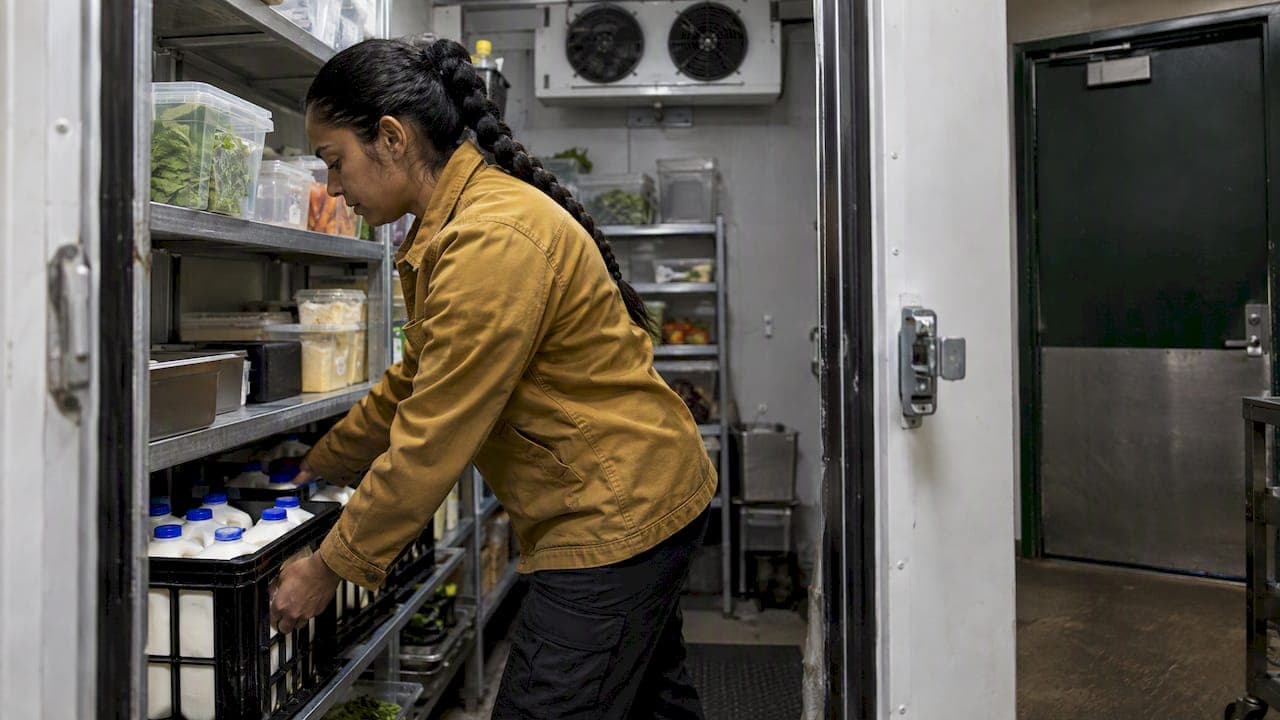
Vendor managed inventory (VMI) means your supplier, not you, decides when and how much to restock, using your sales and stock data. For a restaurant, café or pub it can work well for a few steady, fast-moving lines such as dairy, bread or soft drink. It rarely suits a whole kitchen. It only works if your own stock counts are accurate, and that is where most venues should start.
TL;DR
- VMI hands replenishment decisions (timing, quantity, frequency) to the supplier, based on data you share with them.
- It fits predictable, high-turnover items from a reliable supplier. It suits seasonal, specials-driven or single-source lines poorly.
- The risks are vendor dependence, overstock from poor data, and loss of control over your own food cost.
- Before any VMI arrangement, you need accurate counts, par levels and usage data. Without them the supplier is guessing, and so are you.
- Most venues get 80% of the benefit by running their own par-level ordering from real-time stock data, then trialling VMI on one or two categories.
Table of Contents
- What vendor managed inventory means in a restaurant
- How VMI works between a venue and its supplier
- VMI versus buyer-managed ordering and consignment stock
- Where VMI already works in Australian hospitality
- Benefits and risks
- Which stock to hand over: the 80/20 rule
- How to prepare your venue for VMI
- You may not need VMI to get the benefit
- Start with your data
- Our view: control first, then collaboration
- FAQ
- Sources
What vendor managed inventory means in a restaurant
In a standard setup, you count stock, decide what is short, and send a purchase order. In VMI, that decision moves to the supplier. SAP Australia describes VMI as an arrangement where the supplier manages its products at the customer's premises, using shared sales, inventory and demand information to reduce shortages and surplus. The supplier handles order timing, sizes and frequency, while the customer remains the final seller.
Translate that to a venue. Your dairy supplier sees that your café goes through roughly the same amount of milk every week, with a bump on weekends. Instead of you phoning in an order on Sunday night, the supplier tops you up to an agreed level on a set schedule and adjusts as your usage changes.
VMI is also called supplier managed inventory or vendor managed replenishment. The idea came out of retail and manufacturing supply chains, which is why most of what ranks for this term talks about warehouses and EDI feeds. Hospitality is a smaller, messier version of the same thing: fewer SKUs per supplier, more perishables, and menus that change.

How VMI works between a venue and its supplier
The moving parts are simple, even if the software behind them is not.
- You share data. NetSuite's overview of VMI says the business shares sales, stock-level and forecast data, and the supplier uses it to decide when and how much to replenish, then arranges delivery without waiting for a purchase order.
- You agree the rules. Under SAP's description of the process, the parties agree roles, delivery schedules, stock levels, return policies and minimum and maximum replenishment levels before they start.
- The supplier replenishes. Deliveries arrive when stock hits the agreed trigger, not when you remember to order.
- You both review. NetSuite's guidance points to regular reviews against KPIs such as inventory turnover and stockout rates.
That third step is what makes VMI different from a standing order. A standing order delivers the same quantity on the same day regardless of what happened. VMI flexes with your actual usage.
What data the supplier needs
At minimum: current on-hand stock, usage or sales by item, and a forecast for busy periods such as Christmas, Melbourne Cup week, school holidays or a footy final. In big supply chains this moves by EDI or a portal. For a single venue it is more likely a shared spreadsheet, a supplier app, or a read-only view of your inventory platform.

If you cannot produce that data reliably today, you are not ready for VMI. You are ready for better stock counts.
VMI versus buyer-managed ordering and consignment stock
Three terms get mixed up. They are different arrangements.
| Buyer-managed ordering | Vendor managed inventory | Consignment stock | |
|---|---|---|---|
| Who decides what to order | You | The supplier | The supplier |
| Who owns stock on delivery | You | Usually you | The supplier |
| When you pay | Per invoice terms | Per invoice terms | When you use or sell it |
| Your main risk | Running out or over-ordering | Depending on the supplier's judgement | Higher unit prices, tighter terms |
MYOB Australia's guide explains the key distinction: in VMI the vendor decides when and what to restock, but the retailer owns the stock on delivery. In consignment, the vendor owns the goods until they are sold. Ownership is a separate negotiation from who does the replenishing, so read the terms carefully.
That matters because some supplier terms are strict. As one example from a different industry, one industrial supplier's call-off terms require the customer to buy outstanding stock at the end of the term and bar returns of delivered products. Food is perishable, so ask who wears the loss when something expires on your shelf.
Where VMI already works in Australian hospitality
The clearest local example is quick-service restaurants. Trace Consultants' 2025 guide for ANZ businesses notes that large QSR chains such as Hungry Jack's rely on VMI for fresh, just-in-time deliveries. It says VMI is particularly relevant to QSRs that need ingredient deliveries aligned with sales, and to fast-moving food and beverage products. Dairy deliveries are its example of a sensible pilot.
Those chains have central purchasing, standardised menus and a distributor built around them. Your independent café or neighbourhood pub has none of that, so you need to be selective.
Good candidates for VMI
- Milk and dairy for a café with steady daily volume.
- Bread and bakery where the supplier already delivers daily.
- Beverages: soft drink, kegs, packaged beer and wine for pubs and clubs, where the distributor often already runs a loose version of this.
- Packaging and disposables: takeaway containers, bags, napkins, fish and chip wrap.
- Frozen staples: chips, battered product and similar lines with predictable turnover.
Poor candidates
- Specials-driven proteins and seasonal produce, where your menu and the market change week to week.
- High-value items where a small over-delivery hurts your cash.
- Anything from a supplier with patchy delivery reliability. Trace warns that unreliable suppliers, disconnected data, setup costs and loss of control can undermine the model.
Benefits and risks
What you can gain
Adobe's summary of VMI lists lower inventory costs, better stock availability, improved forecasting and stronger supplier partnerships. For a venue the practical wins are:
- Less time on ordering for the lines you hand over.
- Fewer "we're out of milk" moments on a Saturday.
- A closer relationship with a supplier who now has a stake in your sales.
Waste is part of the case too. Trace's hospitality cost guide notes that in large food and beverage operations with significant perishable inventory, spoilage can represent 2 to 5% of food cost in poorly managed operations. That is a margin leak most operators feel but few measure.
What can go wrong
The same Adobe source flags dependence on vendor expertise, communication gaps that lead to overstock or stockouts, and security risks from sharing sensitive data. In practice, for a restaurant:
- Overstock you pay for. If the supplier tops up to a level you set too high, you hold cash in the cool room.
- Lost visibility. When someone else orders, you stop noticing price creep and pack-size changes.
- Single-supplier risk. Culinary Strategy recommends building a supplier list with at least two options for every critical ingredient category. VMI tends to push you towards one.
- Sharing sales data. Your sales mix tells a supplier a lot about your business. Agree what they can use it for.
Trace's ANZ view is that VMI is a partnership that needs trust, dependable delivery and shared goals. If you do not already trust the supplier to deliver on time, VMI will not fix that.
Which stock to hand over: the 80/20 rule
People searching this topic often ask about the 80/20 rule. In inventory it is usually applied through ABC analysis, which classifies stock by its importance or consumption value. The rough idea is that a small share of your items accounts for most of your spend.
In a kitchen that typically looks like this:
- A items (a few lines, most of the dollars): proteins, seafood, cheese, premium spirits. Count these weekly or even per shift, and keep ordering in your own hands.
- B items: produce, dairy, bakery, mid-range beverages. Reasonable VMI candidates when usage is steady.
- C items (many lines, little money): dry goods, condiments, cleaning supplies, packaging. Easy to automate, and low risk if the supplier over-delivers slightly.
The usual instinct is to give away the high-value lines because they take the most effort. Do the opposite. Keep the lines that drive your food cost under your own control, and let the supplier manage steady, low-risk categories. The 80/20 split is a guide, not a law, so check it against your own purchase history.
How to prepare your venue for VMI
Trace's guidance for large Australian hospitality groups puts an accurate cost-of-goods baseline first, then inventory and par-level optimisation, which follows procurement consolidation. A single venue can use the same logic in a smaller form.
- Get a clean baseline. Do a full stocktake and record opening stock, purchases, closing stock and sales for at least four weeks.
- Set par levels. Decide the minimum and maximum you want on hand for each item. A VMI supplier will need exactly these numbers.
- Pick one category and one supplier. Dairy or beverages are the usual start. Keep the rest on your own ordering.
- Agree terms in writing. Cover delivery days, trigger levels, maximum order value, price notification, who owns stock on delivery, and what happens to short-dated product.
- Run a 4 to 8 week pilot. Compare waste, stockouts and spend against your baseline.
- Review regularly. One Australian supplier guide suggests reviewing a wholesale meat relationship at least quarterly, checking price, quality, delivery reliability and range. The same rhythm suits any supplier.
You can see the pattern. Every step depends on trustworthy numbers. For multi-site groups, add one more step: aggregate volume across venues before you negotiate. Trace calls procurement consolidation the highest-impact, fastest-return initiative for most large hospitality operations, and it is the best moment to ask a supplier for VMI-style service.
You may not need VMI to get the benefit
The appeal of VMI is less ordering work, fewer stockouts and less waste. You can capture a lot of that on your own side of the counter:
- 📦 Real-time stock tracking so you know what is on the shelf without a weekend count.
- 🔔 Low-stock alerts when an item drops below its par level.
- 🛒 Supplier ordering from the same screen, built from your par levels.
- 📊 Waste and food cost reporting so you can see which lines leak margin.
That is what PantryHub does for Australian venues, from a single café to a multi-location group. Once your counts and par levels are in one place, you can decide with real data whether a supplier should take over a category. You can also hand them a clean usage report instead of a guess.
Start with your data
PantryHub plans are published at A$39 a month for Starter, A$69 for Regular and A$99 for Pro, and you can begin with a free trial. Set up your items and par levels, run a few weeks of counts, and you will know which categories are steady enough to hand to a supplier.
Start your free trial and bin the spreadsheets. If you run several sites, our Melbourne, Sydney, Adelaide and Perth pages show how venues in each city use it.
Our view: control first, then collaboration
We built PantryHub by chefs for chefs, and we have seen the same pattern in kitchens again and again. The margin does not disappear in one big mistake. It leaks out through over-ordering, spoiled produce and last-minute supplier calls.
So our view on VMI is practical. It is a good idea for the right categories, and a bad one when it replaces knowing your own numbers. A supplier managing your stock is only as good as the data behind it. If your counts are a guess, the supplier's replenishment will be a guess too, delivered on a schedule.
Our advice to operators:
- Fix your own visibility first. Count properly, set par levels, and track waste.
- Keep your high-value lines in your hands, and keep a second supplier for anything critical.
- Use VMI-style arrangements for boring, steady lines, where handing over the work frees up your time without risking your food cost.
- Treat any supplier who offers it as a partner you review, not a system you forget about.
If you want more on choosing the right tool for your venue size, see our guide to inventory software for small Australian venues and our comparison of the best inventory systems for restaurants in Australia. Hotel operators can read our piece on hotel F&B inventory management.
— the author
FAQ
What does VMI stand for in a restaurant?
VMI stands for vendor managed inventory. It is an arrangement where your supplier monitors your stock and sales data, then decides when and how much to deliver. You still own the stock once it arrives in most models, but you stop writing the purchase orders for those items.
Is vendor managed inventory the same as consignment stock?
No. In VMI the supplier controls ordering and restocking, but you generally own the goods on delivery and pay for them. In consignment, the supplier owns the stock until you use or sell it. Always confirm which model your supplier is offering, because the payment and return terms differ.
Is VMI worth it for a single café or pub?
Sometimes, for one or two categories. Milk, bread, packaged drinks and disposables are steady enough to suit it. For a small venue, the bigger gain usually comes first from accurate counts and par levels, which also make any VMI conversation with a supplier easier.
What is the 80/20 rule for restaurant inventory?
It says a small share of your stock lines accounts for most of your spend. Kitchens use it through ABC analysis: count and control the few high-value lines closely, and automate the many low-value ones. It helps you decide what to keep in-house and what to hand to a supplier.
What do I need before starting VMI?
You need a recent stocktake, usage data by item, agreed par levels, and a supplier with a reliable delivery record. Put the delivery days, order limits and ownership of short-dated stock in writing before the pilot starts.
Sources
- How Australian Organisations Can Leverage VMI Effectively (Trace Consultants)
- How to Reduce Food and Beverage COGS in Hospitality (Trace Consultants)
- What is Vendor Managed Inventory (VMI)? (SAP Australia)
- What Is Vendor-Managed Inventory (VMI)? (NetSuite)
- What is vendor managed inventory? (MYOB Australia)
- Vendor managed inventory: benefits, risks, and best practices (Adobe)
- Terms and Conditions of Sale, Call Off Inventory (RS)
- Pre-Opening Checklist (Culinary Strategy)
- 7 Mistakes When Buying Bulk Meat Online in Australia (Meat Online)
- ABC Analysis (80/20 Rule) in Inventory Management (MRPeasy)