

A kitchen stocktake process is the physical counting and recording of all kitchen inventory to verify that actual stock levels match what your records show. This practice sits at the core of any effective kitchen inventory procedure, giving restaurant and café managers the data they need to reduce waste, control costs, and make confident purchasing decisions. Whether you're running a single café or a multi-location group, understanding how to do a stocktake correctly separates kitchens that bleed margin from those that protect it.
What is a kitchen stocktake process and why does it matter?
A kitchen stocktake is more than a headcount of cans and containers. Stocktaking is reconciliation, a process of uncovering discrepancies between physical stock and recorded data so you can make better operational decisions. That distinction matters because managers who treat stocktaking as a formality miss the real value: identifying theft, spoilage, over-ordering, and supplier errors before they compound.
The importance of kitchen stocktake shows up directly in your bottom line. When your records say you have 10 kg of salmon but the walk-in holds 6 kg, that 4 kg gap represents either waste, theft, or a receiving error. Without a regular kitchen stock management process, those gaps accumulate silently. Regular stocktakes also support accurate menu costing, which is the foundation of profitable pricing.
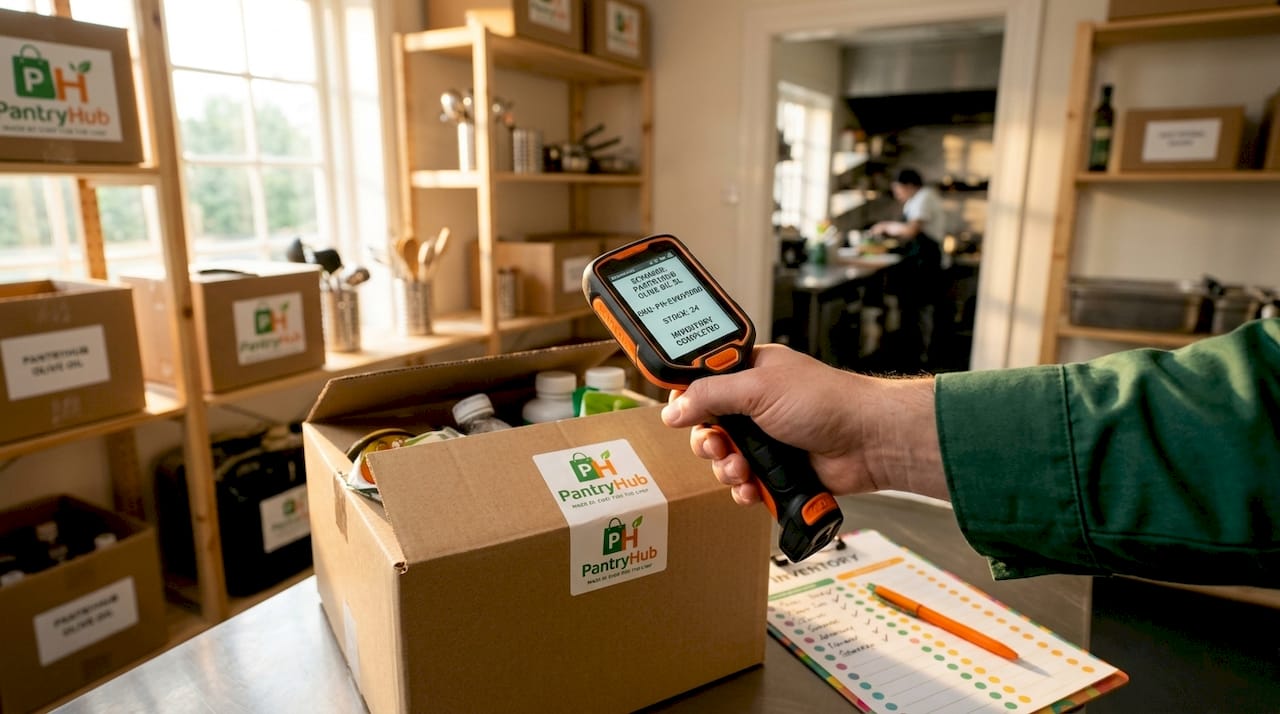
Common tools used in the kitchen stocktake process include paper count sheets, barcode scanners, and dedicated inventory management software. Each approach has a place depending on your operation's size and complexity. The goal across all of them is the same: accurate, consistent data you can act on.
How to do a stocktake: the 7-step workflow
The stocktake workflow follows seven defined steps, and skipping any one of them introduces errors that undermine the entire count.
-
Plan the stocktake. Set a date and time, ideally at the end of a trading period when stock levels are at their lowest. Decide which areas you are counting and what tools you will use. Communicate the schedule to all relevant staff in advance.
-
Prepare stock areas. Clean, organized, and labeled storage areas are non-negotiable before counting begins. Consolidate partial containers, face products forward, and remove any items that belong in a different area. Disorganized shelves produce inaccurate counts every time.
-
Assign roles. Separate the counter from the recorder. Dividing these roles reduces the risk of one person both counting and recording incorrectly without a check. In smaller operations, two staff members working together is the minimum.
-
Run pre-count checks. Walk the kitchen before counting starts. Look for items stored in unusual locations, deliveries that haven't been put away, or stock that has been moved between areas. Catching these anomalies before the count prevents double-counting and missed items.
-
Count area by area. Work systematically through each section: dry store, refrigerators, freezers, and prep areas. Count every item in one zone before moving to the next. Record quantities in the units your recipes use, whether that's kilograms, liters, or individual units.
-
Recount discrepancies. Any item where your physical count differs significantly from your recorded quantity gets counted a second time before you accept the variance. This step alone catches the majority of human counting errors.
-
Update records and reconcile. Compare counts to records and update your inventory system. Investigate major variances before accepting them. Adjusting records without understanding why a gap exists hides the underlying problem rather than fixing it.
Pro Tip: Schedule stocktakes at the end of service on a Sunday or your slowest trading day. Stock levels are predictably low, deliveries are unlikely to arrive mid-count, and staff are already on-site.
Periodic vs. cycle counting: which method fits your kitchen?
Two primary stocktaking methods for kitchens exist: periodic full counts and continuous cycle counting. Each suits different inventory types and operational rhythms.
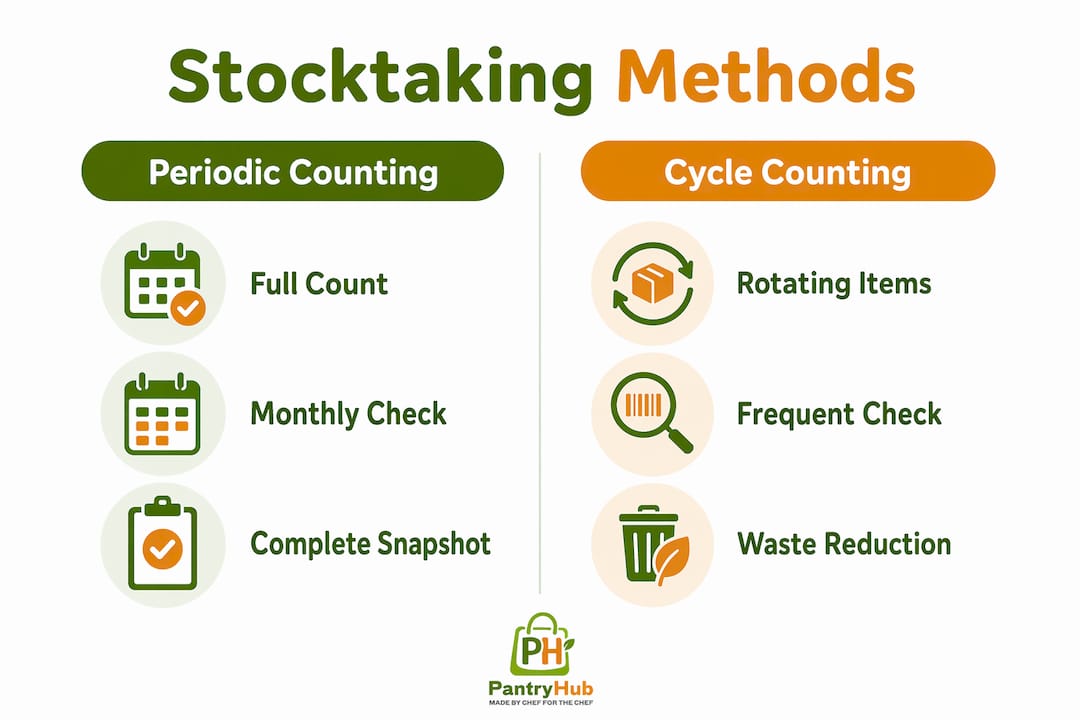
A periodic stocktake counts all items at a fixed interval, typically monthly or weekly. It gives you a complete snapshot of your entire inventory at one point in time. The trade-off is that it requires stopping or slowing operations and dedicating significant staff time to a single count event.
Cycle counting takes a different approach. This method checks different items on rotating schedules, so high-turnover perishables like proteins and dairy might be counted weekly, while dry goods and cleaning supplies are counted monthly. The result is ongoing accuracy without the operational disruption of a full shutdown count.
Weekly counts for high-turnover items and monthly counts for slower-moving stock reduce waste and sharpen reorder decisions. This is the approach most high-volume restaurants use in practice.
| Method | Best for | Frequency | Disruption level | Accuracy over time |
|---|---|---|---|---|
| Periodic full count | Full inventory snapshot | Monthly or quarterly | High | High at count date |
| Cycle counting | Ongoing accuracy | Daily, weekly, or monthly by item | Low | Consistently high |
| Spot check | Investigating specific variances | As needed | Minimal | Targeted only |
Pro Tip: For perishable-heavy kitchens, apply cycle counting to your top 20 ingredients by cost. These items drive the majority of your food cost variance and deserve the most frequent attention.
For operations managing stock across multiple sites, a multi-location stock guide covers how to adapt these methods without duplicating effort.
How technology improves your kitchen stocktake
Digital tools change the accuracy and speed of the kitchen stocktake process in ways that manual methods cannot match. Inventory software and barcode scanners reduce human error, support real-time tracking, and make reconciliation faster and more reliable.
Here is how technology integrates with each stage of the stocktake:
- Barcode scanners and mobile apps let staff scan items directly into a digital count sheet, eliminating transcription errors from paper to system. Platforms like PantryHub allow counts to be entered on a phone or tablet from anywhere in the kitchen.
- POS integration pulls sales data automatically, so your system can calculate theoretical usage and compare it against your physical count. The gap between theoretical and actual usage is your variance, and it tells you exactly where to investigate.
- Low-stock alerts notify managers when an item falls below a set threshold, reducing the chance of running out mid-service without a manual check.
- Reporting dashboards track variance trends over time. A single count showing a 5% variance in beef is a data point. Six consecutive counts showing the same variance is a pattern that points to a specific operational problem.
- Supplier ordering integration means that once your count is complete, reorder quantities can be generated automatically based on par levels, removing a manual step that often introduces errors.
Transitioning from paper to digital does not require a full system overhaul on day one. Start by digitizing your count sheets and entering results into a spreadsheet or basic inventory app. Once your team is comfortable with the discipline of regular counting, move to a purpose-built platform that connects counts to ordering and reporting.
Practical tips for accuracy and waste reduction
Accurate stocktaking and waste reduction are directly connected. Every percentage point of variance you close translates to recovered margin. These practices make the biggest difference in real kitchen environments.
- Label everything with units and locations. Stock that lives in a consistent, labeled spot gets counted correctly. Stock that migrates between shelves gets missed or double-counted. A kitchen inventory checklist that maps each item to a fixed location is one of the most underused tools in hospitality.
- Count before ordering, not after. Many kitchens order on habit rather than on current stock levels. Counting first and ordering second eliminates the over-purchasing that drives spoilage.
- Investigate variances before adjusting records. Reconciliation should involve investigating discrepancies before updating records. Accepting a variance without understanding it masks theft, spoilage, or receiving errors.
- Use the same method every time. Consistency in stocktaking methods over time builds reliable variance trends. Switching between count sheets, apps, and verbal tallies makes it impossible to compare results across periods.
- Train new staff before they count alone. Pair new team members with an experienced counter for at least two full stocktakes before they work independently. Counting errors from untrained staff are the most common source of unexplained variance.
For kitchens focused on cutting food waste, connecting your stocktake data to a broader food waste reduction strategy gives you the full picture of where losses occur across the operation.
Pro Tip: Run a quick variance report after every stocktake and share it with your head chef. When chefs see the numbers, they take ownership of waste in a way that general reminders never achieve.
Key takeaways
A disciplined kitchen stocktake process, run consistently with clear roles and validated data, is the single most effective tool for controlling food cost and reducing waste in a commercial kitchen.
| Point | Details |
|---|---|
| Define the process correctly | A stocktake is reconciliation, not just counting. It uncovers discrepancies between physical stock and records. |
| Follow the 7-step workflow | Plan, prepare, assign roles, pre-check, count, recount variances, then update and reconcile records. |
| Match method to your operation | Use cycle counting for perishables and periodic full counts for a complete inventory snapshot. |
| Investigate before adjusting | Never update records to match a variance without understanding its cause first. |
| Consistency builds reliable data | Using the same method every count period allows meaningful trend analysis and better purchasing decisions. |
Why most kitchens are doing stocktakes wrong
I have worked with enough restaurant and café managers to say this plainly: the majority of kitchens treat stocktaking as a compliance exercise rather than a management tool. They count, they update the spreadsheet, and they move on. The variance column gets ignored until the accountant asks about food cost at the end of the quarter.
The kitchens that actually use stocktake data are the ones that investigate every significant variance the same week it appears. They ask whether the gap came from a receiving error, a prep waste issue, a portioning problem, or something more serious. That investigation loop, done consistently, is what separates a 28% food cost from a 34% food cost over a year.
The other mistake I see constantly is inconsistency in method. A manager counts proteins by weight one month and by portion the next. A new staff member counts the dry store differently from how it was done before. The data becomes incomparable, and the variance trends that should guide purchasing decisions become noise instead of signal.
If you take one thing from this article, make it this: the value of a stocktake is not in the count itself. It is in the comparison between this count and the last one, and the discipline to understand why the numbers moved.
— Admin
Take control of your kitchen inventory with PantryHub
PantryHub is built specifically for restaurants, cafés, and commercial kitchens that want to move beyond spreadsheets and paper count sheets. The platform connects your physical stocktakes to real-time inventory tracking, supplier ordering, and variance reporting in one place. You count, PantryHub reconciles, and your purchasing decisions are backed by accurate data rather than guesswork. Whether you manage one location or several, hospitality inventory software from PantryHub gives you the visibility to cut waste and protect margin every week. Explore PantryHub and see how it fits your operation.
FAQ
What is a kitchen stocktake process?
A kitchen stocktake process is the physical counting and recording of all kitchen inventory to verify that actual stock levels match your records. It is used to identify discrepancies, reduce waste, and support accurate purchasing decisions.
How often should a kitchen stocktake be done?
High-turnover perishables like proteins and dairy should be counted weekly, while dry goods and slower-moving items are typically counted monthly. The right frequency depends on item value, turnover rate, and how closely you need to monitor food cost.
What is the difference between periodic and cycle stocktaking?
Periodic stocktaking counts all inventory at one fixed point in time, such as monthly. Cycle counting checks different items on rotating schedules, providing ongoing accuracy without the disruption of a full shutdown count.
Why should discrepancies be investigated before updating records?
Accepting a variance without investigating it masks the underlying cause, whether that is theft, spoilage, a receiving error, or a counting mistake. Investigating first protects data integrity and allows you to fix the actual problem.
What tools are used in a kitchen stocktake?
Common tools include paper count sheets, barcode scanners, and dedicated inventory management platforms. Digital tools reduce transcription errors, support real-time tracking, and make variance analysis faster and more reliable than manual methods.