

Fish shop stock control is the process of managing seafood inventory through integrated systems that connect weight measurement, sales data, and environmental monitoring to reduce spoilage and protect profit margins. The industry term for this discipline is perishable inventory management, and it goes far beyond counting boxes in a cooler. AI-driven freshness monitoring and demand forecasting systems reduce spoilage by 20–30% and can save fish shop operators $2,000–$5,000 monthly in waste costs. For any fish shop owner serious about margins, understanding how these systems work together is the starting point for real change.
How fish shop stock control works: the core system
Fish shop stock control works by linking four interconnected processes: receiving, weighing, labeling, and selling. Each step feeds data into a central inventory record, so your stock levels update automatically every time a transaction occurs. Modern stock control for seafood uses a centralized POS that integrates scales and inventory databases to automate weight, pricing, and real-time sales-based inventory adjustments, eliminating manual tracking errors entirely.
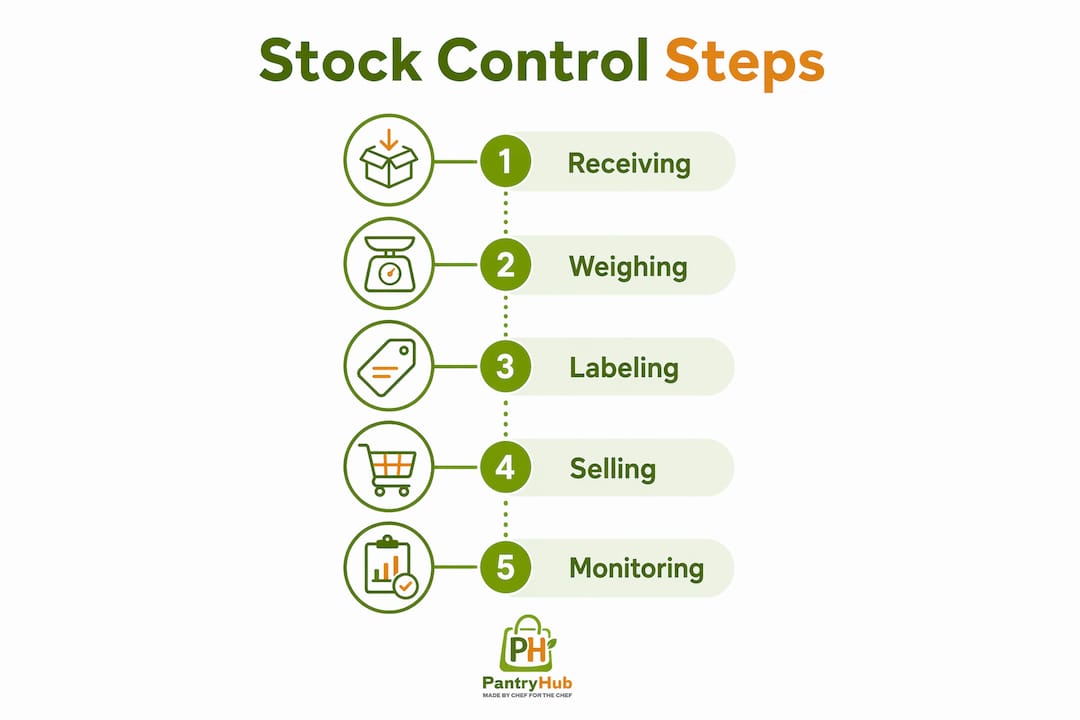
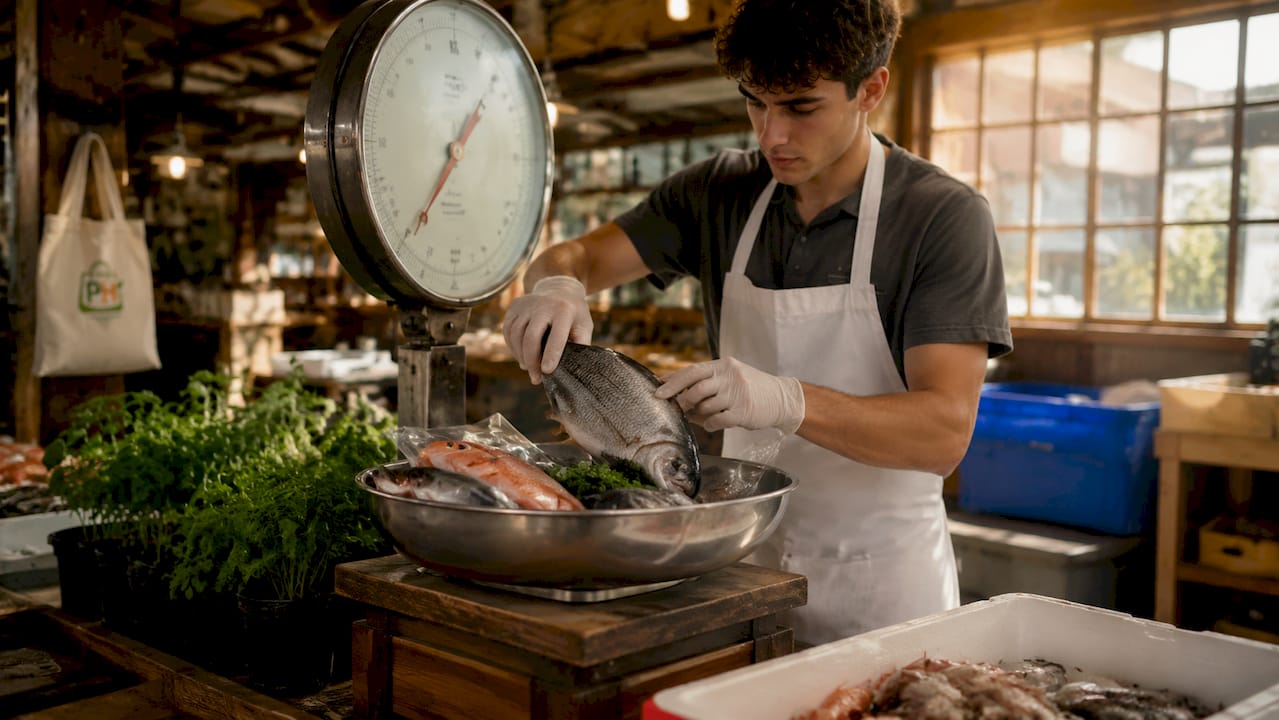
The process starts the moment a delivery arrives. Staff weigh each batch on calibrated scales before any trimming, icing, or processing begins. Recording true batch weights upon receipt before processing provides accurate baseline data to monitor shrinkage and wastage throughout the day. That baseline number is what makes everything downstream reliable.
After weighing, the system auto-generates labels that include species name, weight, catch date, and a barcode. Those barcodes connect the physical product to the digital inventory record. When a staff member scans a label at the point of sale, the system deducts the correct weight from stock automatically. No manual entry. No guesswork.
| System component | Function | Benefit |
|---|---|---|
| Calibrated receiving scales | Weigh batches on arrival | Accurate shrinkage baseline |
| Auto-labeling printer | Prints species, weight, catch date, barcode | Traceability and faster checkout |
| POS integration | Deducts sold weight from live inventory | Real-time stock accuracy |
| Inventory database | Stores all transaction and weight data | Audit trail and reporting |
| Low-stock alerts | Triggers reorder notifications | Prevents stockouts |
Pro Tip: Weigh every delivery before staff touch it. Even a 5% trimming loss on a 50-pound batch of salmon adds up to significant untracked shrinkage by end of week.
What role do environmental and freshness monitoring systems play?
Live seafood and fresh fish are living assets, not static SKUs. Water temperature, dissolved oxygen, and ammonia levels directly determine whether your live stock survives until sale. Data-driven water quality monitoring in live seafood shops reduces losses from die-offs by 30–50%. That is a direct hit to your cost of goods if you ignore it.
IoT sensors placed in tanks and cold storage units send continuous readings to a central dashboard. When a reading crosses a threshold, the system fires an alert to the manager's phone before product dies or spoils. Predictive analytics utilize IoT sensors and environmental data to forecast seafood shelf life, improving stock rotation and enabling proactive interventions before losses occur.
Freshness scoring adds another layer of control. Each delivery gets logged with catch date, transit temperature, and a supplier quality grade. Freshness tracking systems flag deliveries that exceed freshness thresholds immediately, enabling rejection before cold storage and protecting the quality of everything already in your cooler.
The practical result is that your team knows exactly which product is closest to its freshness limit at any moment. That knowledge drives smarter decisions at the counter, in the kitchen, and when placing the next order.
- Monitor ammonia, dissolved oxygen, and temperature in live tanks daily
- Set automated alerts at 80% of the safe threshold, not at the limit itself
- Log supplier quality grades at every delivery to build a performance record
- Cross-reference temperature logs with sales data to spot patterns in spoilage timing
- Use freshness scores to guide daily specials and promotional pricing before product turns
Pro Tip: Correlate your environmental sensor data with your weekly sales reports. If spoilage spikes every Thursday, check whether your Tuesday delivery is arriving warmer than spec.
How to implement FEFO stock rotation in a fish shop
FEFO (First Expired, First Out) is the correct rotation method for perishable seafood. FIFO (First In, First Out) works for shelf-stable goods, but fish does not spoil in the order it arrives. A batch of snapper delivered on Monday may have a shorter shelf life than a batch of barramundi that arrived on Sunday, depending on catch date and cold chain handling. FEFO stock rotation ensures products with the earliest expiry dates sell first, which is critical for seafood with varying shelf lives.
The difference between FIFO and FEFO is what you track. FIFO tracks receipt date. FEFO tracks expiration date. For seafood, expiration is calculated from catch date and temperature history, not from when the box hit your loading dock.
| Method | Basis for rotation | Best for | Risk in seafood |
|---|---|---|---|
| FIFO | Receipt date | Shelf-stable goods | Ignores variable shelf life |
| FEFO | Expiration date | Perishable seafood | Requires digital tracking |
Implementing FEFO requires digital labels that display expiry dates clearly. Frontline staff need to read those labels and pull from the correct position in the cooler, not just grab from the front. Storage layout matters too. Organize coolers so that product with the earliest expiry sits at the front and at eye level, making the right choice the easy choice for every team member.
Traceability and documented inspection plans with digital approvals simplify audits and support precise margin management by tracking yield and cost at the batch level. When your FEFO system is running correctly, you can trace any product back to its catch date, supplier, and cold chain record in seconds.
Pro Tip: Print expiry dates in large, bold font on every label. Staff working fast during a lunch rush will not stop to calculate shelf life from a catch date. Make the expiry date impossible to miss.
How do fish shops forecast demand and avoid overstocking?
Demand forecasting is the practice of using past sales data and known future events to predict how much stock you need before you order it. Without forecasting, fish shop owners either overorder and absorb spoilage costs or underorder and lose sales. Both outcomes hurt the business. The goal is to reduce food waste while keeping the display case full.
Accurate forecasting for a fish shop pulls from several data sources:
- Sales history by species, day of week, and season
- Local event calendars including fishing tournaments, public holidays, and school breaks
- Supplier lead times and delivery reliability scores
- Weather forecasts, which affect both supply from fishing boats and customer foot traffic
- Promotional schedules that drive demand spikes for specific products
The most overlooked input is the local event calendar. A fishing tournament weekend can triple demand for bait and live product. A public holiday Monday means your Friday delivery needs to cover three days instead of one. Operators who build these events into their ordering schedule consistently outperform those who react after the fact.
Digital inventory platforms generate reorder alerts based on current stock levels and projected sales rates. When stock for a given species drops below a calculated buffer level, the system flags it for reorder before you hit zero. That buffer level should account for supplier lead time, not just current demand. A supplier who delivers in 48 hours needs a different buffer than one who delivers same day.
Integrating your forecasting data with supplier scheduling also lets you log delivery performance over time. If a supplier consistently delivers late or short, that history shows up in your records and informs future ordering decisions. Traceability as a quality-control tool enables supplier scorecards that improve sourcing decisions based on freshness consistency.
Key Takeaways
Effective fish shop stock control requires integrating weighing, labeling, environmental monitoring, FEFO rotation, and demand forecasting into one connected system that updates inventory in real time.
| Point | Details |
|---|---|
| Weigh on arrival | Record batch weights before processing to establish an accurate shrinkage baseline. |
| Use FEFO, not FIFO | Rotate seafood by expiration date, not receipt date, to match actual shelf life. |
| Monitor live stock conditions | IoT sensors in tanks reduce die-off losses by 30–50% through early alerts. |
| Forecast with local data | Build event calendars and supplier lead times into your reorder calculations. |
| Track freshness at receipt | Log catch date, temperature, and quality grade for every delivery to catch substandard product before it enters cold storage. |
Why most fish shops are still leaving money on the table
I have worked with enough food operators to know that the gap between knowing what to do and actually doing it is where most profit disappears. Fish shop owners understand freshness. They know their product. What they often underestimate is how much money leaks through imprecise weighing, ignored environmental data, and gut-feel ordering.
The operators who turn this around fastest are not the ones who buy the most expensive equipment. They are the ones who commit to recording accurate data at the point of receipt and then actually reviewing it weekly. A shrinkage report that nobody reads is just noise. A shrinkage report that triggers a conversation with your supplier is a profit tool.
Traceability also changes supplier relationships in ways that most operators do not anticipate. When you can show a supplier a six-month record of their delivery temperatures and freshness grades, the conversation shifts. You are no longer just a customer complaining about quality. You are a data-informed buyer with mobile stock management capabilities that document every transaction. Suppliers respond to that differently.
The technology exists to run a fish shop with the same inventory discipline as a large food manufacturer. The barrier is not cost. It is the willingness to replace manual habits with digital ones, one process at a time.
— Admin
Pantryhub gives fish shop operators real-time stock visibility
Running a fish shop means managing some of the most time-sensitive inventory in the food industry. Pantryhub's hospitality inventory software is built for exactly this kind of operation, giving you live stock tracking, low-stock alerts, and supplier integration from a single platform.
Pantryhub connects your receiving process, your sales data, and your reorder workflow so nothing falls through the gaps. You get automated alerts when stock drops below your set threshold, full batch-level traceability for compliance, and reporting that shows you exactly where shrinkage is happening. Whether you run one location or several, Pantryhub gives you the visibility to make faster, better decisions about your fish and chips inventory and every other product in your cooler.
FAQ
How does fish shop stock control differ from standard retail inventory?
Fish shop stock control tracks weight, catch date, temperature history, and expiration date rather than unit counts alone. Seafood spoils based on freshness conditions, not just time on the shelf, which requires real-time environmental monitoring alongside standard inventory tracking.
What is FEFO and why does it matter for seafood?
FEFO (First Expired, First Out) rotates stock by expiration date rather than receipt date. For seafood with variable shelf lives, this method prevents fresher product from being sold before older stock that expires sooner.
How much can automated freshness monitoring reduce spoilage?
AI-driven freshness monitoring and demand forecasting systems reduce spoilage by 20–30% and can save operators $2,000–$5,000 monthly in waste costs, according to seafood retail industry data.
What data should I log at every fish delivery?
Log batch weight before processing, catch date, transit temperature, supplier name, and a quality grade for each delivery. This data supports FEFO rotation, freshness compliance, and supplier performance tracking.
Do I need IoT sensors to manage live seafood stock effectively?
IoT sensors are the most reliable method for live tank management, but manual logging of water quality readings at set intervals is a workable starting point. The key is consistency: untested water conditions are the leading cause of live stock die-offs.