

Choosing an inventory and ordering system for hospitality that fits local operations and pricing is difficult without running multiple software pilots. Some platforms require a sales call for pricing or lack local currency integration, forcing operators into manual reconciliation and budget uncertainty. This comparison maps features, pricing, and supplier management so you can pick a system that fits your venues and budget without guessing.
Table of Contents
Pantryhub
At a Glance
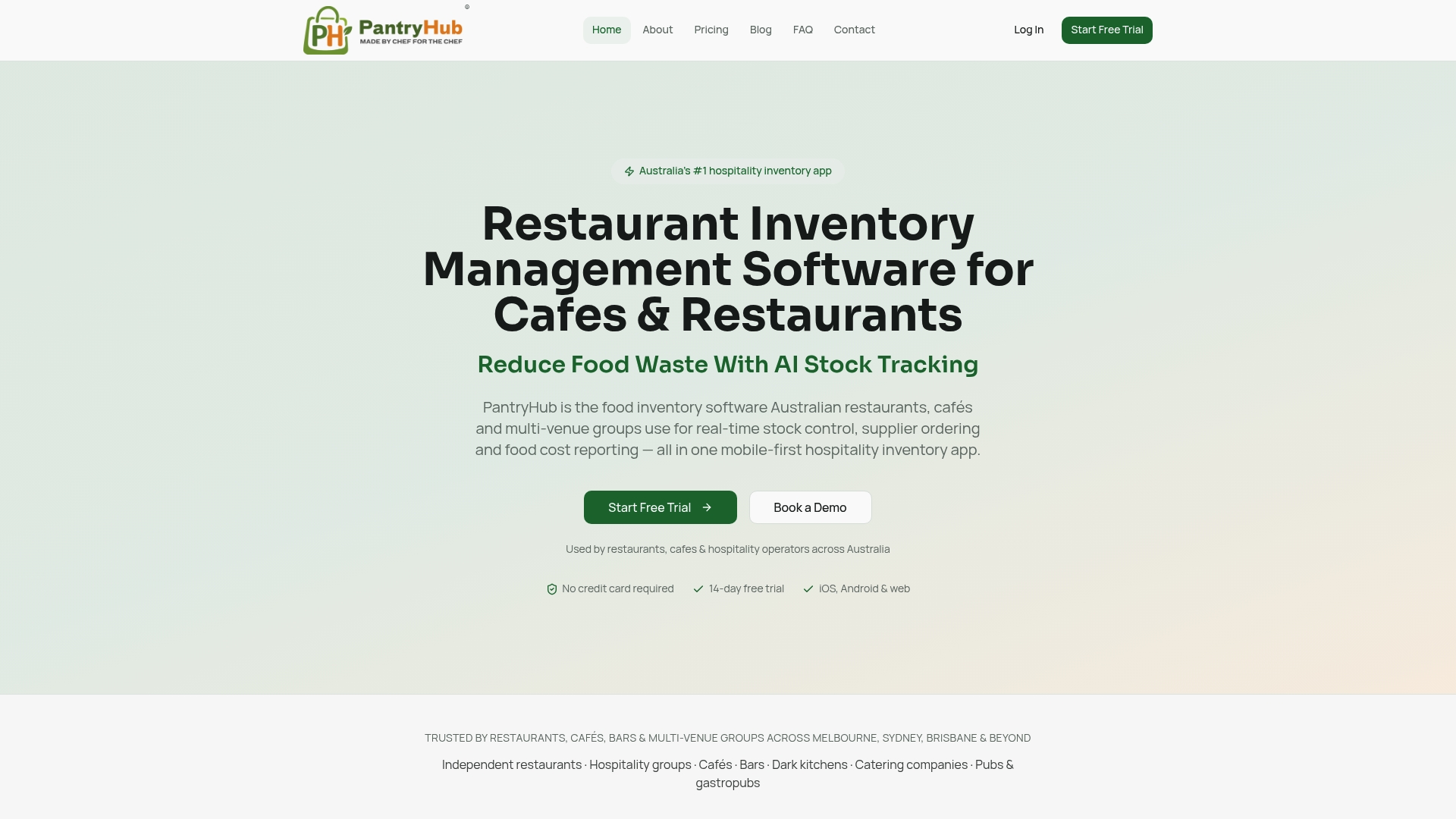
Plans start at A$39/month with a 14-day free trial and no setup fees. Pantryhub runs on iOS, Android, and web browsers and was created in a busy Melbourne kitchen for Australian hospitality. The product supports multi venue management, AUD pricing, and GST-aware ordering for local suppliers.
Core Features
- Real-time stock counts across all locations so you know on-hand levels without manual spreadsheets. This works on mobile devices and the web.
- Automated supply ordering that lets staff place supplier orders with one tap and reduce manual re-entry. Orders reflect AUD pricing.
- Multi location management dashboard that centralizes stock, orders, and user permissions for groups with more than one site.
- Live food cost, variance, and waste reports to track margin movement and spot problem items quickly.
- Low stock alerts and notifications configured to local GST rules and supplier pricing for timely reordering in AUD currency.
Key Differentiator
Pantryhub focuses solely on the Australian hospitality market and ties supplier pricing to AUD and local GST rules. That local alignment reduces invoice reconciliation work for finance teams. The product also prioritizes mobile first workflows with offline stocktake capability that keeps physical counts recorded when connectivity drops.
Pros
- Purpose built for Australian venues with local support and AUD currency. This reduces manual currency conversions and tax guesswork.
- Mobile first design with offline stocktake functionality lets kitchen staff run counts on phones or tablets during service. Offline counts sync when the device reconnects.
- Supports multi venue operations with a centralized control panel for shared items, supplier lists, and reporting across sites. This reduces duplicate setup work.
- Affordable pricing with no annual contracts or setup fees makes piloting feasible for single sites. You can scale plans as locations grow.
- Intuitive interface built for kitchen and floor staff, so training time is shorter and adoption is faster for nontechnical teams.
Cons
- Limited integrations with third party POS and accounting systems can force manual exports for reconciliation, which adds work for finance teams.
Who It's For
Pantryhub fits Australian restaurant, cafe, bar owners, and hospitality managers who need a low cost, locally supported inventory system. It works well for single site operators and small chains that want centralized stock control and simpler supplier ordering. Larger enterprises needing deep customization may find analytics or integrations lacking.
Unique Value Proposition
Local supplier pricing in AUD combined with GST aware ordering means purchase orders and supplier invoices align more closely with your bills. That reduces time spent fixing line item prices and tax on supplier invoices. For Australian operators this translates into fewer invoice disputes and cleaner cost reports.
Real World Use Case
A Melbourne cafe chain uses Pantryhub to track inventory across three outlets. Kitchen teams perform stocktakes on phones during quiet hours. The group automates supplier orders, compares live food cost reports, and cuts waste by spotting high variance items sooner.
Pricing
Plans start at A$39/month for Starter, A$69/month for Regular, and A$99/month for Pro. A 14-day free trial is available and there are no setup fees. Features scale from single venues to multi venue groups.
Website: https://pantryhub.com.au
Moka POS
At a Glance
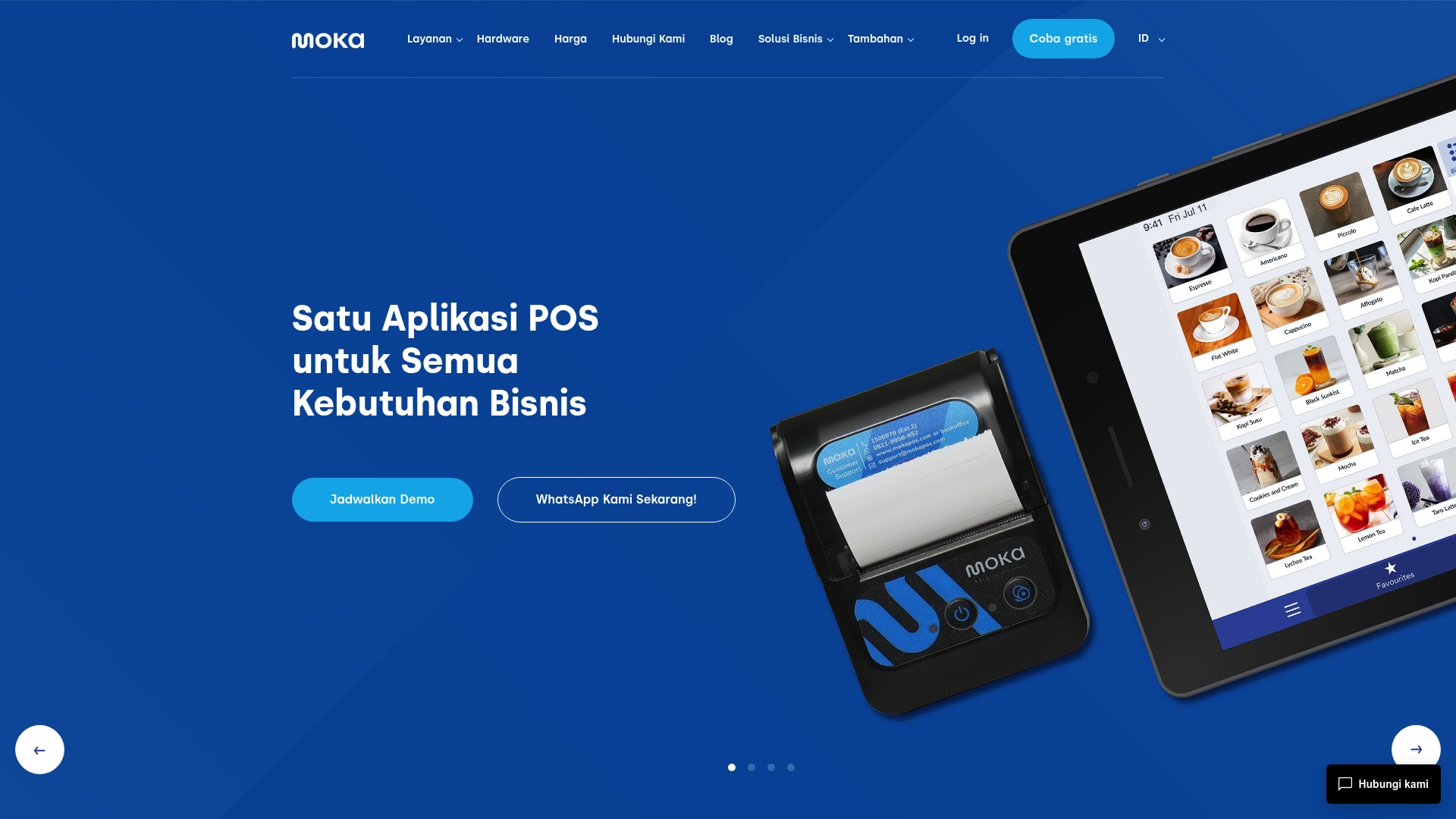
Moka POS reports more than 45,000 businesses use its system across Indonesia. The system combines point of sale, inventory, and reporting into a single cloud based product. It serves retail, restaurants, cafes, salons, and other small to medium operations with hardware support and an online storefront option.
Core Features
Moka offers a cloud based POS and inventory management system that tracks sales and stock across outlets. It supports both online and offline sales channels so stores keep selling when connectivity drops. The platform provides real time sales and stock analytics with standard reporting dashboards. Hardware integrations include printers, barcode scanners, and card readers. Moka also publishes GoStore for merchants who want a digital storefront that links to their register.
Key Differentiator
The platform focuses on connecting physical outlets to online channels while keeping reporting current. That alignment fits merchants who run both a shop and an online store and want one data source for sales and inventory. The vendor positions the product specifically for Indonesian business needs and local payment hardware.
Pros
-
Easy to learn interface that speeds staff training for restaurants and retail stores. The layout keeps common tasks visible and reduces order errors.
-
Real time analytics that show sales and stock levels at the outlet level. Managers can spot low stock and sales dips without manual counts.
-
Supports online and offline sales channels so you keep taking orders when internet service drops. This suits locations with intermittent connectivity.
-
GoStore integration makes launching a simple online storefront straightforward. It links online orders to the same inventory as in person sales.
-
Hardware integrations cover printers, scanners, and card readers commonly used by small businesses. That reduces time spent matching devices to software.
Cons
-
Third party reviews and independent audits are sparse, which makes deeper technical limits hard to verify. Customers must rely mostly on vendor documentation.
-
The premium plan pricing can push costs higher for very small operations when multiplied by multiple outlets. That may force startups to choose a simpler register first.
-
The product depends on a reliable internet connection for full cloud features. Offline mode protects sales but limits some reporting until sync resumes.
When It May Not Fit
Moka may not suit very large enterprise groups that need proven scalability for hundreds of outlets. The vendor provides limited public detail on enterprise scale limits. It also does not remove the need for local IT when integrating complex payment or legacy systems. Businesses with zero tolerance for cloud outages should plan for offline gaps in reporting.
Who It's For
Small to medium sized business owners in Indonesia who want a single product for in person and online sales will find this useful. It fits independent chains, single location restaurants, retail stores with a few outlets, and service shops like salons. Owners who want hardware bundled with point of sale and inventory will appreciate the device support.
Real World Use Case
A local restaurant chain uses Moka to accept dine in, takeaway, and delivery orders through one system. Inventory updates after each sale so kitchen staff and managers see current stock. The chain links its GoStore page to the same stock pool to avoid overselling.
Pricing
The vendor lists the premium plan at Rp299,000 per month per outlet. Additional hardware and setup costs may apply depending on device choices and installation.
Website: https://mokapos.com
Qdos ERP
At a Glance
Qdos runs cloud based ERP stacks that combine POS, inventory, financials, and eCommerce for retail and wholesale operators. The vendor cites customers such as Vinnies using its cloud software to improve store intelligence and operations. Local Australian based support and industry configurations set its practical focus for Australian businesses.
Core Features
- Cloud based ERP for retail and wholesale distribution that covers core operational modules.
- POS integration with inventory and sales flows built for storefront and multi location setups.
- Inventory management linked to financials and reporting to reduce stock errors and reconcile costs.
- eCommerce support and BI style reporting for sales analysis and demand insight.
- Industry specific configurations for wine and liquor, apparel and footwear, charity stores, and breweries.
- Australian based support, onboarding guides, and online training.
Key Differentiator
Qdos centers its offering on local support paired with tiered scalability. The vendor emphasizes Australian based support alongside configurable modules for specific retail sectors. That combination appeals to operators who prefer an ERP vendor with nearby support and industry templates.
Pros
-
Offers scalable, industry specific modules that map directly to retail and wholesale workflows. This reduces the amount of base customization for common sectors.
-
Local Australian based support and online onboarding materials help teams get started faster. Support being local shortens feedback loops for operational issues.
-
Flexible tiers and modules let businesses add POS, inventory, or financials without replacing the whole system. You can grow from basic to more advanced feature sets.
-
Integrates core business functions so sales, stock, and ledgers share a single source of truth. That reduces manual reconciliation work across teams.
-
Includes eCommerce connectivity and reporting tools for sales analysis and demand planning. Reporting helps spot slow moving lines and high margin items.
Cons
-
Public documentation and third party reviews point to complexity when customizing and wiring multiple modules together. Custom projects can take time and specialist configuration.
-
Pricing is not published online, which means you must contact sales to get a cost estimate and implementation plan. That creates uncertainty for budget planning.
-
There is limited publicly available information about day to day user interface usability. You may need a demo or pilot to judge staff adoption.
When It May Not Fit
Smaller operators with limited IT budgets may find the procurement process and customization costs too heavy. If you need transparent list pricing for quick comparison the lack of published rates will slow evaluation. Complex integrations to legacy systems may require external consultancy and additional time.
Who It's For
Mid sized retail and wholesale businesses in Australia that need industry specific ERP features and local support will get the most value. Charity organizations and multi location retailers who want a single system for POS, inventory, and finance will find the vendor alignment useful. Companies that want a vendor they can call locally for onboarding will prefer this fit.
Real World Use Case
Vinnies uses Qdos cloud software to gain store level intelligence and to tighten operations across multiple outlets. The implementation combined POS, inventory, and reporting to give managers clearer sales and stock visibility. That visibility helped staff make better buying and markdown decisions.
Pricing
Qdos does not publish standard list pricing. You must contact the vendor for a tailored quote based on chosen tier, modules, and customization needs. Expect pricing to vary by scale, industry configuration, and implementation scope.
Website: https://qdos.com.au
Comparison of alternatives
Selecting the right hospitality inventory and ordering system depends on specific requirements and regional considerations. Here, we compare Pantryhub, Moka POS, and Qdos ERP to aid businesses in identifying the most suitable tool for their operations.
Support for regional customization
Pantryhub delivers significant advantages within the Australian hospitality industry. Designed with this market in mind, it provides GST-aware ordering, AUD-based pricing, and local supplier support. Qdos ERP also targets Australian markets but focuses on mid-sized retail and wholesale, offering extensive ERP functionalities that may be unnecessary for smaller operations. Moka POS, although versatile with its online storefront integration, primarily serves Indonesian businesses and lacks specific regional capabilities for Australia, such as AUD currency handling.
Suitability for operational scalability
Qdos ERP emphasizes scalability, offering tailored modules to integrate functions across larger multi-location operations. Conversely, Pantryhub's strength lies in its streamlined setup for small to medium-sized venues. Moka POS excels in linking physical and online sales, beneficial for businesses seeking to expand their digital presence but may encounter challenges with system reliance on cloud connectivity.
Best fit:
- Pantryhub: Ideal for Australian establishments requiring efficient, localized inventory and supplier management.
- Moka POS: Suited for small to medium businesses blending physical and digital sales channels.
- Qdos ERP: Best for mid-sized retailers seeking extensive ERP features with localized industry support.
Our pick:
Pantryhub.com.au emerges as the choice for Australian hospitality enterprises prioritizing GST-aligned, AUD inventory management. However, enterprises demanding refined scalability or enhanced online sales integration should explore alternatives such as Qdos ERP or Moka POS.
Hospitality operators can compare solutions based on localization and integration features to meet their specific business needs.
| Product | Core Feature | Key Differentiator | Best For | Pricing | Notable Limitation |
|---|---|---|---|---|---|
| Pantryhub | Real-time stock counts, multi-site tools | AUD pricing, GST-aware ordering | Australian hospitality | From A$39/month | Limited POS and accounting system integrations |
| Moka POS | POS with inventory, online/offline sales | Online/physical sales channel alignment | Indonesian small to medium-sized businesses | Rp299,000/month | Offline mode restricts certain reports |
| Qdos ERP | Cloud-based ERP for retail/wholesale | Industry-specific modules for Australia | Mid-sized Australian retail and wholesale sectors | Not disclosed | Complex customization processes for integrating modules |
Discover a Smarter Alternative for Hospitality Inventory Management
When searching for hlpos.com alternatives, local Australian hospitality operators often face challenges with supplier ordering tied to foreign currencies, manual stock counts, and limited mobile usability. Pantryhub directly addresses these pain points by delivering real-time stock visibility, GST-aware supplier integration, and offline mobile stocktake capabilities designed specifically for restaurants, cafés, and bars in Australia.
Pantryhub helps you manage inventory across multiple venues with ease while eliminating confusing invoice reconciliation caused by currency mismatches.
Take control of your pantry with a platform built by chefs who understand your needs. Visit Pantryhub to start a free trial and see how instant supplier orders and live food cost reports can simplify your inventory management. Stop guessing and start managing with confident, real-time data today.
FAQ
What features make Pantryhub suitable for hospitality inventory management?
Pantryhub offers real-time stock counts across locations, allowing users to monitor inventory without manual spreadsheets. This feature supports mobile devices and web access, enabling seamless tracking for busy hospitality settings.
How does Pantryhub's pricing compare to Moka POS?
Moka POS provides a comprehensive point of sale and inventory system, which is used by over 45,000 businesses in Indonesia. In contrast, Pantryhub offers a straightforward pricing model starting at A$39/month with no setup fees, making it a more cost-effective option for Australian hospitality venues seeking a local solution.
What integration capabilities should I consider with Pantryhub?
Pantryhub focuses on integrating local supplier pricing and GST-aware ordering, which minimizes manual invoice reconciliation. This is particularly beneficial for Australian operators who prioritize streamlined supplier engagement and accurate tax calculations.
Can Pantryhub support multi-venue operations effectively?
Yes, Pantryhub's multi-location management dashboard centralizes stock, orders, and user permissions. This feature reduces the duplication of work across multiple sites, making it an excellent fit for restaurant chains or hospitality groups needing uniform control.
What helps guarantee Pantryhub's affordability for single-site operators?
Pantryhub’s pricing structure begins at A$39/month, with no annual contracts or setup fees, making it an appealing choice for single-site operators looking to implement an inventory system without significant upfront costs. For growing operations, this scalability in pricing allows for future expansion without financial strain.