
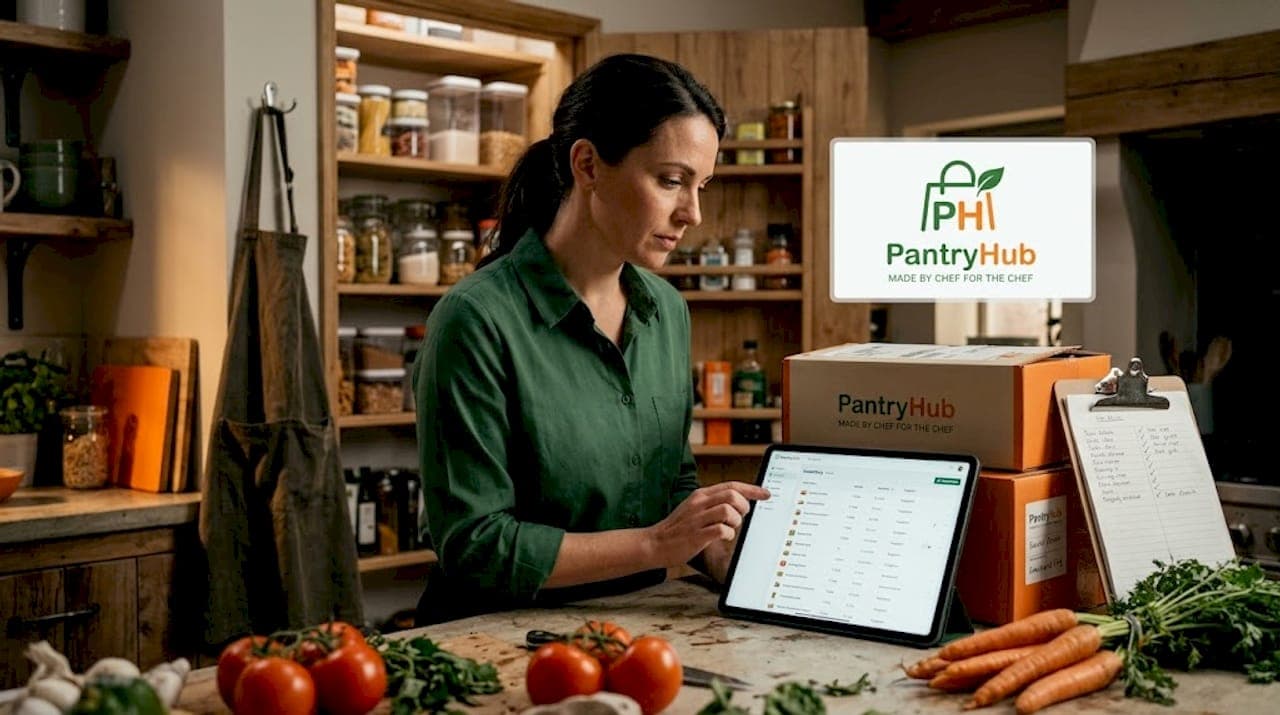
Running a restaurant on weekly or monthly inventory counts is like driving with a fogged windshield. You can see roughly where you're going, but you're missing critical details until it's too late. Understanding why restaurant inventory needs real-time data comes down to a simple truth: every hour your stock data is outdated, money walks out the door. Outdated inventory data can cost restaurants up to 10% of annual revenue through waste, theft, and poor purchasing decisions. That number is not theoretical. It's happening in kitchens that still rely on clipboards and spreadsheets.
Table of Contents
- Key takeaways
- Why restaurant inventory needs real-time data
- Operational benefits you'll see immediately
- The financial case for real-time inventory
- Implementation challenges and how to avoid them
- Future applications of real-time inventory data
- My take: stop managing your kitchen on yesterday's numbers
- See real-time inventory in action with Pantryhub
- FAQ
Key takeaways
| Point | Details |
|---|---|
| Real-time data prevents costly gaps | Outdated inventory leads to stockouts, overstocking, and missed margin opportunities that compound daily. |
| POS integration is the foundation | Connecting inventory to your POS system enables automatic stock deductions and faster decision-making across every shift. |
| Variance analysis must be regular | Comparing theoretical vs. actual usage weekly or daily catches waste, theft, and portioning problems before they become expensive. |
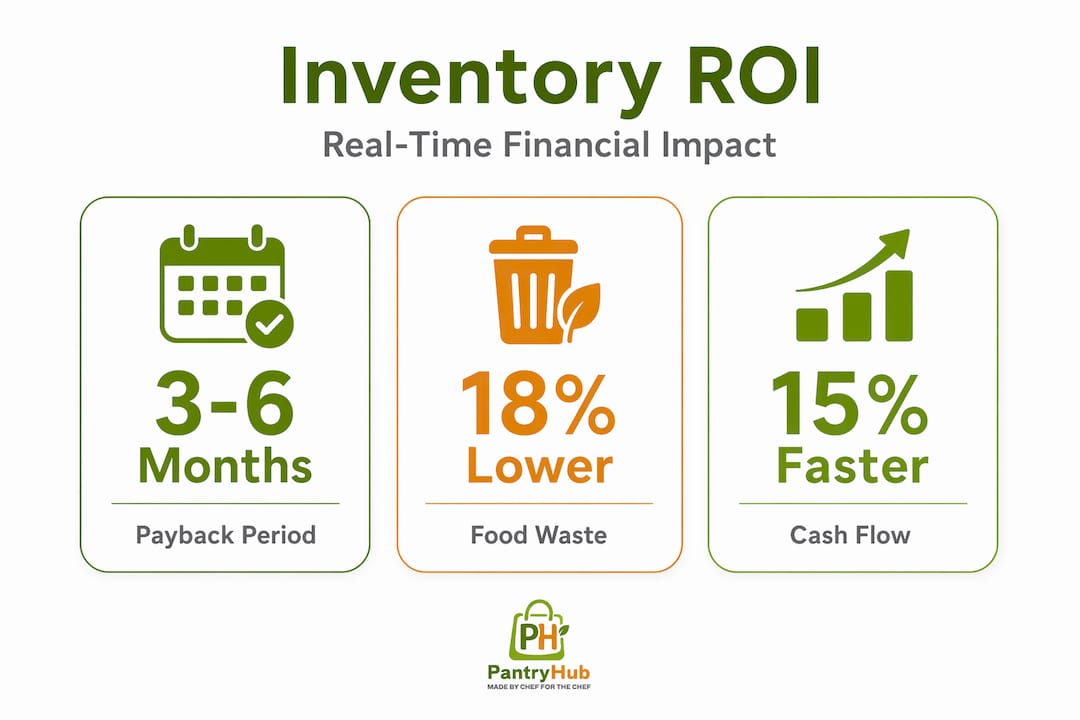
| ROI comes faster than expected | Most restaurants recover the cost of real-time inventory software within 3 to 6 months through accuracy and labor savings. |
| Training sustains accuracy | Technology alone is not enough. Staff procedures and daily spot-checks keep real-time data reliable and trustworthy. |
Why restaurant inventory needs real-time data
Most restaurant operators understand that inventory management matters. What they underestimate is how damaging the delay in data actually is. Traditional inventory methods take a snapshot once a week or once a month. By the time you process that count, the numbers are already stale. A supplier delivered short. A line cook over-portioned pasta for three shifts. A high-value protein went bad in the walk-in. None of these problems show up until your next scheduled count, and by then, corrective action is weeks behind the problem.
Real-time inventory systems work differently. They update stock levels continuously as sales are rung through the POS, as deliveries are received, and as items are transferred between stations. POS-integrated APIs can update stock every 15 minutes, automatically deducting ingredients based on menu item sales. That's not just convenient. That's a fundamentally different management model.
Here's a quick comparison of how the two approaches stack up:
| Inventory method | Update frequency | Error visibility | Decision speed |
|---|---|---|---|
| Traditional (weekly/monthly count) | Days to weeks | Delayed by counting cycle | Reactive, after the fact |
| Real-time system (POS-integrated) | Every 15 to 60 minutes | Immediate alerts and variance flags | Proactive, same shift |
The practical difference is that real-time data lets you act before decision windows close. You catch a shortfall before the dinner rush, not after a table sends food back. You spot a variance in your beef tenderloin before it wipes out your margin for the week.
Key ways real-time inventory systems stay current:
- Automatic stock deductions triggered by POS sales
- Delivery receipts updated on mobile devices at the dock
- Low-stock alerts sent to managers before items run out
- Supplier order suggestions generated from live usage data
Operational benefits you'll see immediately
The most visible improvement from switching to real-time inventory is stock accuracy. When you know exactly what's on hand at any given moment, your purchasing decisions stop being guesses. Real-time systems reduce error rates by 25 to 30% and improve order accuracy for 78% of operators. That has a direct knock-on effect: fewer emergency supplier calls, fewer 86'd menu items mid-service, and less over-ordering to cover uncertainty.
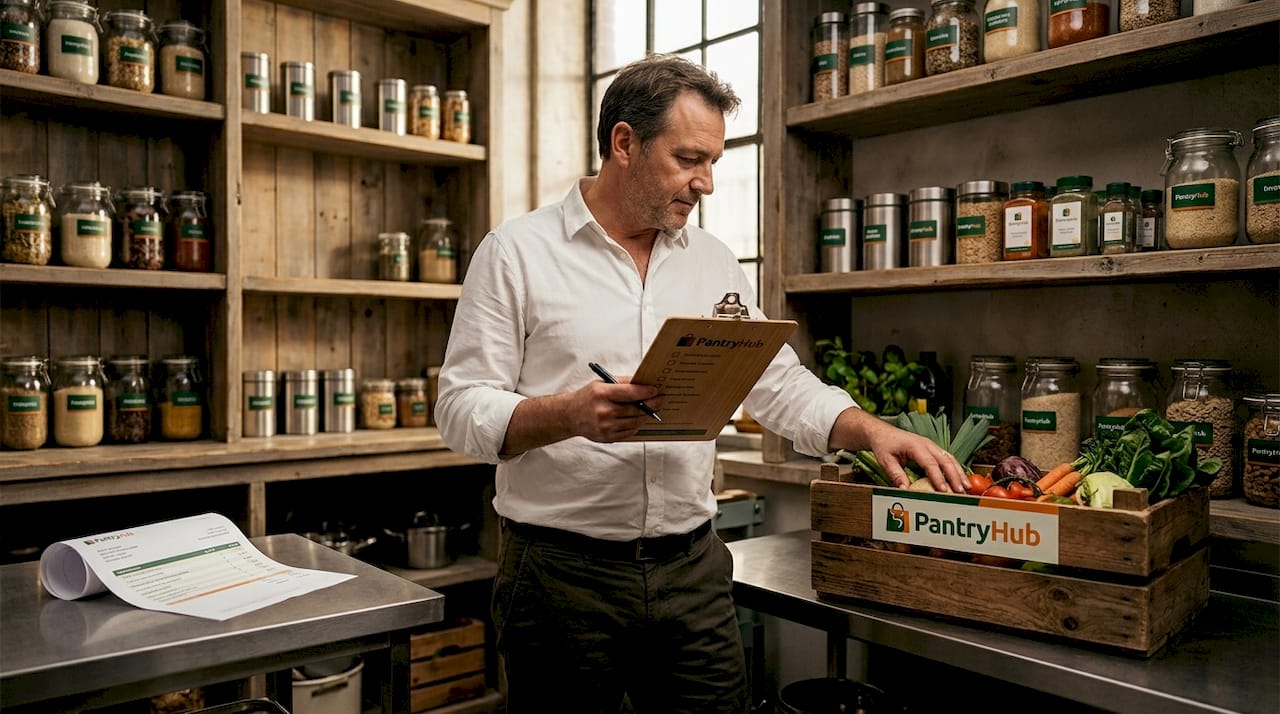
Waste reduction is where real-time data earns its keep fastest. When systems continuously compare theoretical food usage against actual usage, you can identify on a daily or per-shift basis exactly where product is disappearing. Is your avocado usage running 20% above what the POS sales would predict? That's a portioning problem, a theft problem, or a spoilage problem. With traditional counting, you'd find out in three weeks. With real-time tracking, you find out today.
Here's a practical sequence for using real-time data to tighten operations:
- Connect your POS to your inventory system so every sale automatically deducts ingredients from the relevant recipe.
- Set threshold alerts on your top 10 highest-cost items so you're notified the moment stock drops below par.
- Run a daily variance report comparing theoretical vs. actual usage on proteins, dairy, and alcohol.
- Review the report at the start of each shift briefing so your team understands accountability.
- Use the data to adjust portion guides and ordering quantities weekly rather than monthly.
Pro Tip: Don't try to monitor every item daily at first. Start with your top 20% of items by cost, which typically account for 80% of your food spend. Get accurate there first, then expand your tracking.
Labor savings are another underrated benefit. Mobile barcode scanning and cloud-based updates eliminate manual counting errors and cut the time spent on physical counts dramatically. A stock count that used to take a manager three hours on Sunday night can be reduced to spot-checks and exception reviews.
The financial case for real-time inventory
The numbers behind real-time inventory are hard to argue with. Beyond the error reduction already mentioned, real-time systems deliver 20 to 40% better working capital efficiency and 60 to 80% fewer supply chain disruptions. In restaurant terms, that means less cash tied up in excess stock sitting in a walk-in, and far fewer situations where a supplier shortage halts a menu item during peak service.
Consider what better purchasing decisions alone are worth. When your data is current, you order what you actually need rather than what you think you need. You stop topping up stock that hasn't moved and stop running short on items that sell fast. That tightening of the ordering cycle has a measurable impact on food cost percentage.
"The biggest financial win from real-time inventory isn't the one big catch. It's the dozens of small corrections that happen every week because your managers have current information to act on."
Most restaurants recover their investment in real-time inventory software within 3 to 6 months through a combination of accuracy improvements and labor savings. For a mid-size restaurant with $1.5 million in annual revenue, even a 2% reduction in food cost represents $30,000 per year. The software pays for itself quickly.
You can also look at it from a cash flow angle. When you carry less excess inventory and order more precisely, you reduce the amount of cash locked up in product that may not sell or may spoil. That frees up working capital for other parts of the business, from equipment upgrades to marketing.
Implementation challenges and how to avoid them
Real-time inventory is not plug-and-play. The technology works, but the results depend entirely on how it's set up and how consistently your team uses it. Many operators assume integrations work out-of-the-box but fail to verify that update speeds are fast enough to prevent overselling during peak hours. An inventory system that updates every four hours is far less useful than one that updates every 15 minutes during a Saturday dinner rush.
The other common failure point is variance analysis. Ignoring theoretical vs. actual usage for long periods delays problem detection and limits your ability to correct course. The system generates the data, but someone has to look at it regularly and take action. Without that review habit, real-time data becomes just another report nobody reads.
Pro Tip: Assign variance review as a named responsibility in your management team. When one person owns it daily, problems get caught and fixed rather than accumulating quietly into a bigger loss.
Best practices for keeping your system accurate over time:
- Perform daily spot-checks on your highest-value items, even with automation running. Physical checks validate digital data and catch spoilage or theft that the system may miss.
- Document your standard operating procedures for how deliveries are received and entered into the system. Inconsistency in receiving is one of the top sources of data drift.
- Train every staff member who touches inventory on the correct process. One person receiving stock without scanning it breaks the data chain for everyone.
- Audit your recipe costing regularly. If your recipes are outdated, your theoretical usage will be wrong, and your variance analysis will flag false positives.
Learning how to track restaurant inventory correctly from the start saves significant rework later.
Future applications of real-time inventory data
Real-time data is already changing how smart operators manage menus and margins, and the capabilities are expanding fast. When you know exactly what's in stock at any given moment, you can make menu decisions that protect profitability in ways that weren't possible before.
Consider a few applications that are gaining traction in 2026:
- Dynamic menu adjustments: If your salmon stock is running high approaching the end of its use-by window, you can feature a salmon special that evening and communicate it to front-of-house before service. No more throwing away margin because product sat unnoticed.
- Multi-location visibility: Integrated platforms with low API latency give multi-location operators a unified view of stock across every site, enabling transfers between locations and preventing duplicate over-ordering.
- Sustainability and waste reduction: Accurate forecasting means less food ends up in the bin, which has real environmental value alongside the financial savings. Smarter restaurant food waste reduction starts with knowing what you have before you over-order.
- Supplier portal integration: When your inventory system talks directly to your supplier portals, reordering can happen automatically based on live thresholds, reducing the administrative burden on managers.
The importance of real-time inventory grows as restaurants face tighter margins and more volatile supply chains. The operators who invest in live data now are building a structural advantage that compounds over time.
My take: stop managing your kitchen on yesterday's numbers
I've seen hundreds of restaurant operators describe the same painful pattern. They do their weekly count Sunday night, spend Monday trying to reconcile the numbers, and by Tuesday they're already operating on data that doesn't reflect what happened over the weekend. By the time they catch a portioning problem or a theft issue, the loss has already happened and repeated itself a dozen times.
What I find consistently true is that the biggest misconception about real-time inventory is that it's only for large operations with big tech budgets. It's not. A single-site café benefits just as much from live stock visibility as a restaurant group with ten locations. The financial exposure is proportionally the same.
The implementations I've seen succeed all share one thing. They treated real-time data as a management habit, not just a software purchase. The system generates the information, but the culture of reviewing it daily and acting on it is what separates operators who get results from those who pay for software and see no change. Proactive management beats reactive snapshot accounting every single time. That's not an opinion. It's what the numbers show in every kitchen that makes the shift.
— Admin
See real-time inventory in action with Pantryhub
If this article has made you think differently about how your kitchen tracks stock, the next step is seeing what a purpose-built system looks like in practice.
Pantryhub is built specifically for restaurants, cafés, bars, and commercial kitchens. It connects directly to your POS, sends low-stock alerts before you run out, and gives you a live view of usage and variance from any device. Whether you manage one location or several, you get the same accurate, current picture of your inventory at all times. Explore hospitality inventory software built for Australian operators, or check the pricing plans to see what fits your operation.
FAQ
Why does real-time inventory data matter for restaurants?
Real-time inventory data matters because outdated stock information leads to waste, over-ordering, and missed margin opportunities. Restaurants using live tracking systems reduce operational costs by 15 to 30% compared to those relying on periodic manual counts.
How often should restaurant inventory be updated?
For accurate decision-making, inventory should update at minimum every 15 to 60 minutes during service through POS integration. Daily spot-checks on high-value items are also recommended even when automation is in place.
How do real-time systems help reduce food waste?
Real-time systems compare theoretical usage against actual usage on a daily or per-shift basis, making it possible to catch over-portioning, spoilage, and theft before they compound. This immediate problem detection is not possible with weekly or monthly counts.
Is real-time inventory software worth it for small restaurants?
Yes. The benefits of real-time data apply equally to smaller operations because food cost percentage and margin pressure are proportionally the same. Most restaurants recover the software investment within 3 to 6 months through reduced waste and labor savings.
What's the difference between theoretical and actual inventory usage?
Theoretical usage is what your recipes predict you should have used based on POS sales. Actual usage is what's physically gone from your stock. Analyzing this variance regularly is one of the most reliable ways to detect waste, theft, and portioning problems in a restaurant kitchen.